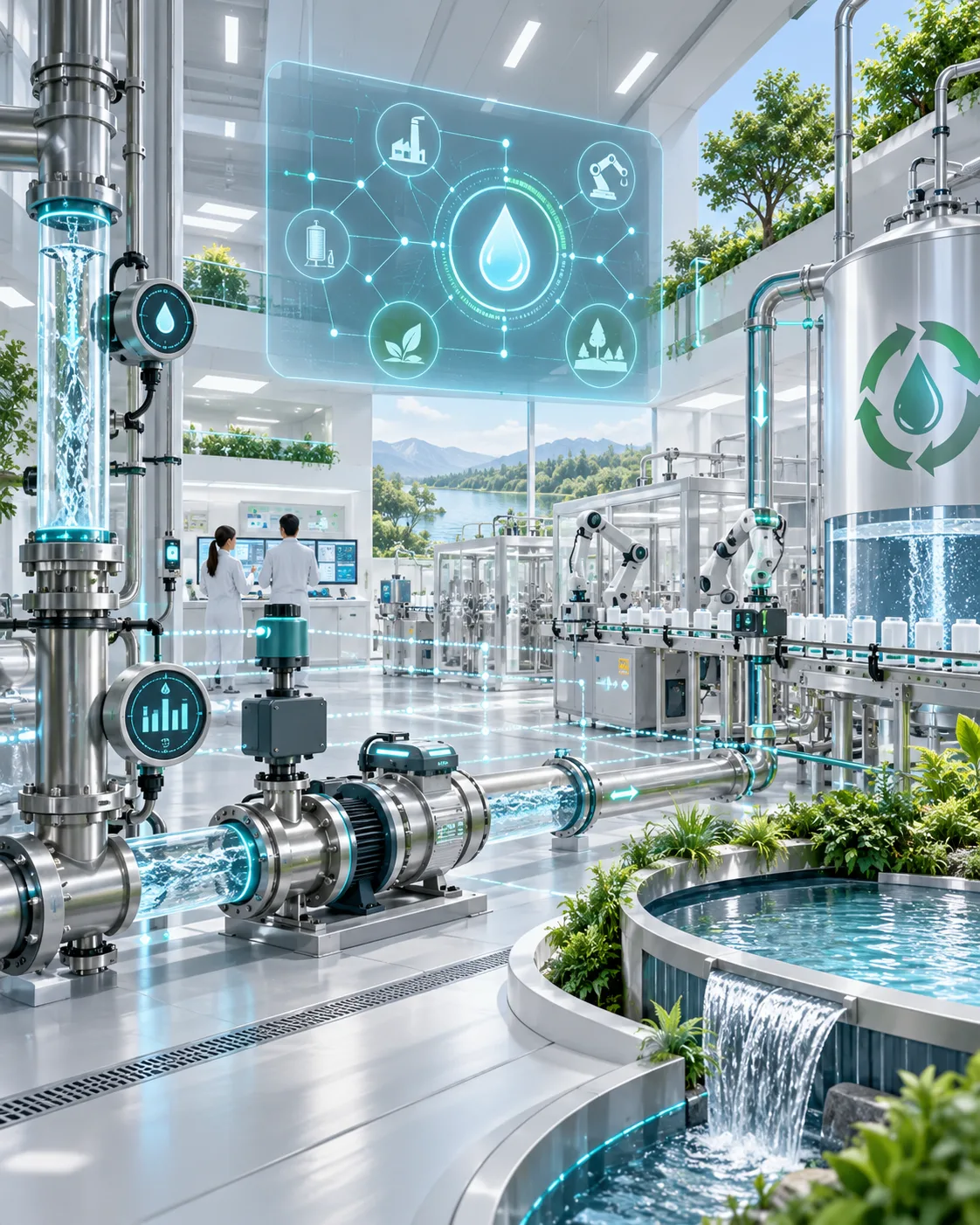
Most ESG systems I see deployed in plants do three things: collect data, measure performance and generate reports.
The more interesting step is engineering, not reporting: take the same real-time operational data and let it drive how the factory actually runs.
Picture an AI agen wired into an existing control layer, reading from sensors, flow meters and pumps through a controlled industrial interface.
It is not just logging how much water went through the line. It has enough context to reason about:
- actual production demand
- live flow rate at the meter
- process setpoints and requirements
- historical usage patterns
- abnormal consumption
From there, and staying strictly inside pre-approved engineering and safety limits, it can modulate flow toward what the process actually needs instead of what the schedule assumed.
Production Demand → Sensors → Ejen AI → Controlled Tindakan → Feedback
The same loop architecture carries over to energy draw, cooling, material feed, waste streams and machine efficiency.
That moves ESG from
Logging what already happened
to
Reading what is happening now
and eventually
Correcting it while it is happening.
The engineering principle is simple:
ESG should not only measure sustainability.
It should keep operations sustainable in real time.
That is the line where agen AI stops being a dashboard feature and starts earning its place on the plant floor.
#ESG #AgentAI #Pembuatan #IndustrialAI #Kelestarian #SmartManufacturing #Automasi

















Ruang pembaca
Apa pendapat anda?
Komen baharu dihantar untuk semakan terlebih dahulu. Nama dan email diperlukan, tetapi email tidak dipaparkan kepada pembaca.
The framing around pre-approved is better than I expected. Need to read this part again.
Good write-up. collect data, measure performance alone was worth the read.
Short and clear. ESG should not only measure is worth sending to my team.
Honestly, picture an AI agen wired surprised me.
Slightly disagree on cooling, material feed, waste streams, but the direction is right.