By 2039, we may be running less of the world's compute workload out of centralized data centres. Instead, billions of smartphones could act as nodes in a distributed compute and storage fabric.
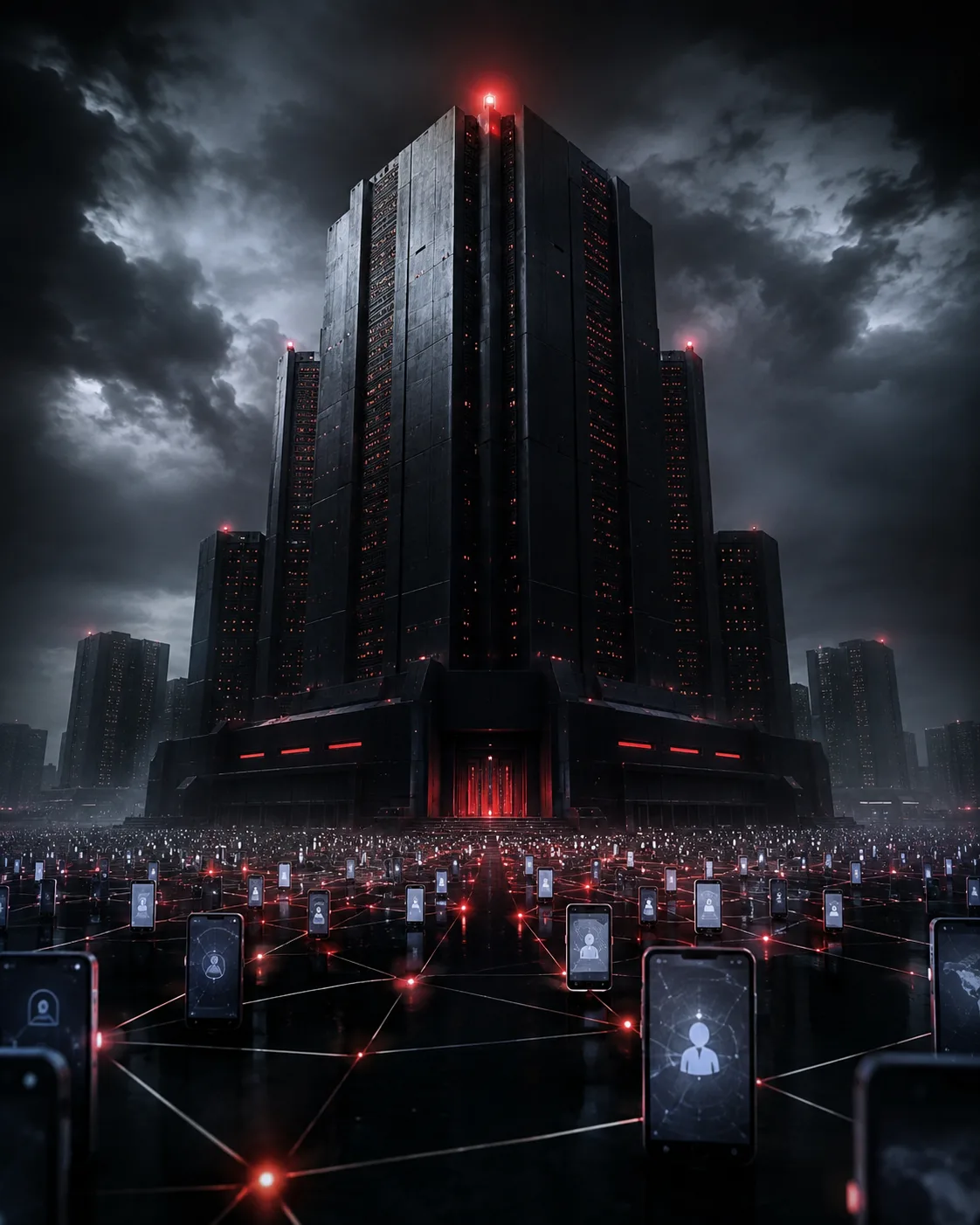
There are roughly 10 billion smartphones in the field, with an average usable capacity heading toward 4 TB. The raw storage pool is on the order of 40 ZB. If even 20% of that capacity is made available through secure, consent-based participation, you are looking at about 8 ZB of distributed storage-without pouring concrete for an equivalent centralized build-out.
These devices are not just storage bins. They already ship with capable CPUs, GPUs, NPUs, large RAM footprints, and local LLMs that run on-device. That idle capacity can be repurposed for:
• Distributed object and file storage
• Containerized compute workloads
• Tempatan and federated AI inference
• Encrypted backup and recovery services
• Edge routing, caching and service delivery
The architecture we are building toward shifts from the classic star topology:
*Device → Data Centre → Device*
to a mesh-plus-core topology:
*Device ↔ Device ↔ Edge ↔ Data Centre*
Data centres do not go away. Their job changes: orchestration, high-throughput training, cold storage, policy enforcement, and resilience fallback. They become the control plane and backplane rather than the only plane.
From an ESG and engineering standpoint, the model is interesting because it increases hardware utilization, keeps processing close to the data source, cuts unnecessary wide-area transfers, and reduces demand for baharu concrete-and-steel capacity.
That said, the hard problems are real: secure identity and attestation, device trust boundaries, erasure coding and replication, dynamic routing, battery and thermal protection, bandwidth metering, and energy-aware scheduling. These are integration problems, not just algorithmic ones.
At AINNA, through *AINNA NeuralOps, we are building the operating layer that lets billions of devices cooperate as a Global Distributed Intelligence Infrastruktur*. That means mesh networking, device lifecycle management, policy-driven resource sharing, and fault tolerance at scale.
The question we are trying to answer is less about capacity planning and more about coordination:
*“Sejauh manakah berbilion peranti dapat bekerjasama secara cekap?”*
And the real engineering follow-up: how do we keep that fabric secure, available, and maintainable over time?
#AINNA #NeuralOps #P2P #DistributedComputing #EdgeAI #AIInfrastructure #ESG #GreenComputing #DecentralizedComputing #ArtificialIntelligence
There are roughly 10 billion smartphones in the field, with an average usable capacity heading toward 4 TB. The raw storage pool is on the order of 40 ZB. If even 20% of that capacity is made available through secure, consent-based participation, you are looking at about 8 ZB of distributed storage-without pouring concrete for an equivalent centralized build-out.
These devices are not just storage bins. They already ship with capable CPUs, GPUs, NPUs, large RAM footprints, and local LLMs that run on-device. That idle capacity can be repurposed for:
• Distributed object and file storage
• Containerized compute workloads
• Tempatan and federated AI inference
• Encrypted backup and recovery services
• Edge routing, caching and service delivery
The architecture we are building toward shifts from the classic star topology:
*Device → Data Centre → Device*
to a mesh-plus-core topology:
*Device ↔ Device ↔ Edge ↔ Data Centre*
Data centres do not go away. Their job changes: orchestration, high-throughput training, cold storage, policy enforcement, and resilience fallback. They become the control plane and backplane rather than the only plane.
From an ESG and engineering standpoint, the model is interesting because it increases hardware utilization, keeps processing close to the data source, cuts unnecessary wide-area transfers, and reduces demand for baharu concrete-and-steel capacity.
That said, the hard problems are real: secure identity and attestation, device trust boundaries, erasure coding and replication, dynamic routing, battery and thermal protection, bandwidth metering, and energy-aware scheduling. These are integration problems, not just algorithmic ones.
At AINNA, through *AINNA NeuralOps, we are building the operating layer that lets billions of devices cooperate as a Global Distributed Intelligence Infrastruktur*. That means mesh networking, device lifecycle management, policy-driven resource sharing, and fault tolerance at scale.
The question we are trying to answer is less about capacity planning and more about coordination:
*“Sejauh manakah berbilion peranti dapat bekerjasama secara cekap?”*
And the real engineering follow-up: how do we keep that fabric secure, available, and maintainable over time?
#AINNA #NeuralOps #P2P #DistributedComputing #EdgeAI #AIInfrastructure #ESG #GreenComputing #DecentralizedComputing #ArtificialIntelligence
LikeComment
Official Cross-Network Resource