Board Meeting on ESG
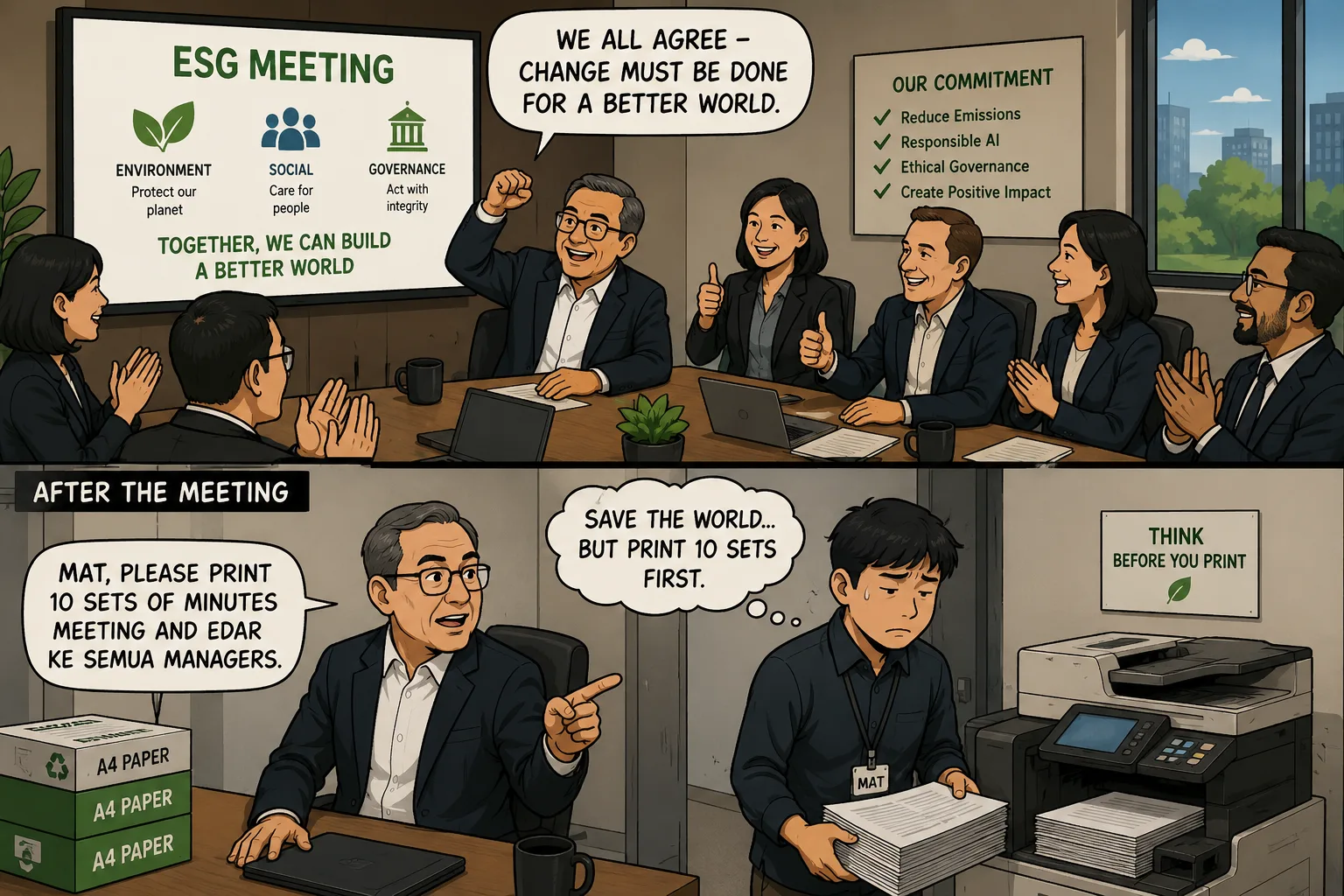
Semua board members agreed:
“We must change for a better world.”
They reviewed sustainability targets, energy-efficient infrastructure, carbon reduction, responsible compute and the importance of sizing resources to actual demand.
The meeting closed with strong commitments and unanimous approval.
Then came the final instruction:
“Mat, please print 10 sets of the meeting minutes and distribute them to all managers.”
I see the same disconnect in production AI deployments almost every week.
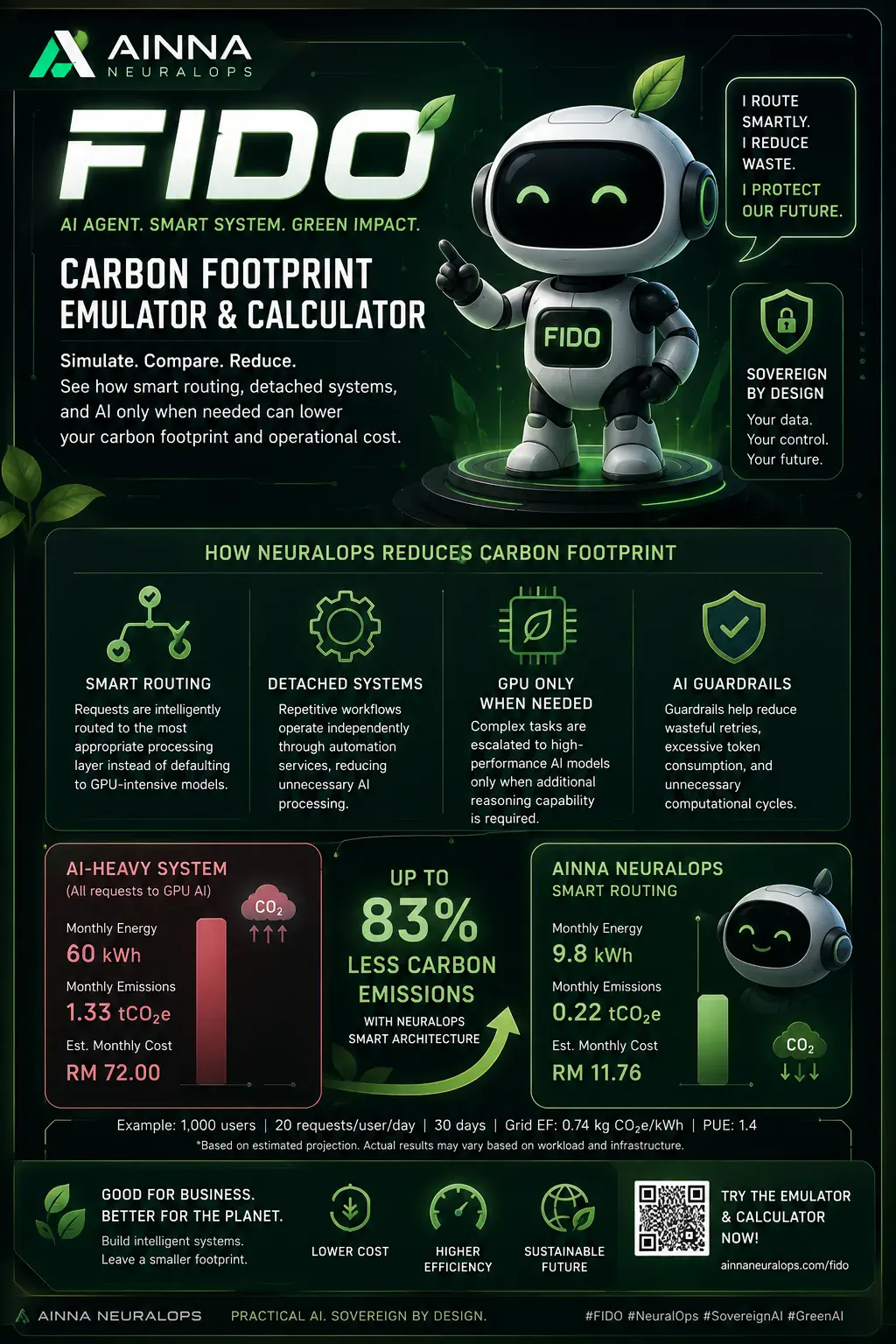
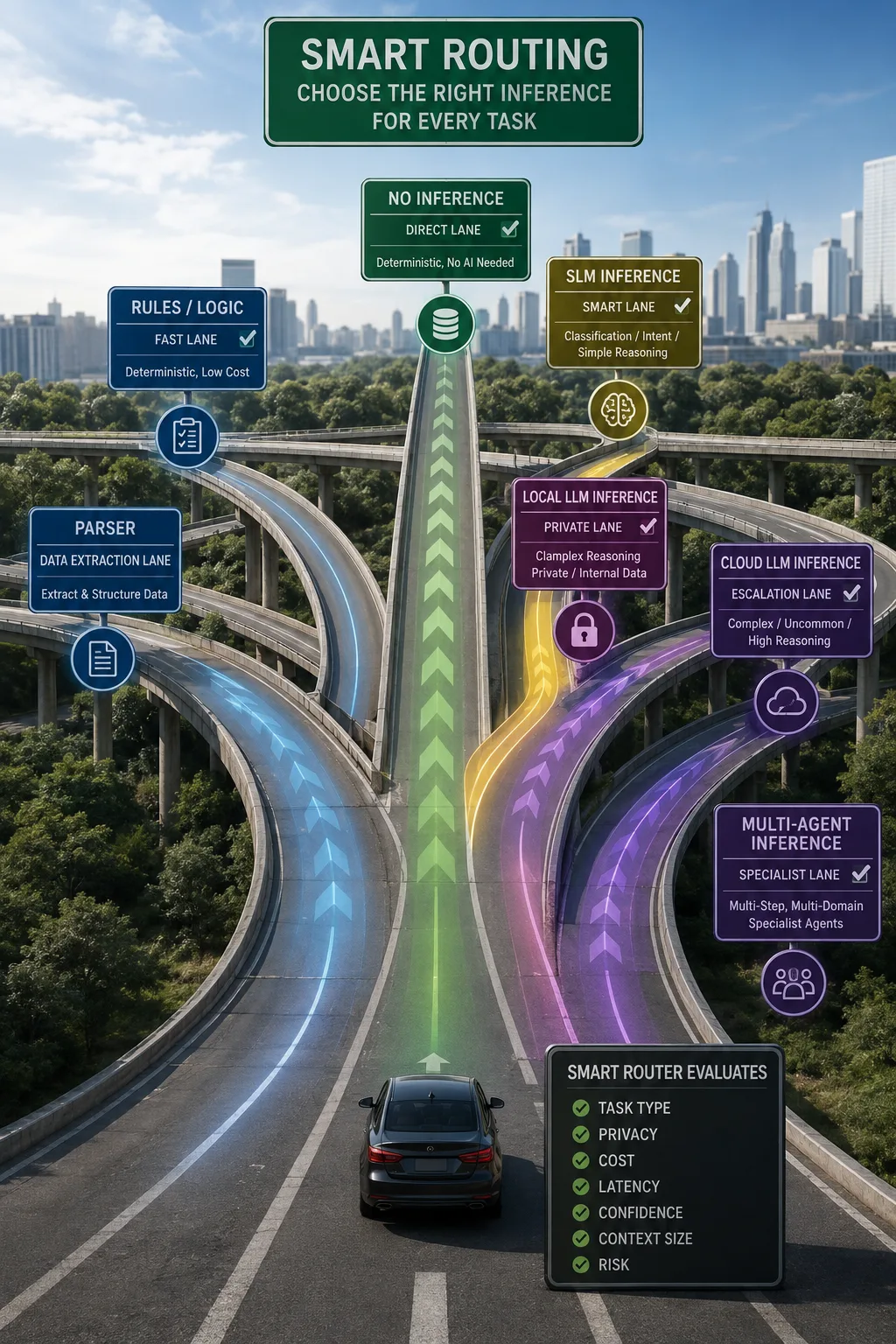
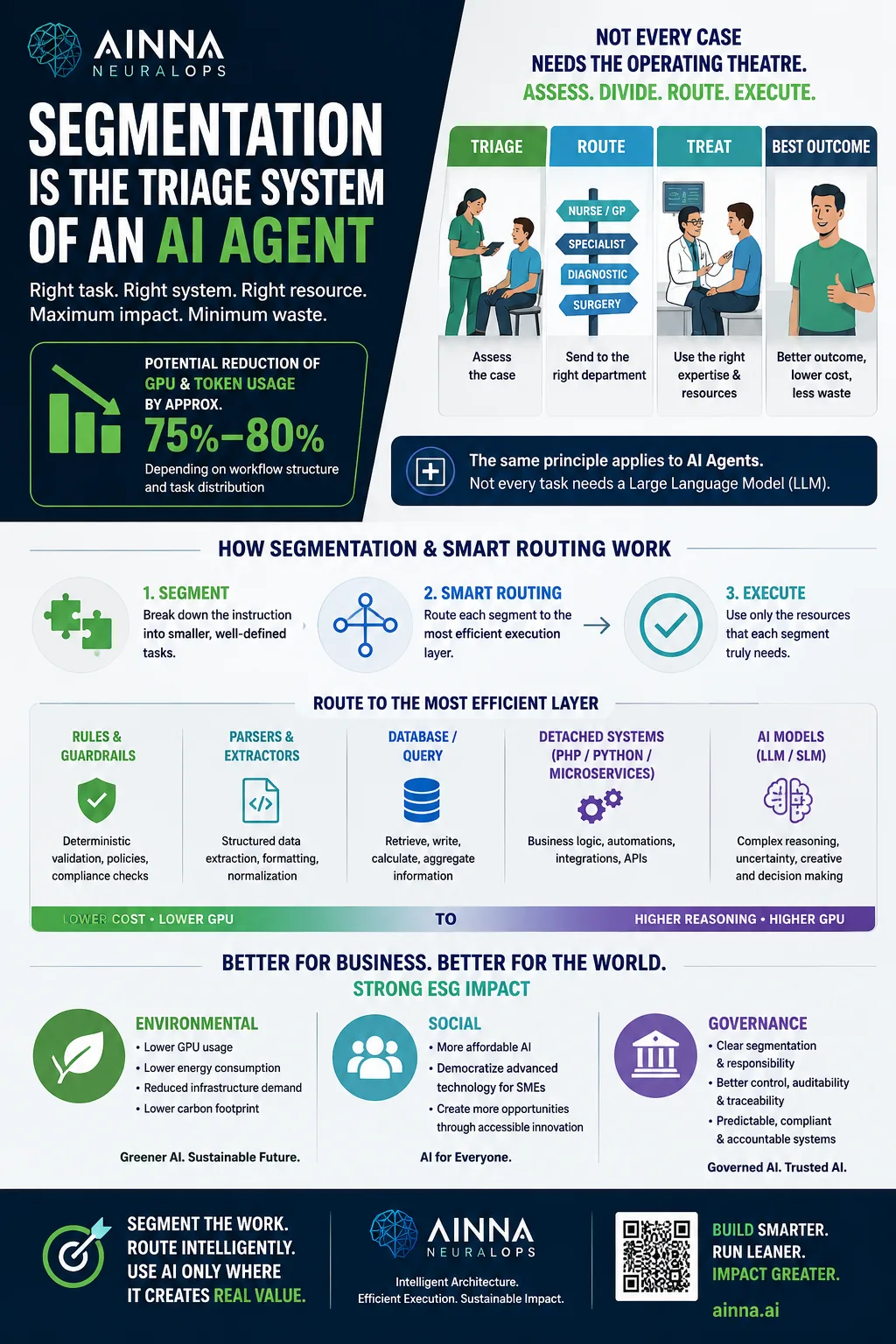
Teams approve responsible AI, ESG targets, efficient inference and sustainable compute-then push every request straight to the largest LLM in the stack, bypassing the rule engine, parser, automation workflow or lebih kecil model that could handle it lebih pantas, lebih murah and with a lower carbon footprint.
Generate every response with AI.
Analyse every dataset with AI.
Rewrite every line with AI.
Default to the biggest model available.
No routing layer.
No model-selection strategy.
No per-task cost control.
No carbon or latency budget.
No independent validation gate.
Using AI indiscriminately is not digital transformation.
It is simply replacing one form of waste with another-at scale.
Responsible AI engineering begins with one design question:
Does this task genuinely require AI?
When the answer is yes:
Which inference layer is the most efficient, secure and appropriate for this workload?
Real AI sustainability is not what we approve in the roadmap.
It is what we commit to the codebase and the production pipeline immediately after the meeting ends.
#ResponsibleAI #ESG #Kelestarian #AIStrategy #DigitalTransformation #AIInfrastructure #EnergyEfficiency #AINeuralOps