Sedang parse Pipeline: Why Rule Engines Still Outperform AI-Only Pendekatanes in Production
Document parsing is one of the core integration points between unstructured input and downstream business systems. A bank statement, invoice, receipt, sales report, or financial PDF does not become useful the moment it is read. The real engineering problem is converting it into structured, validated records that accounting software, ERP systems, databases, and reporting alatan can consume reliably.
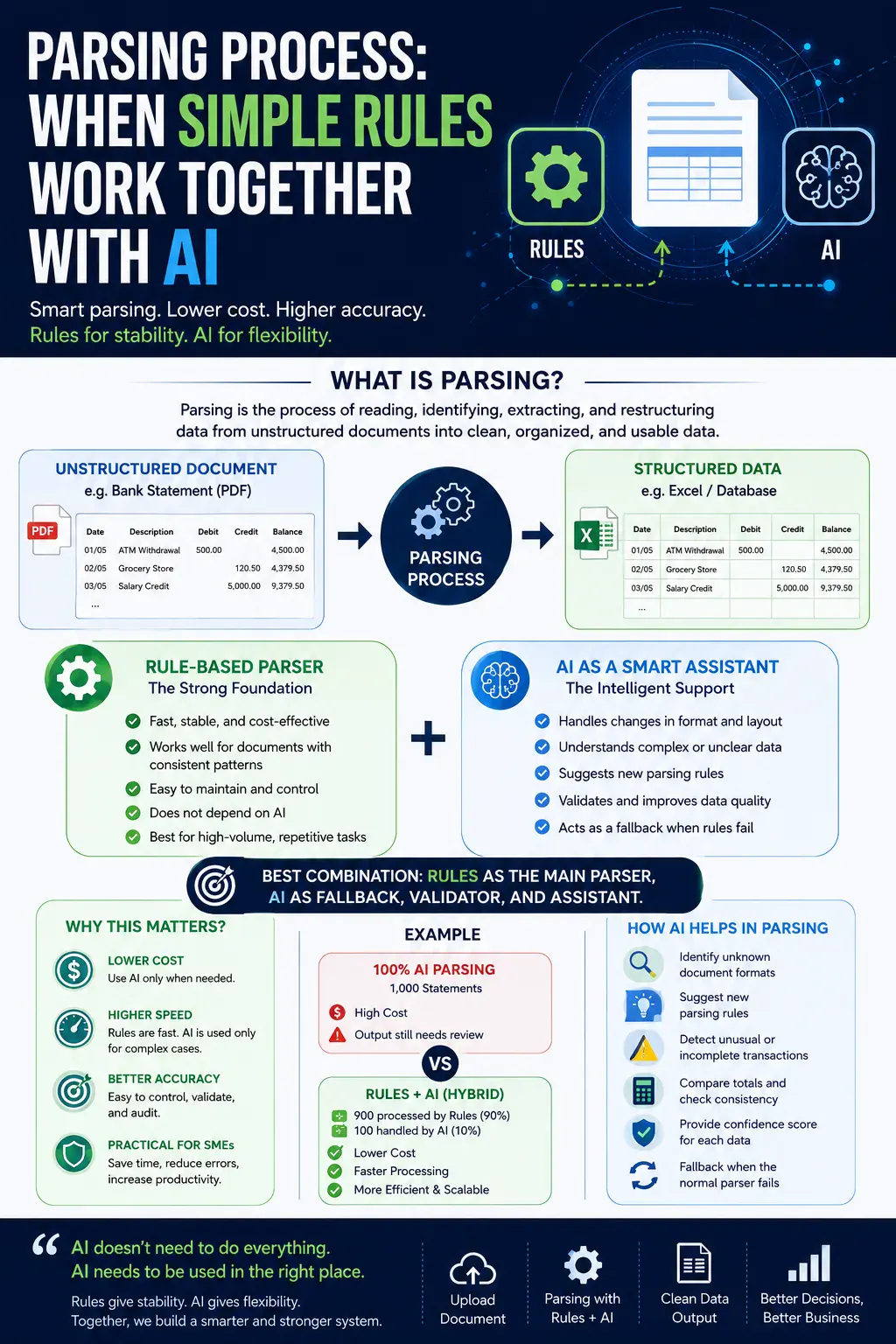
In our field, there is a tendency to drop an LLM on every problem. From a systems standpoint, that is usually the wrong first move. AI is powerful, but it is also non-deterministic, slower, and more expensive than deterministic logik. When a document follows a predictable format, a rule-based parser will almost always beat an AI model on latency, cost, and reproducibility.
A rule-based parser is built around explicit logik: layout heuristics, regex patterns, coordinate-based extraction, table reconstruction, and known field positions. It can pull transaction dates, descriptions, debit and credit amounts, balances, reference numbers, and account details with high keyakinan when the format is stable. If the schema is fixed, rules give you deterministic output, version control, and easy debugging.
AI earns its place where the pipeline hits ambiguity. When a format changes, a baharu template appears, a scan is low quality, or a value is unclear, an LLM or vision model can act as an exception handler. It can classify unknown layouts, propose baharu extraction rules, validate low-keyakinan fields, and flag incomplete or anomalous transactions for human review.
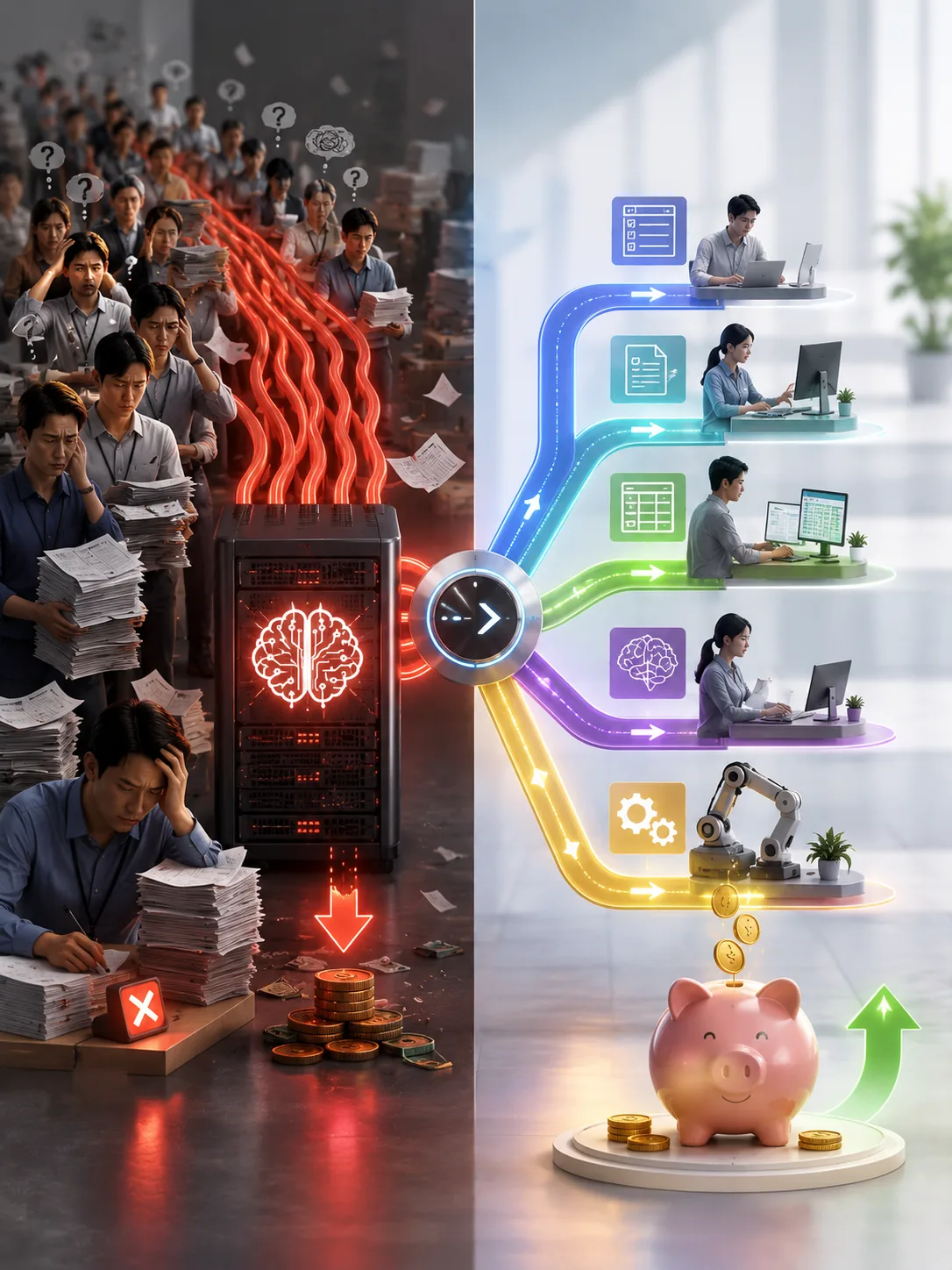
The architecture that actually works in production is not rules versus AI. It is rules orchestrated with AI. The rule engine owns the happy path because it delivers speed, control, and predictable behavior. AI handles the tail: edge cases, validation, schema inference, and continuous improvement. The two layers are wired together through keyakinan scoring and fallback logik.
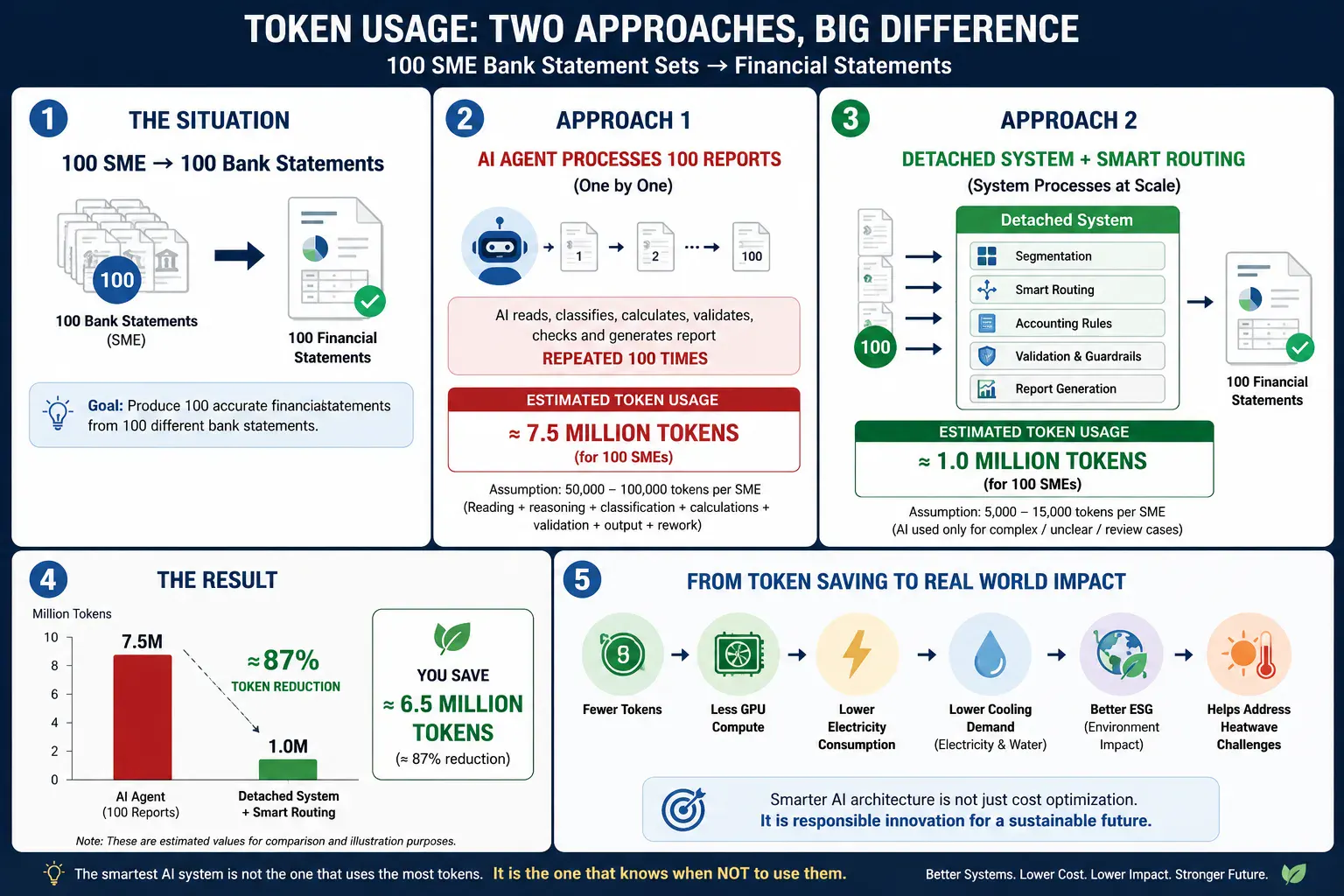
Consider a batch of 1,000 bank statements. Running all of them through a large model burns tokens and still leaves you with output that needs QA. If the rule engine processes 900 of them cleanly and only escalates the difficult 10% to AI, you cut inference cost by an order of magnitude and keep the pipeline deterministic where it matters.
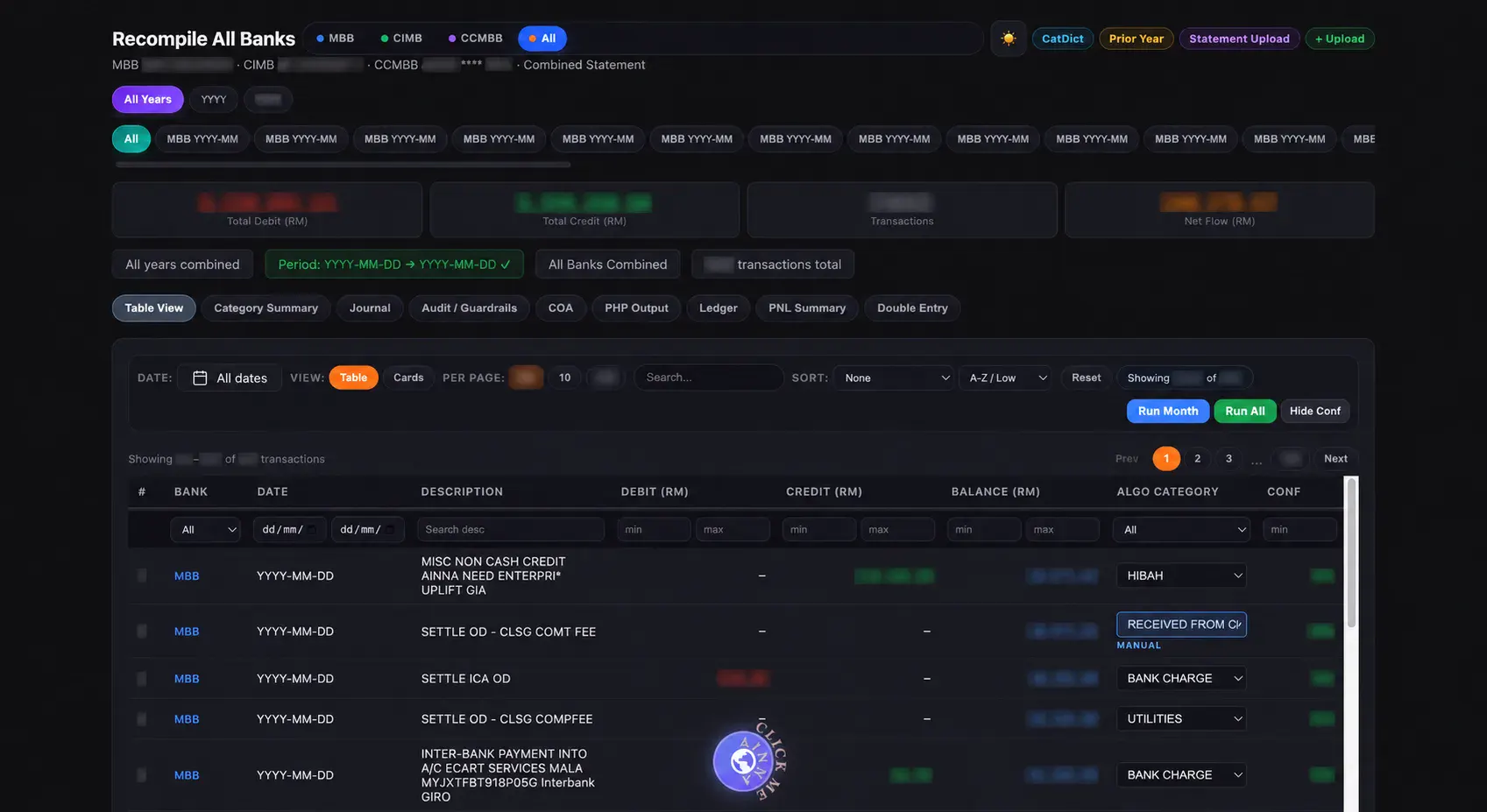
This matters most for PKS that are still entering data manually. A well-built parsing system lets them upload a document, trigger the pipeline, and receive clean records in Excel, CSV, or directly into a database. From our side, the win is not just automation. It is a maintainable system that does not break every time a supplier changes a PDF layout.
To me, that is the disciplined way to use AI. It does not need to own every step. It needs to sit at the right layer. Rules give you stability, AI gives you flexibility, and together they create a parsing pipeline that is lighter, lebih murah, and more reliable in the field.
#AI #Automasi #DataParsing #PKS #Fintech #RuleBasedSystem #DigitalTransformation #PerniagaanAutomasi













Ruang pembaca
Apa pendapat anda?
Komen disemak sebelum diterbitkan. Email diperlukan untuk moderasi dan tidak dipaparkan kepada pembaca.
Ang bahagi tungkol sa 900 ang pinag-isipan ko nang matagal.
Good write-up. escalates the difficult 10% alone was worth the read.
Still thinking about validated records that accounting software.
Sent this to two people already. rule engine processes 900 is why.
900には賛成です。方向性がはっきりしています。
The bit about document parsing is what I keep coming back to.