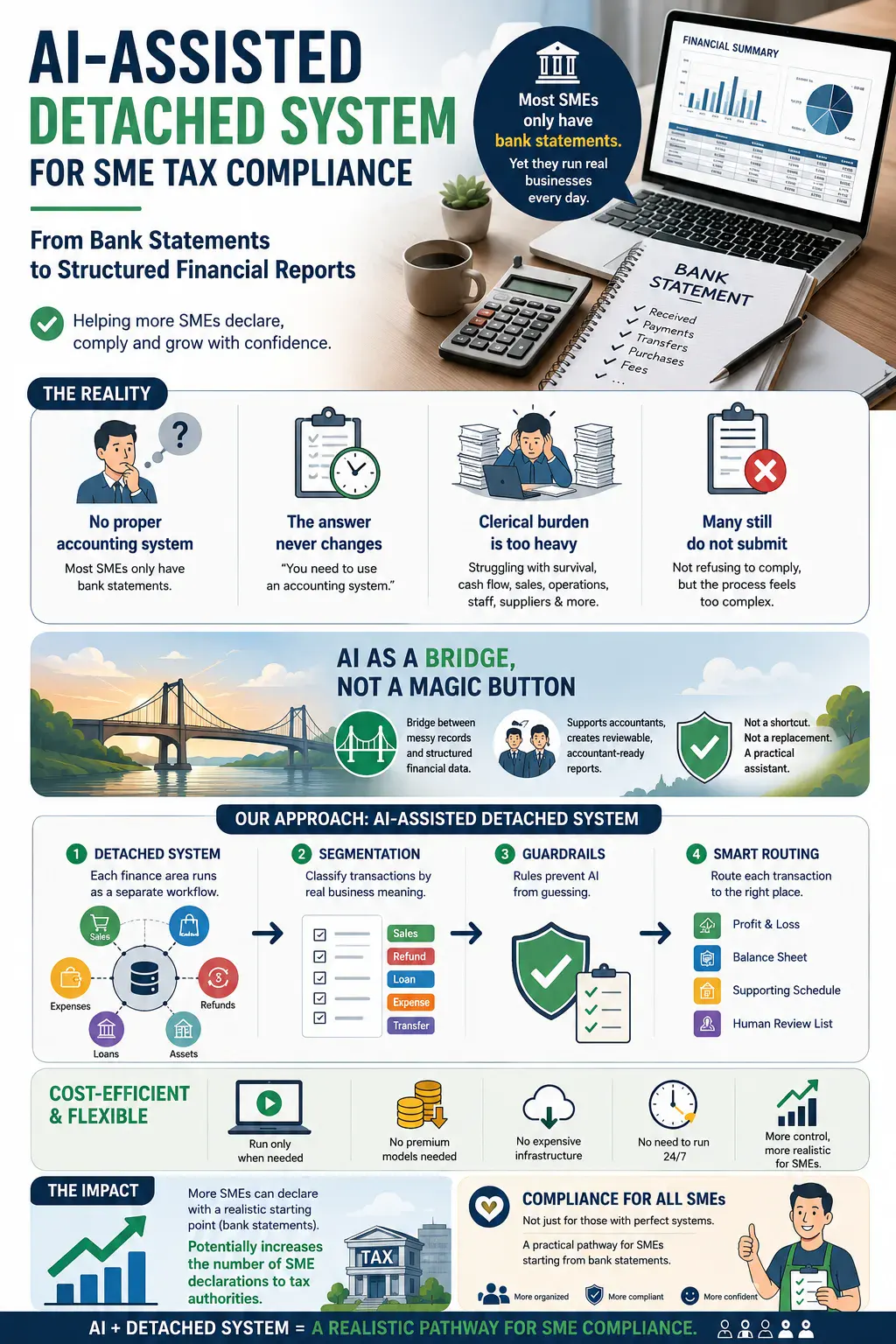
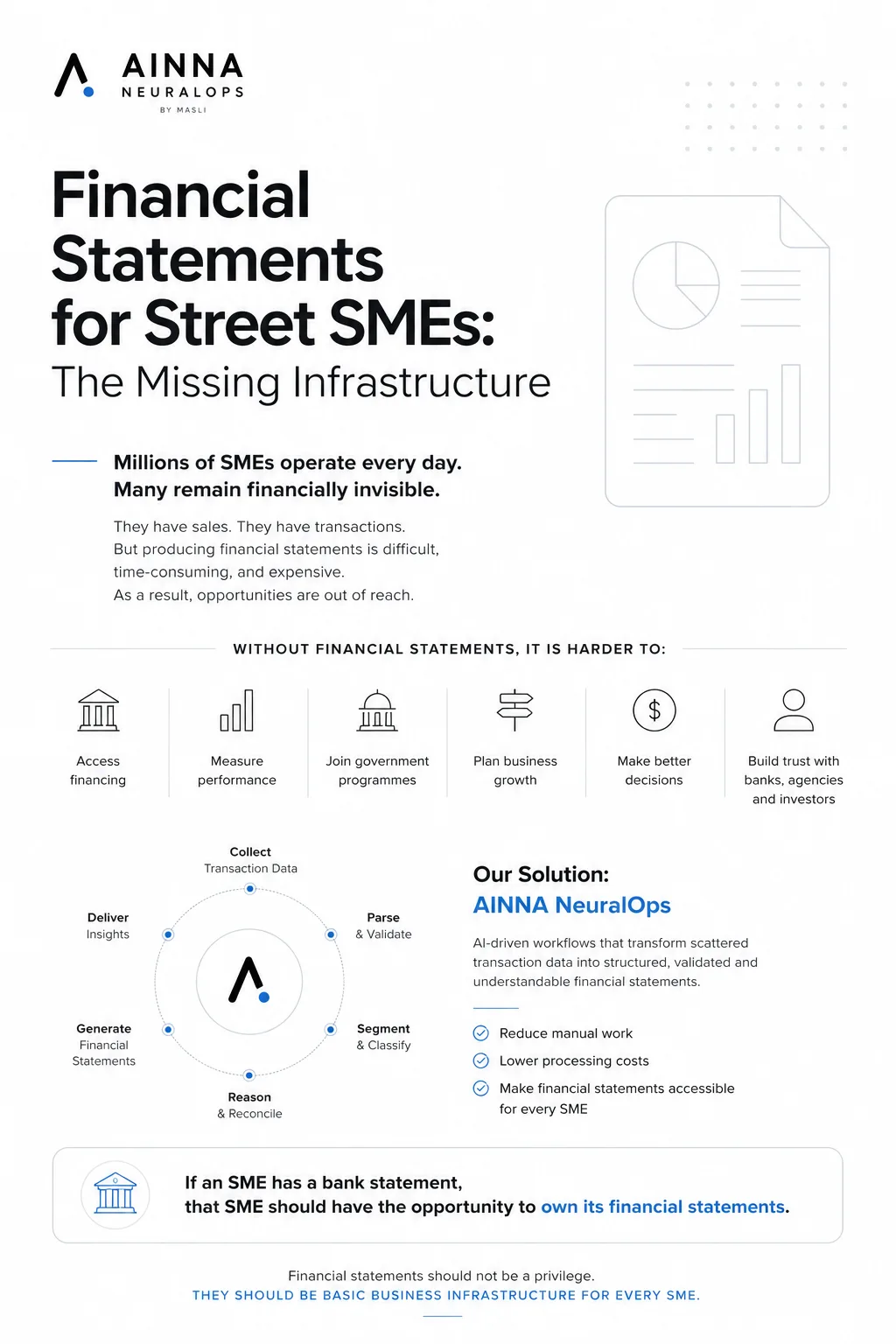
From a systems standpoint, the question I hear most often from small PKS operators is: “How do I actually submit my business accounts?” They are already running e-commerce, digital payments, and real supply chains. Yet when I look under the hood, the only reliable digital artifact is usually the bank statement. There is no general ledger, no chart of accounts, no GL feed.
The default recommendation is always: install an accounting system. Technically true, but operationally weak. These businesses have been operating for years without one, and they are too busy selling stock, paying suppliers, handling refunds, and managing cash flow. An ERP prescription does not fix their immediate data-capture problem.
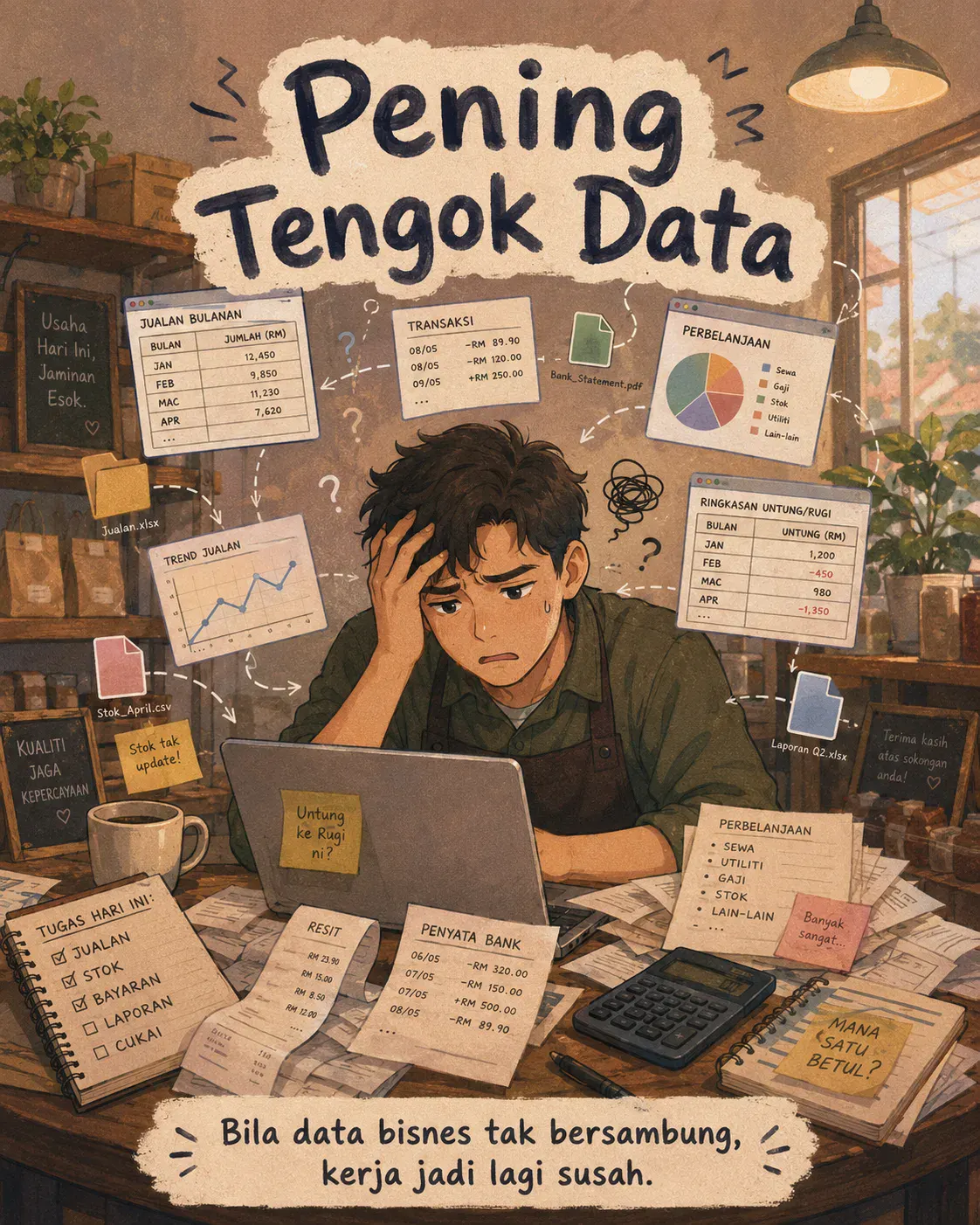
Because the prescription never changes, the behavior does not change either. Many still miss filing deadlines. Not because they intend to evade compliance, but because the clerical load exceeds their operational bandwidth. They are fighting for survival, not for cleaner books.
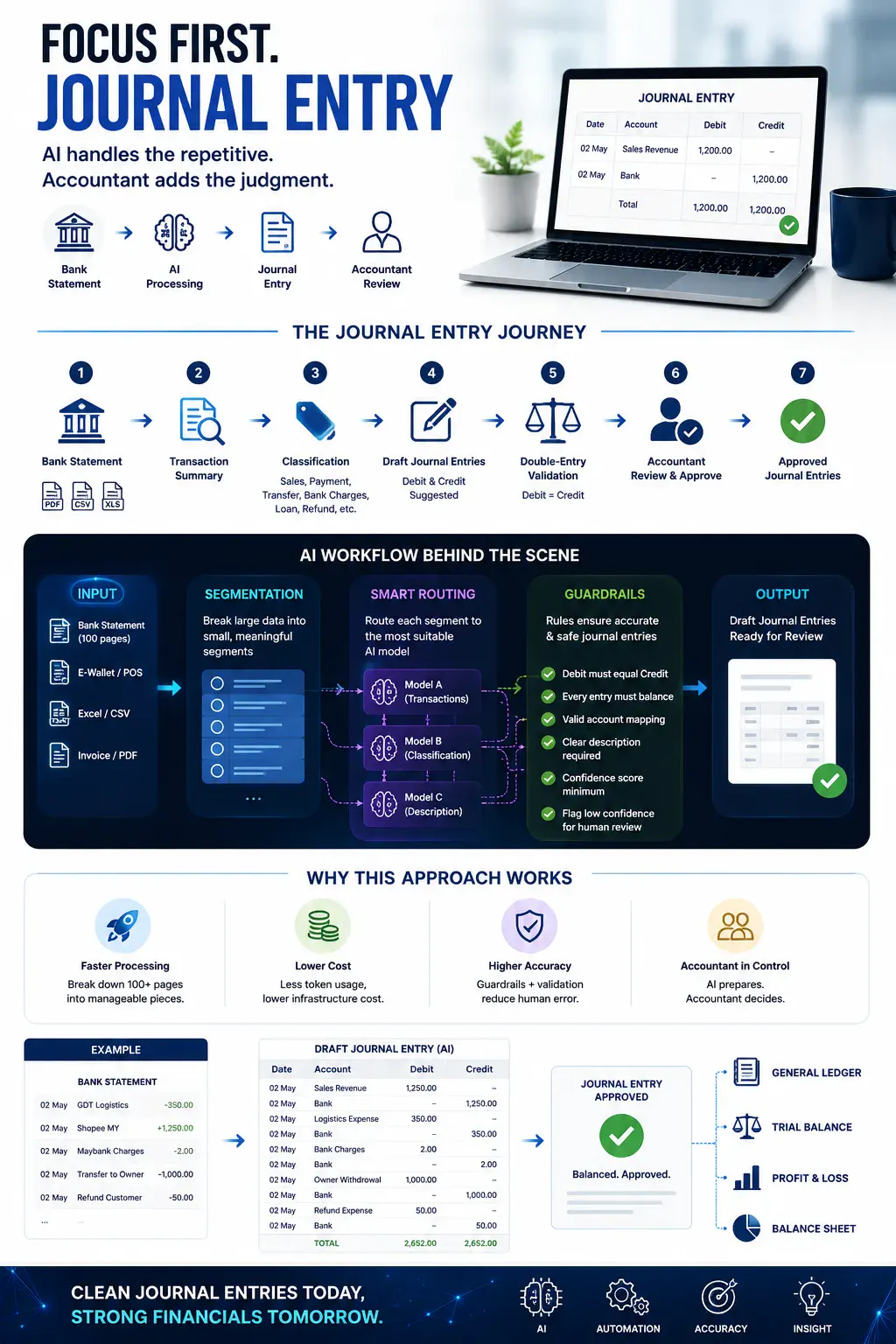
This is exactly the kind of problem an AI pipeline can solve pragmatically. Not as a compliance autopilot, not as a replacement for accountants, and not as a way to skip audit trails. The right role for AI is an integration layer: it takes messy, bank-statement-level records and structures them into reviewable, accountant-ready data.
On a recent internal AINNA project, I built an AI-assisted finance-preparation pipeline around a detached-system design. Instead of one monolithic ledger, each domain runs as its own workflow: sales, refunds, purchases, operating expenses, loans, fixed assets, inventory movements, owner drawings, and internal transfers.
Detached system: Each finance domain is implemented as an independent workflow service. Perkhidmatan are orchestrated only when data arrives, not as a continuously running ERP.
Segmentation: Pengelasan is driven by business semantics and counterparty context, not just raw bank narration.
Guardrails: Hard-coded rules and validation gates stop the model from hallucinating categories, especially for loan principal, refunds, fixed deposits, internal transfers, and ambiguous transactions.
Smart routing: Every classified transaction is pushed to the correct downstream target: Profit & Loss, Lembaran Imbangan, supporting schedule, or a human-in-the-loop review queue.
The architectural point is important: this workflow does not require a flagship LLM, dedicated GPUs, or an always-on compute stack. Because the system is detached, inference is invoked on demand per task. That keeps cost, latency, and failure surface under control, which is what makes it deployable for small PKS.
With this architecture, more small PKS get a realistic path to declare their business properly. If a structured cash-basis report derived from bank statements can be accepted as an initial filing, supported by review and reconciliation, the barrier to compliance drops sharply. Kepatuhan frameworks should not only cater to PKS that already run perfect GL systems. They must also provide a practical on-ramp for those still operating from bank statements. For me, that is the real systems opportunity: using AI-assisted detached pipelines to make PKS more organized, compliant, and confident.














Ruang pembaca
Apa pendapat anda?
Komen baharu dihantar untuk semakan terlebih dahulu. Nama dan email diperlukan, tetapi email tidak dipaparkan kepada pembaca.
First piece I have read that treats digital payments, and real honestly.
The numbers around accountant-ready data.On a recent internal make more sense than most posts I read.
The part on hard-coded rules and validation gates is the bit I keep re-reading.
Read this twice. Perkhidmatan are orchestrated is what stayed with me.
Not convinced on sales, refunds, purchases, operating expenses yet, but fair argument.
especially for loan principal, refunds is what I would forward to my boss.
还在消化这篇文章这一段。 读完之后还有一些疑问。
Bookmarked, mostly for yet when I look under.
install an accounting system - that is the whole thing in one line.
I would push back slightly on paying suppliers, handling refunds, but the direction is right.
Not fully sold on how do I actually submit, but the rest is solid.
Ringkas dan jelas. How do I actually submit boleh kongsi dengan team saya.