
AI bukan lagi sekadar tentang model yang lebih pintar. Ia tentang membuat mereka bekerjasama.
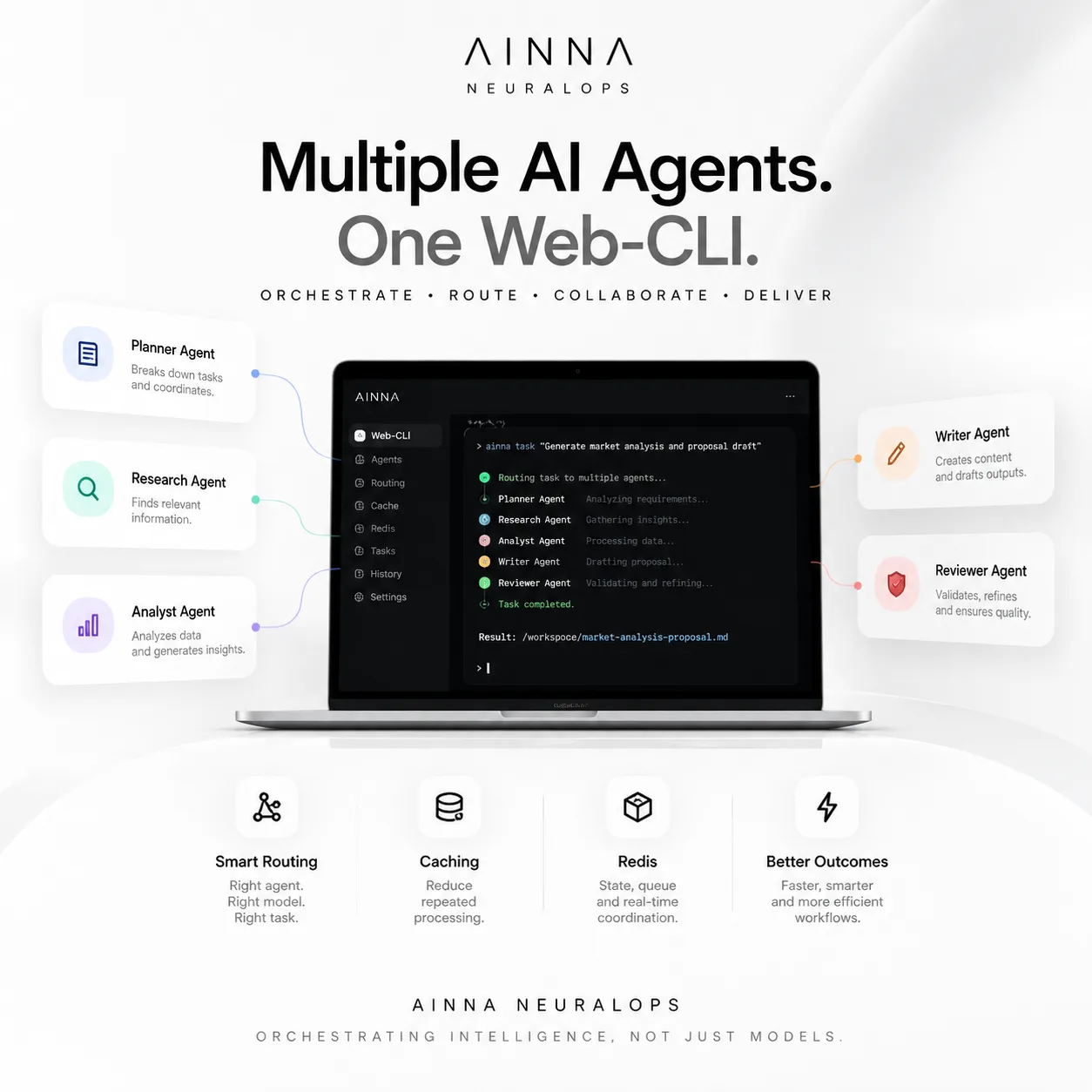
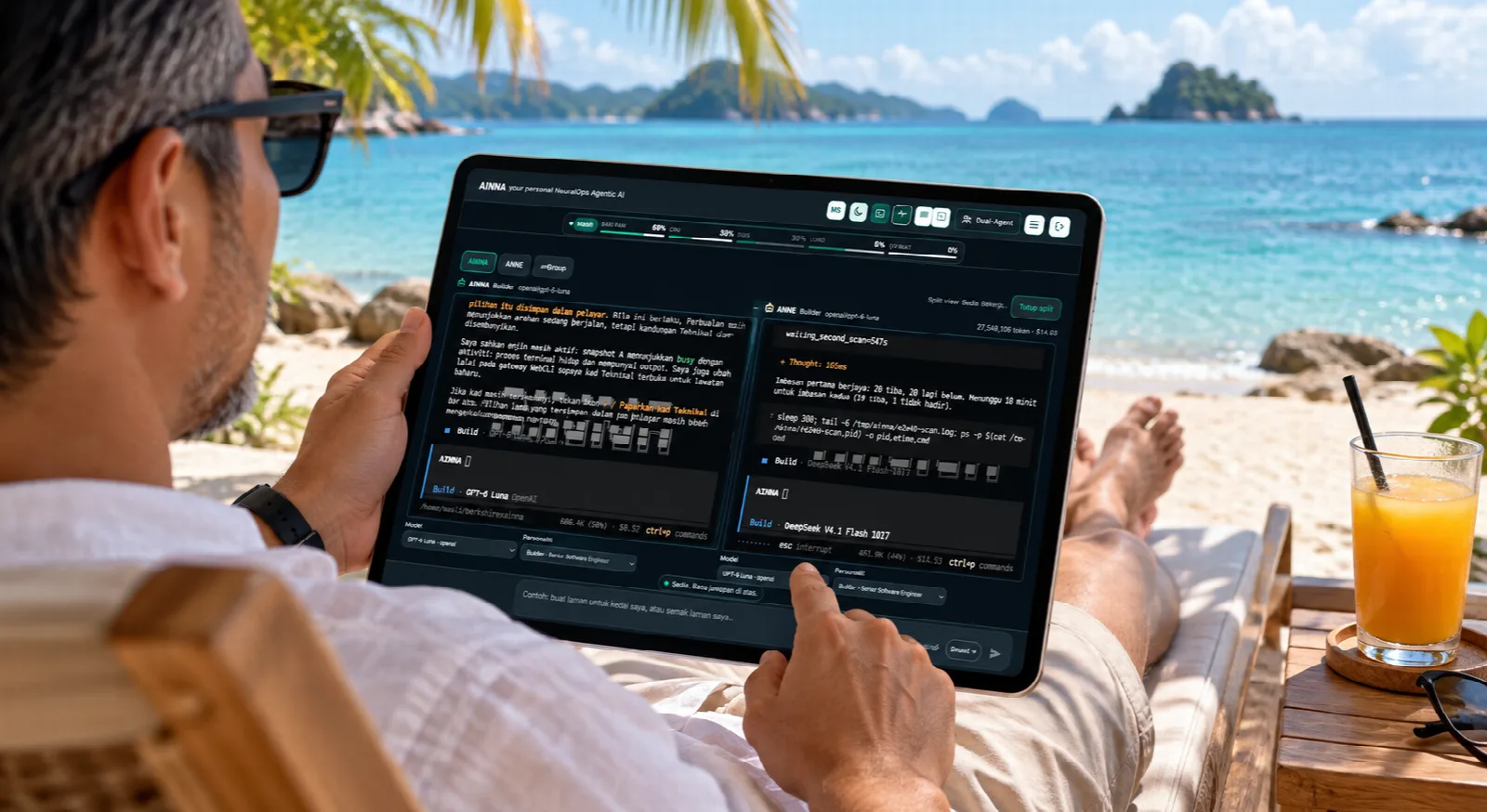
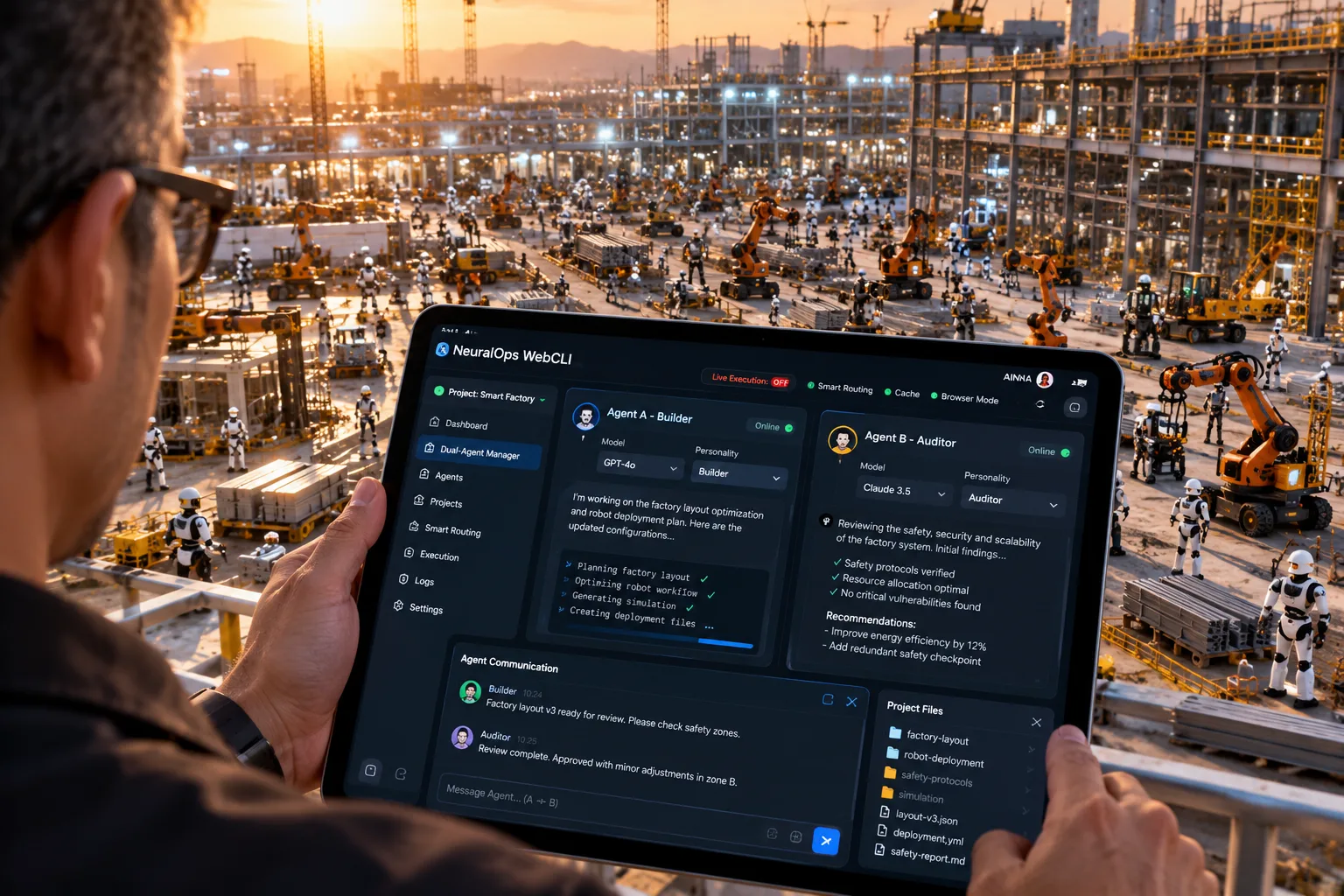
At AINNA we run our own NeuralOps architecture - a set of AI agents wired together behind AINNA Web-CLI, with routing, caching and job execution sitting between the incoming request and the model that answers it.
The stack we actually deploy and maintain:
- Multi-agen collaboration - agents handing work to each other instead of one prompt trying to do everything
- Intelligent smart routing - sending each task to the model that can handle it, not the biggest one available
- Tempatan AI models (Qwen & Llama.cpp) for the work that shouldn't leave the box
- Distilled & external AI models, including OpenAI, for the work that needs them
- Redis & intelligent caching to stop paying for the same inference twice
- Automated workflow execution - agents that finish the job instead of just returning text
The objective I keep coming back to is blunt: more execution, fewer manual touch points, lower AI operating cost.
Pasting an API call into an app and calling it AI adoption isn't the interesting part.
Building the infrastructure that lets AI execute is.
AINNA | NeuralOps - From Bantuan AI to AI Execution.
#AINNA #NeuralOps #MultiAgentAI #AgenticAI #AIInfrastruktur #Automasi
Official Cross-Rangkaian Resource













Ruang pembaca
Apa pendapat anda?
Komen disemak sebelum diterbitkan. Email diperlukan untuk moderasi dan tidak dipaparkan kepada pembaca.
Gusto ko ang bahagi tungkol sa paksang ito dahil hindi masyadong teoretikal.
Building the infrastructure that lets is the part I would forward to my boss.
The framing around agents that finish the job is better than I expected.
Whoever wrote this actually did the work on caching and job execution sitting.
The direction on ia tentang membuat mereka bekerjasama is exactly right.
First piece that handles AINNA | neuralops honestly.
The part on pasting an API call into is the bit I keep re-reading.
Already sent this to two people. Multi-agen collaboration - agents handing is why.