
Flash LLMs are increasingly capable when they are integrated with AI agents, production alatan, structured workflows, and enforceable guardrails.
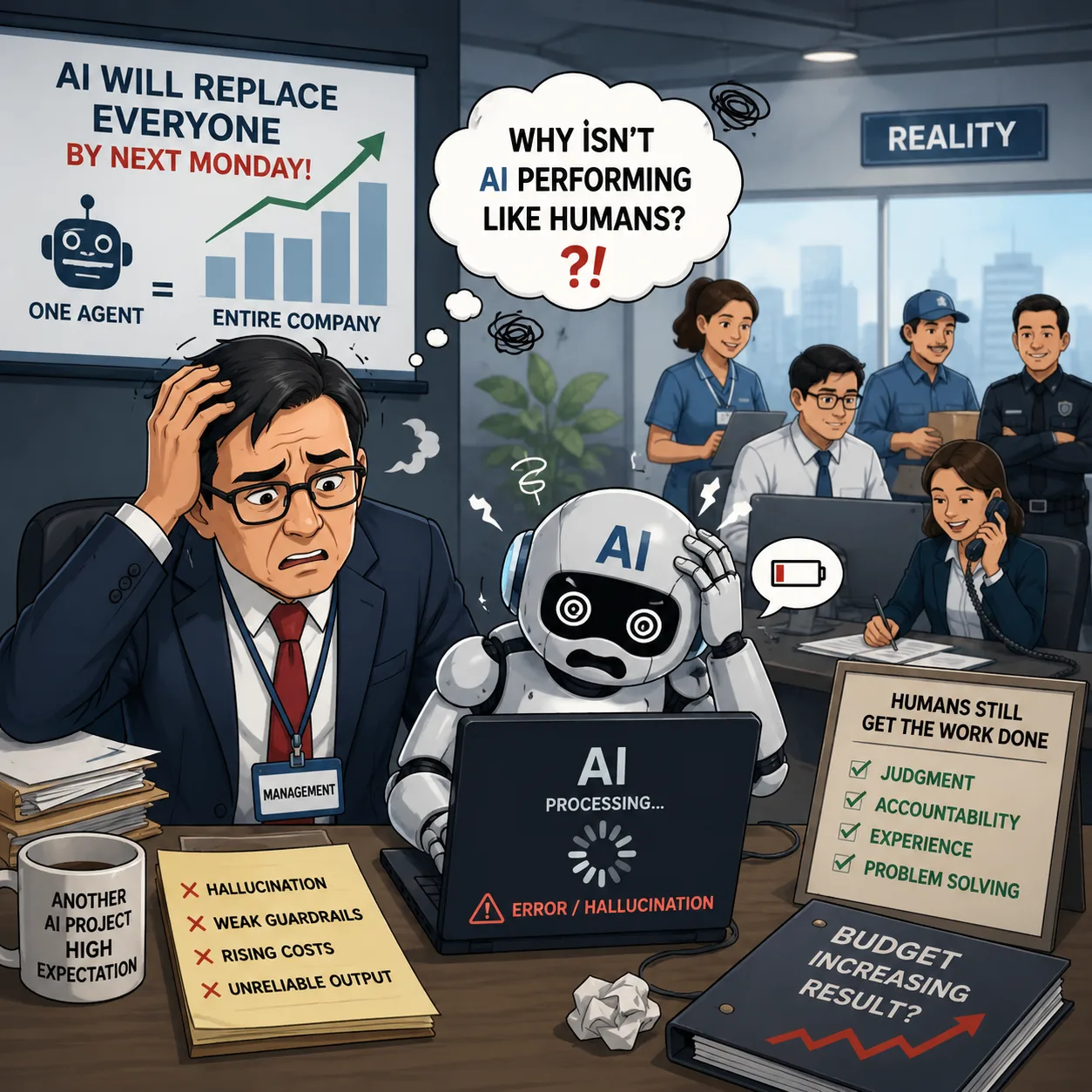
From an engineering perspective, the advantage is no longer determined by model size alone. It depends on how effectively the model is orchestrated inside the complete system.
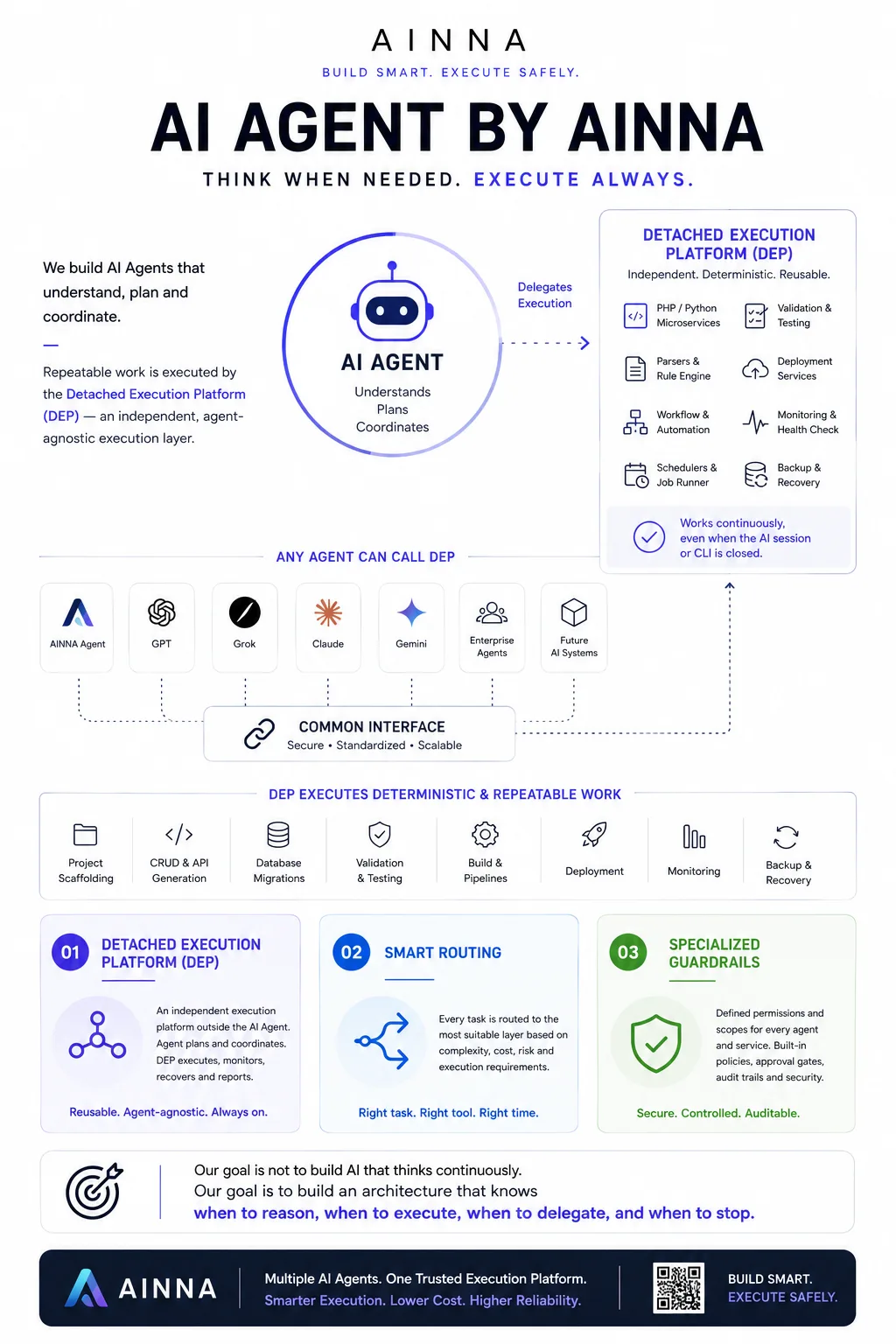
At AINNA, Agent TC works with an Ejen AI adapted from a well-known open-source foundation and integrated with AINNA guardrails, permission controls, workflow logik, and operational infrastructure.
The implementation boundary is deliberate: the LLM handles tasks that require reasoning, while deterministic services, parsers, validation layers, and automation handle predictable operasi.
Enterprise AI will not be defined by brute-force compute alone.
It will be defined by architecture that can be deployed, monitored, controlled, and maintained in real operating environments.
#AINNA #NeuralOps #AIAgent #LLM #EnterpriseAI #AIInfrastructure #Automasi #Guardrails















Ruang pembaca
Apa pendapat anda?
Komen baharu dihantar untuk semakan terlebih dahulu. Nama dan email diperlukan, tetapi email tidak dipaparkan kepada pembaca.
この説明の続編があればぜひ読みたいです。
Es la primera vez que leo algo honesto sobre este tema.
Agent TC works - sums the whole thing up.
Useful. We are handling permission controls, workflow logik right now.
Not convinced on monitored, controlled, and maintained yet, but fair argument.
Dah hantar pada dua orang. Sebab agen TC works.
parsers, validation layers, and automation is the part I would forward to my boss. It make the point easier to understand.
Whoever wrote this actually did the work on production alatan, structured workflows.
Not sure I agree with open-source, but the rest holds up.
Clearer than the vendor decks I get about well-known.
Saya kurang setuju sikit pasal agen TC works, tapi arah dia betul.