How We Bina Selamat Infrastruktur AI for PKS
Building AI that actually runs in production is not about picking the biggest model. It is about engineering the system that hosts, routes, protects, and recovers it.
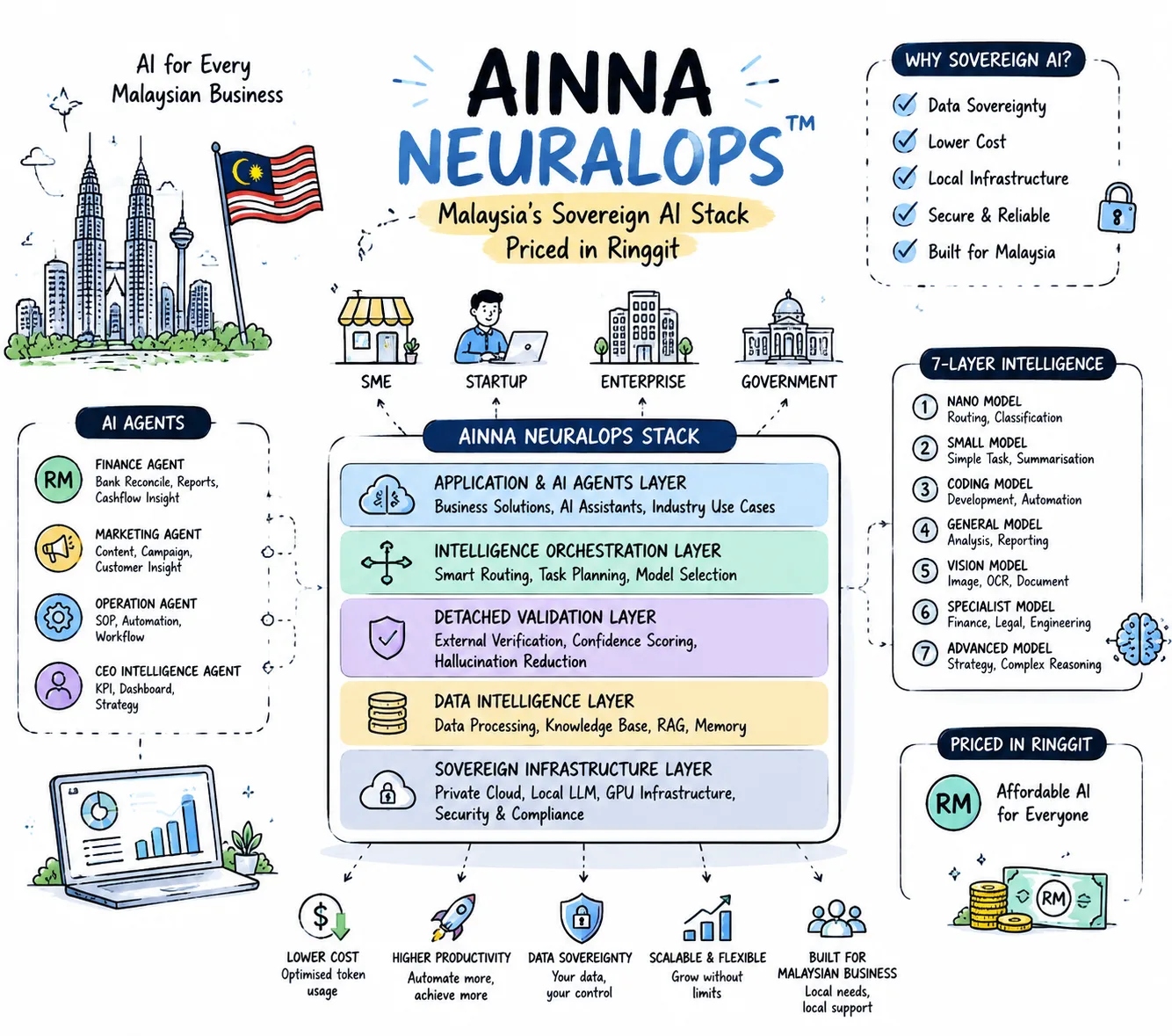
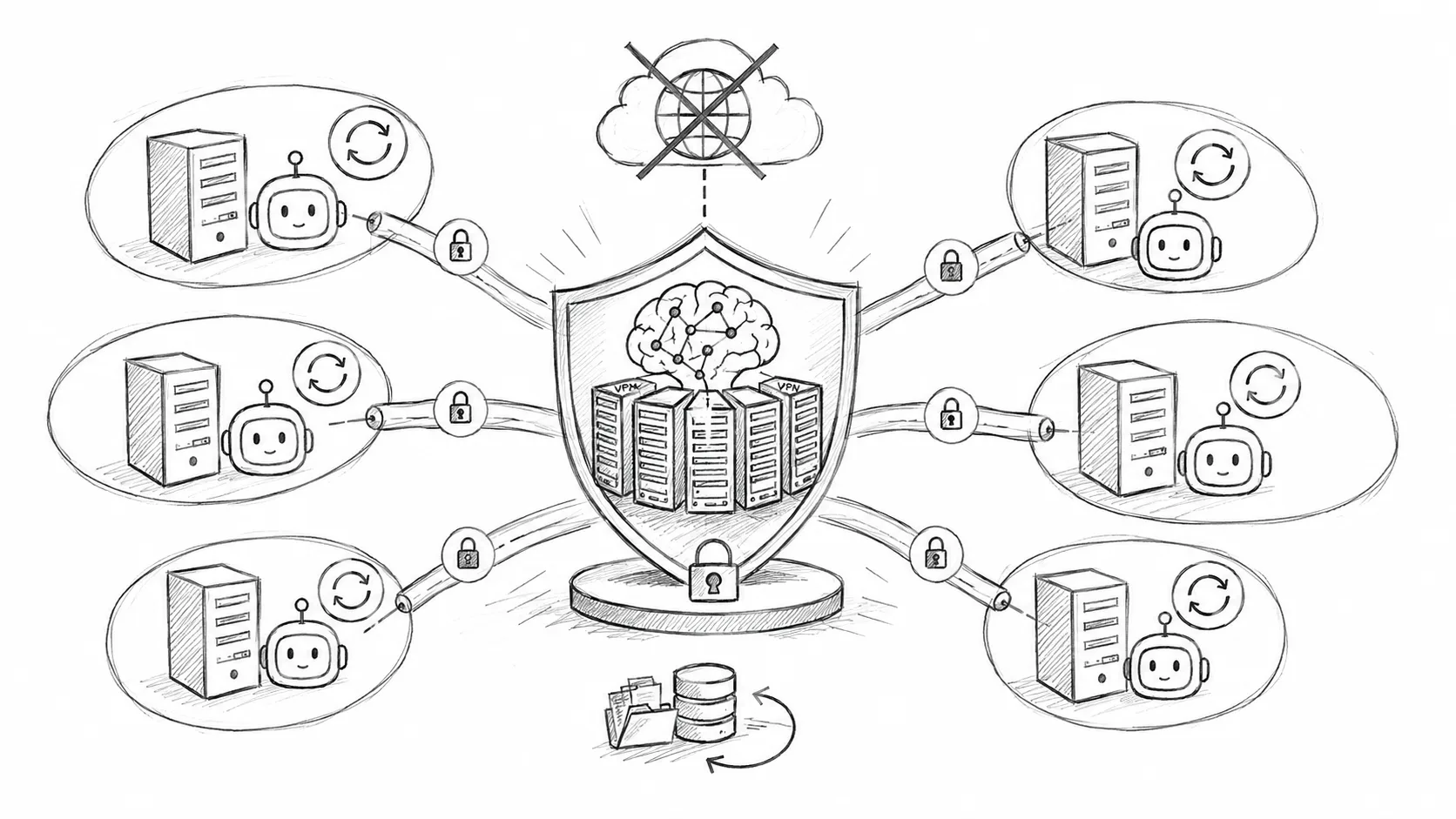
At AINNA, we run enterprise-grade AI infrastructure for PKS as a set of isolated, self-contained environments. Privasi, isolation, resilience, and operational control are not add-ons; they are the base layer of the design.
Every customer gets its own dedicated VPS. Ejen, internal apps, and business workflows run inside that boundary, independent of any other tenant. The only path to the central AI layer is through a private VPN tunnel; the core model hosts never touch the public internet directly.
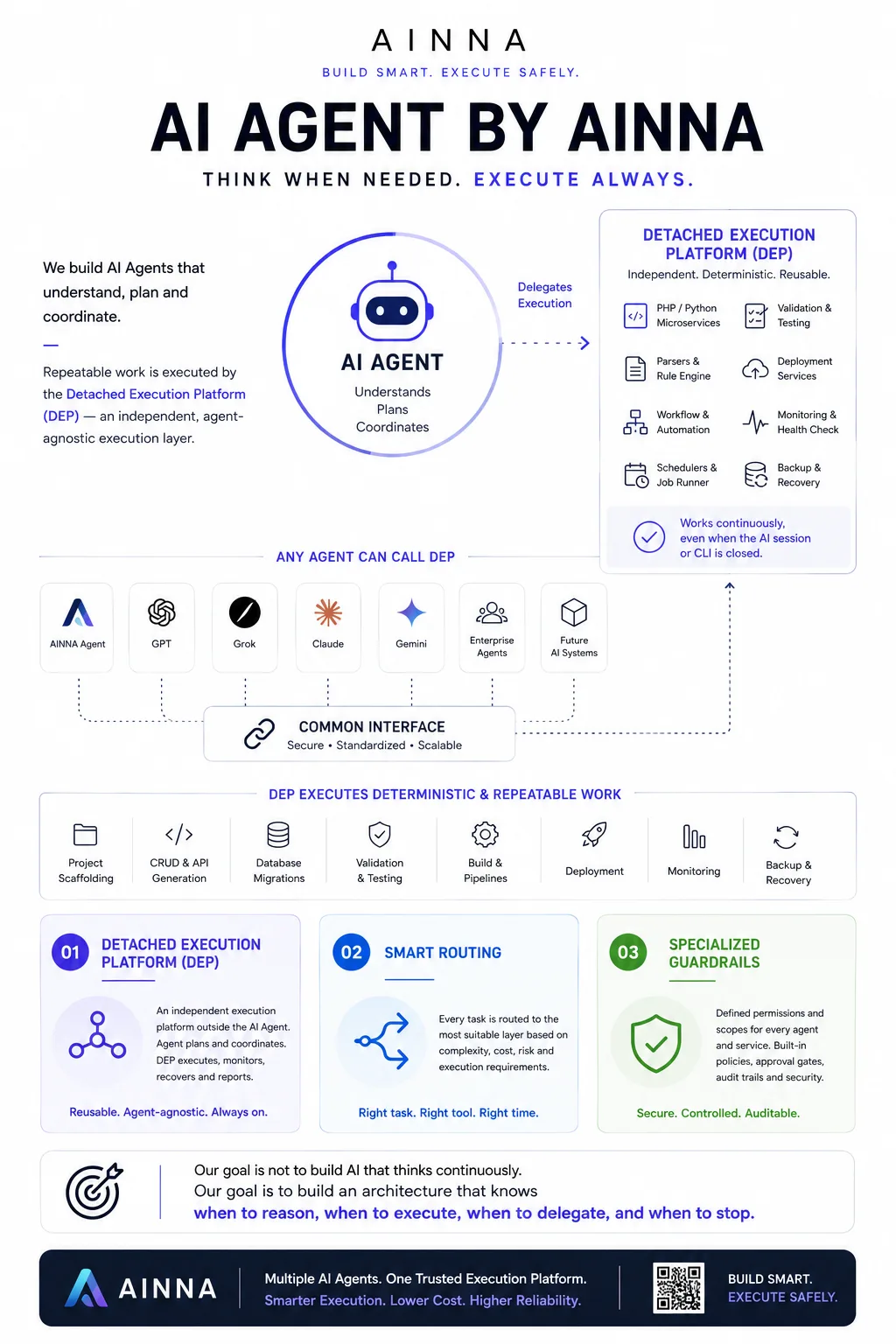
The model layer itself sits on hardened open-source foundations such as Qwen or DeepSeek, then fine-tuned, wrapped, and optimised for the specific automation and decision workflows PKS actually use.
Resilience is built in at the host level. We keep scheduled snapshots and recovery points for each VPS, so when a bad update, broken config, or flaky service appears, we can roll back fast. The goal is to cut downtime and keep blast radius small.
Keselamatan is isolation first. If a customer environment looks suspicious, we revoke its VPN credentials or quarantine the VPS without affecting other tenants or the shared AI backend. That is the difference between perimeter security and real tenant separation.
What you get is a practical detached architecture: workloads stay split, the intelligence layer stays protected, and each environment can be patched, scaled, restored, or cut off on its own.
PKS should get serious AI denganout trading away security, privacy, or uptime.
Powerful AI starts with secure, resilient infrastructure.