Right now, every engineering thread is talking about AI agents.
Almost nobody is talking about the system design that actually decides whether an AI deployment survives in production.
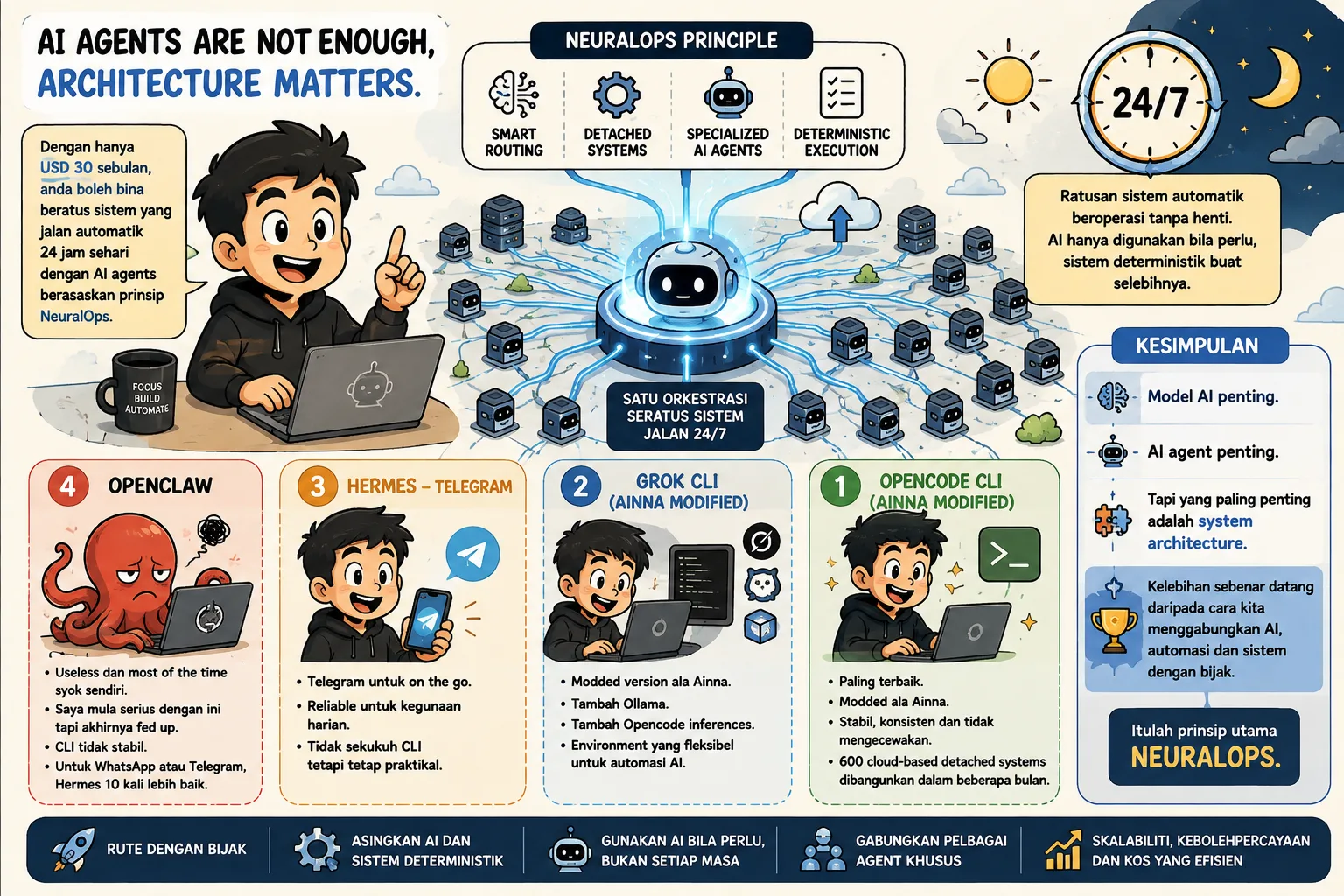
For about USD30 a month, almost anyone can subscribe to an LLM and spin up hundreds of autonomous systems running 24/7. Access is no longer the bottleneck.
The hard part is picking the right architecture, orchestration pattern, and agen profile for the workload.
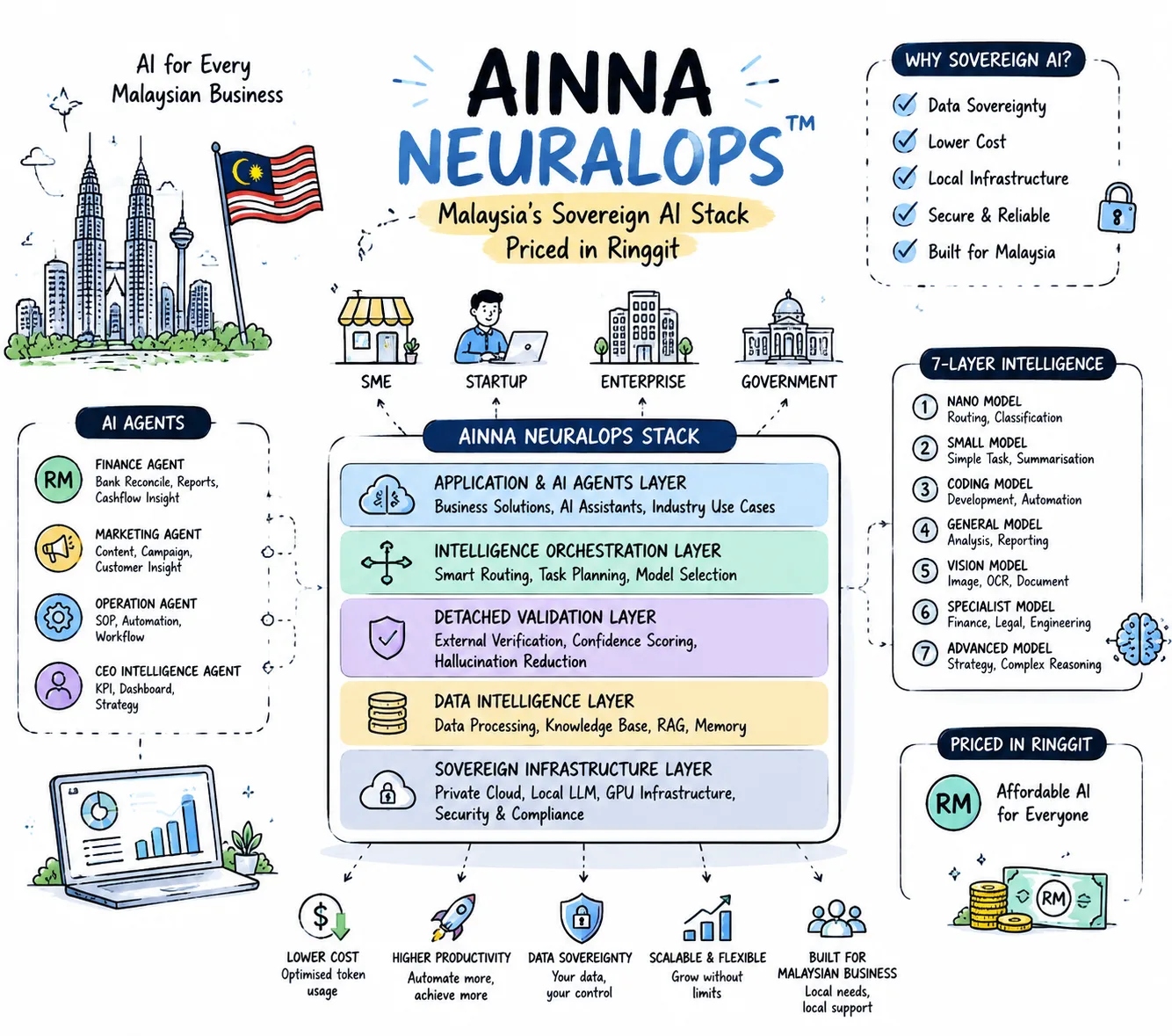
At AINNA, the autonomous systems we ship are built around NeuralOps principles:
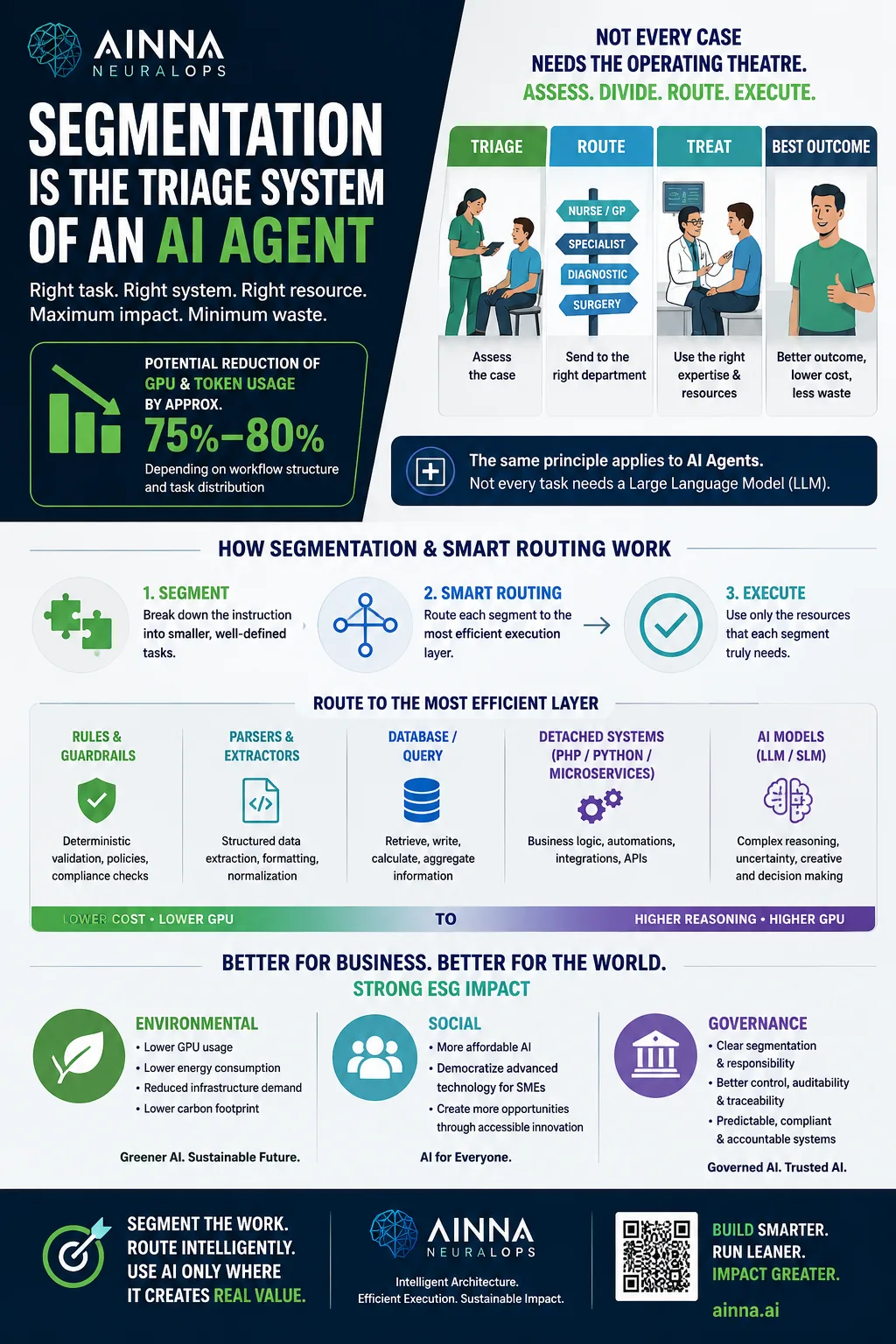
- Smart Routing
- Sistem Berasingan
- Specialized Ejen AI
- Deterministic execution wherever AI is unnecessary
That lets us invoke AI only where real reasoning is needed, and let deterministic code handle the rest.
The outcome is lower operating cost, lower token burn, higher reliability, and easier scaling.
Field Notes
Over the past several months, I have put multiple AI agen ecosystems through real production and pre-production workloads.
4. OpenClaw
OpenClaw is an impressive open-source project with broad channel integrations and an ambitious roadmap.
In my own field tests, it was the least suitable option for our stack.
I put a lot of hours into it because I genuinely believed in the vision.
Eventually I was spending more cycles debugging platform instability than shipping product.
For the systems we ship, it became hard to trust as the primary production layer.
That is not a knock on OpenClaw as a project; it just was not the right fit for how we build production AI systems.
3. Hermes
Hermes became my go-to mobile companion.
When I am on the road or away from my workstation, the Telegram integration makes it extremely practical.
It is not as capable as a full CLI workflow, but for quick approvals, monitoring, and lightweight automation, it performs well.
2. Grok CLI (AINNA Modified)
We heavily modified the CLI environment, integrating:
- Ollama
- OpenCode inference workflows
- Internal orchestration
- Detached execution pipelines
The result is a practical dev environment that coordinates multiple AI tasks efficiently.
1. OpenCode CLI (AINNA Modified)
This is now the backbone of our engineering workflow.
After extensive customization around the NeuralOps architecture, OpenCode gives us the most reliable experience for large-scale AI engineering.
Using this approach, we built approximately 600 cloud-based detached systems in just a few months.
The lesson is simple:
The AI model matters.
The AI agen matters.
But neither is the biggest differentiator.
System architecture determines whether AI becomes an expensive demo or a scalable production platform.
The Future of AI
The next generation of AI will not be defined by who has the biggest model.
It will be defined by who builds the best orchestration.
Organizations that win will:
- Route intelligently.
- Separate deterministic logik from AI reasoning.
- Activate large models only when necessary.
- Combine multiple specialized agents instead of relying on one general-purpose assistant.
- Treat AI as infrastructure-not merely as a chatbot.
In the coming years, competitive advantage will belong not to companies that consume the most AI, but to those that use AI dengan the greatest efficiency.
That is the operating principle behind NeuralOps.
Official Cross-Network Resource