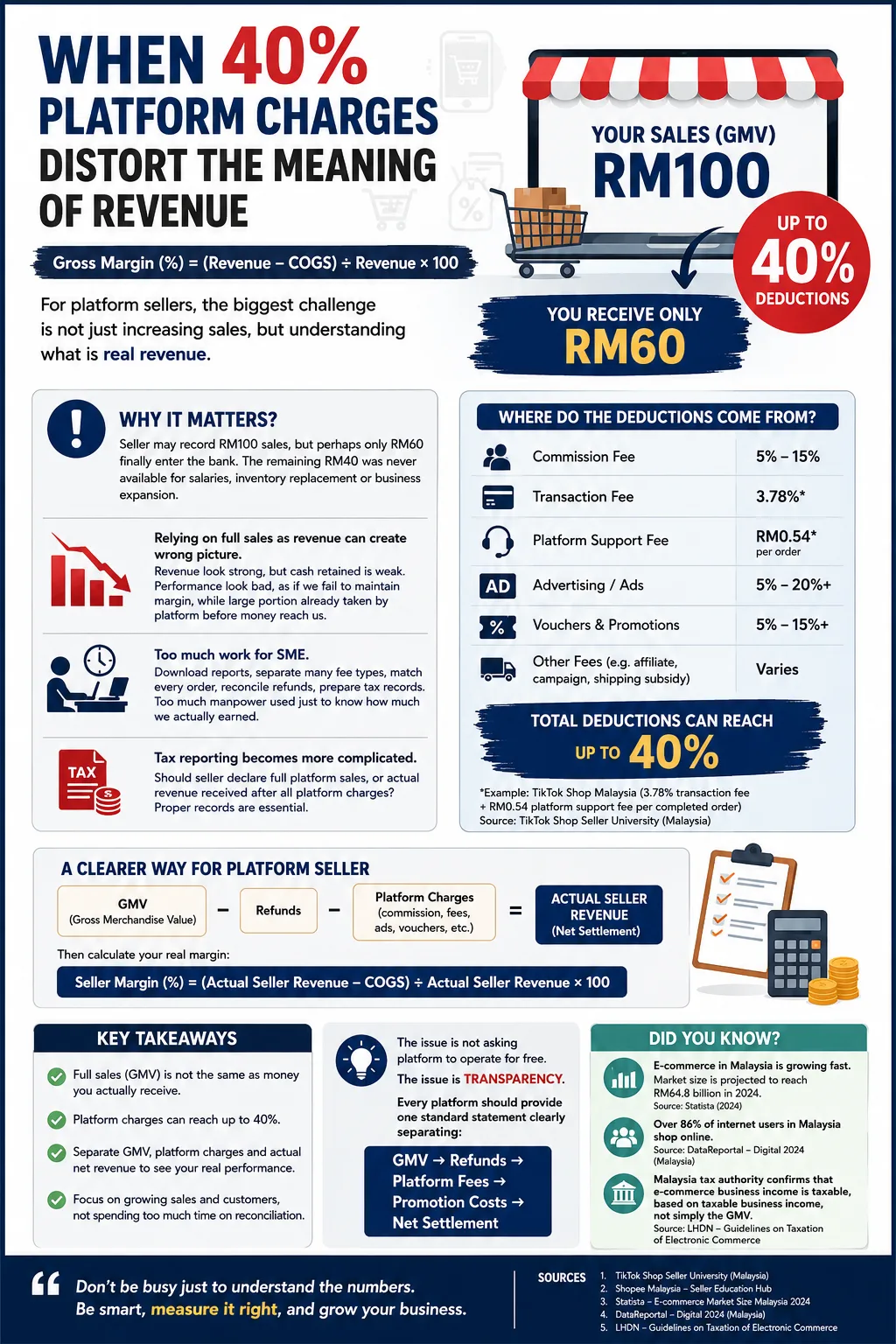
Gross Margin (%) = (Hasil – COGS) ÷ Hasil × 100
This formula looks simple on a dashboard. But for platform sellers, the term revenue is no longer a clean signal-it is an overloaded variable that depends on how far down the settlement pipeline you measure it.
Platform sellers run a multi-stage deduction pipeline. Each order passes through commission fees, transaction fees, platform support fees, affiliate commissions, ads, vouchers and seller-funded promotions. TikTok Shop Malaysia, for example, publishes category-based commission, a 3.78% transaction fee and RM0.54 platform support fee per completed order. Shopee Malaysia runs a similar stack: commission, a 3.78% transaction fee and platform support fee. (TikTok Shop)
Stack all of these together and the effective deduction rate on some campaigns can approach 40%.
A seller may see RM100 in gross sales on the front-end dashboard, but only RM60 may settle in the bank. The remaining RM40 never hits the account and is therefore unavailable for payroll, inventory replenishment or reinvestment.
Under IFRS 15, revenue recognition depends on whether the business acts as a principal or agen. A principal generally recognises gross revenue and books platform fees as separate operating expenses. An agen recognises only its fee or commission. So remapping your accounting revenue directly to the platform settlement amount is not always technically sound. (IFRS Asas)
But from an operational systems standpoint, relying on gross GMV alone gives management a distorted signal.
A seller can show strong top-line revenue but weak cash retained. Internal reports then look like margin failure, when in fact a large slice of the value was siphoned off by the platform before settlement.
In my view, PKS need two distinct telemetry channels:
Perakaunan Hasil = Gross sales recognised under the applicable accounting treatment
Actual Seller Hasil = GMV – refunds – platform charges – seller-funded promotions
Then you calculate an internal margin from the cash-side signal:
Seller Margin (%) = (Actual Seller Hasil – COGS) ÷ Actual Seller Hasil × 100
The bottleneck is not just the margin calculation.
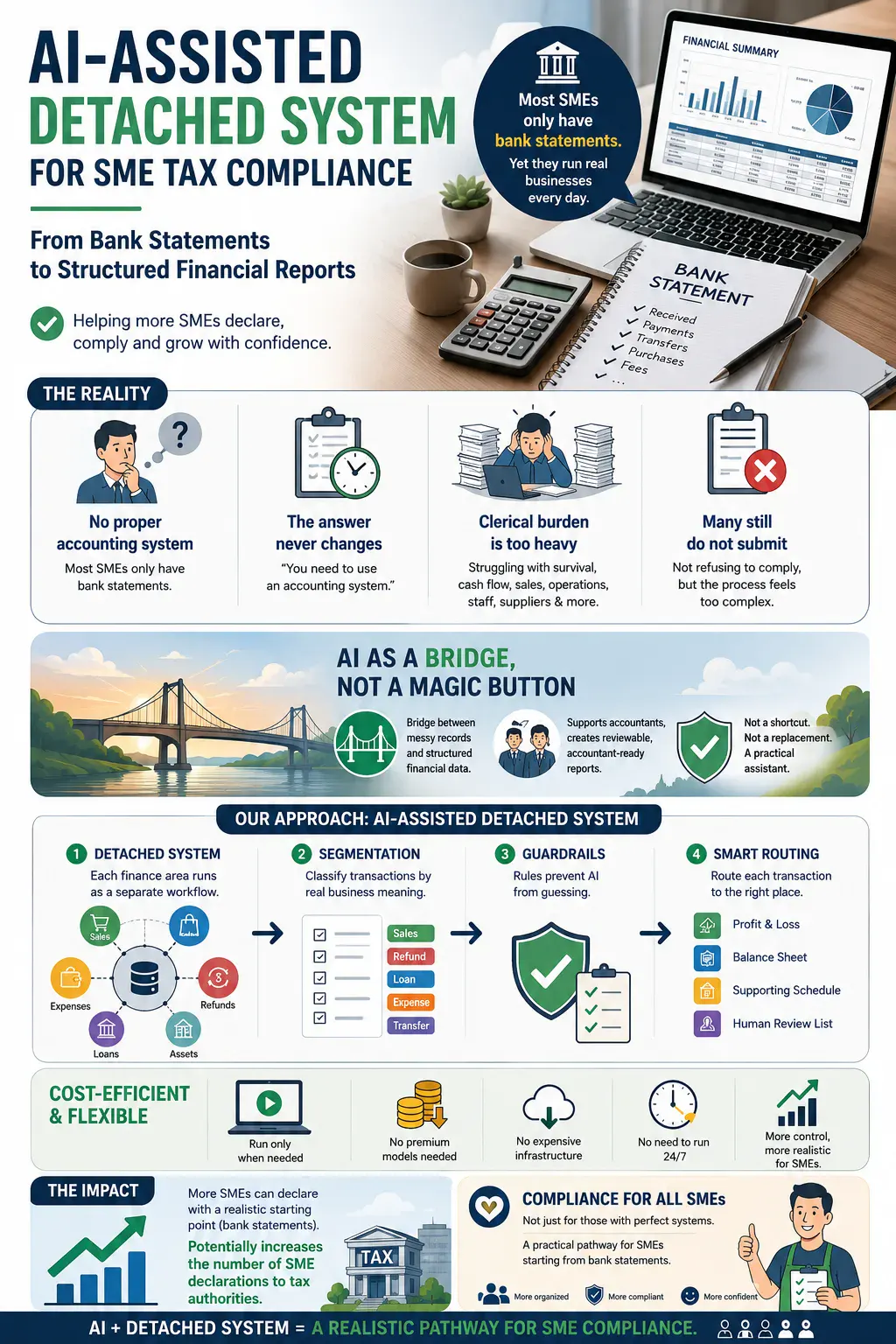
Engineering and operations teams have to download settlement reports, split fee types, match each order, reconcile refunds and build tax-ready records. That is a lot of manual ETL work just to answer a basic operations question-how much cash did the seller actually retain?-pulling resources away from product improvement and demand generation.
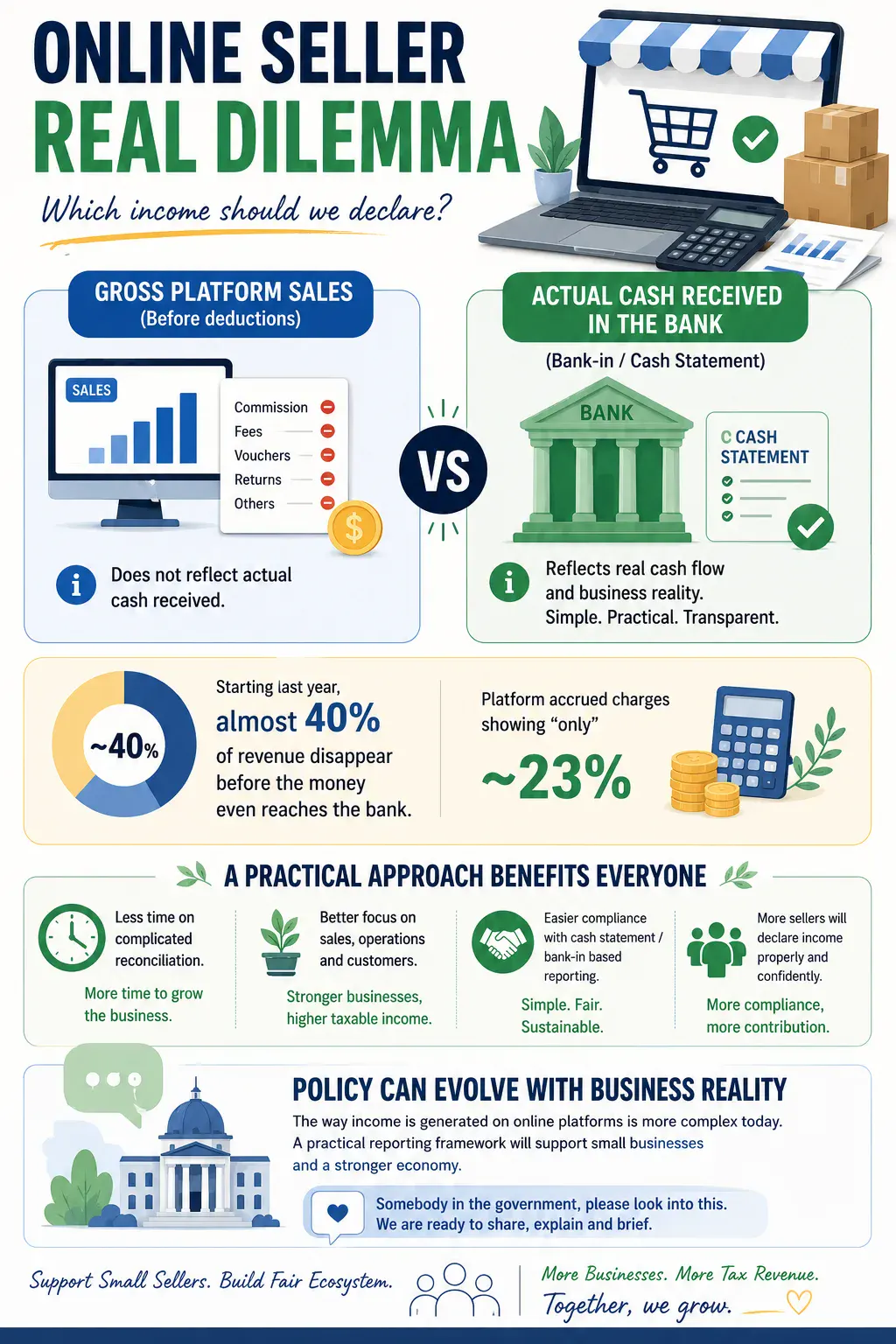
Malaysia’s tax authority confirms that e-commerce income is taxable, but tax is generally assessed on taxable business income-not the raw marketplace GMV shown on the dashboard. Proper records of income and deductible business expenses are still required. (lampiran2.hasil.gov.my)
This is not an argument that platforms should work for free.
The engineering ask is transparency.
Every marketplace should expose a single, standardised settlement statement with clear data lineage:
GMV → Refunds → Platform Fees → Promotion Costs → Net Settlement
Without that, an PKS can look healthy on the sales dashboard while the bank statement tells a completely different story.














Ruang pembaca
Apa pendapat anda?
Komen disemak sebelum diterbitkan. Email diperlukan untuk moderasi dan tidak dipaparkan kepada pembaca.
100の数字は他の記事より納得できます。
This is where gross margin (%) = (Hasil finally makes sense.
The framing on platform sellers run a multi-stage is better than expected.
may see RM100 RM100 is what I would forward to my boss.