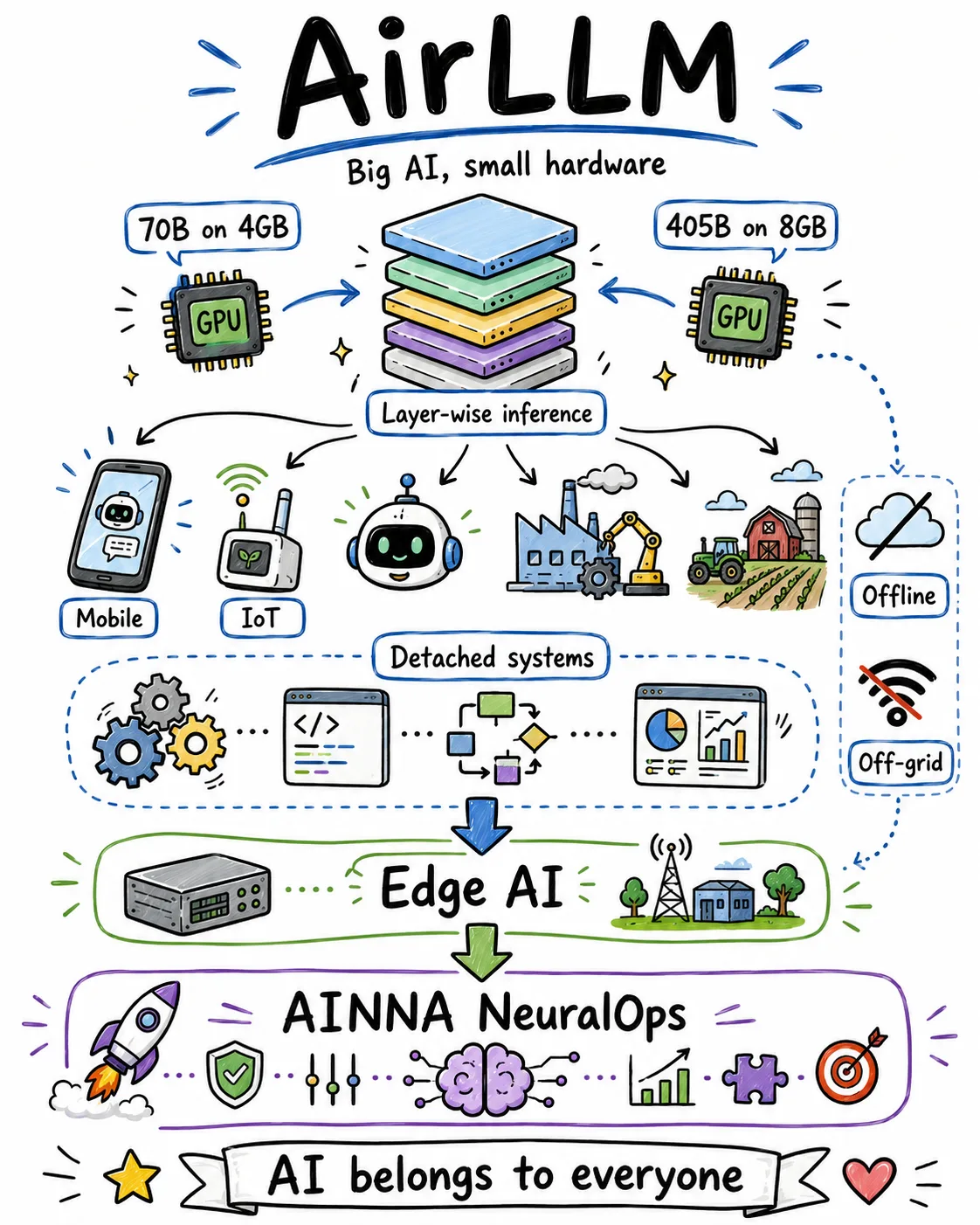
AirLLM is the kind of systems-level shift that changes how we size and deploy AI infrastructure in the field.
You can now run a 70B model on a 4GB GPU and push experiments toward the Llama 3.1 405B with only 8GB VRAM - that is not marketing hype, that is a real memory-and-compute architecture shift.
For years, real AI felt locked behind hyperscaler racks, monster GPUs, and enterprise cloud contracts. Everyone else was essentially renting intelligence by the token.
That narrative is changing fast. Layer-wise inference, tighter memory management, and open-source tooling are putting large models within reach of small teams, PKS, student labs, researchers, and local builder communities.
The real permainan changer is not only bigger models. It is how we run them - lighter, smarter, more local, more efficient, and actually useful in production.
This is where Edge AI and AINNA NeuralOps come in. Instead of routing everything through a cloud API, intelligence can live closer to the device, the sensor, the machine, the farm, the factory - the actual operation on the ground.
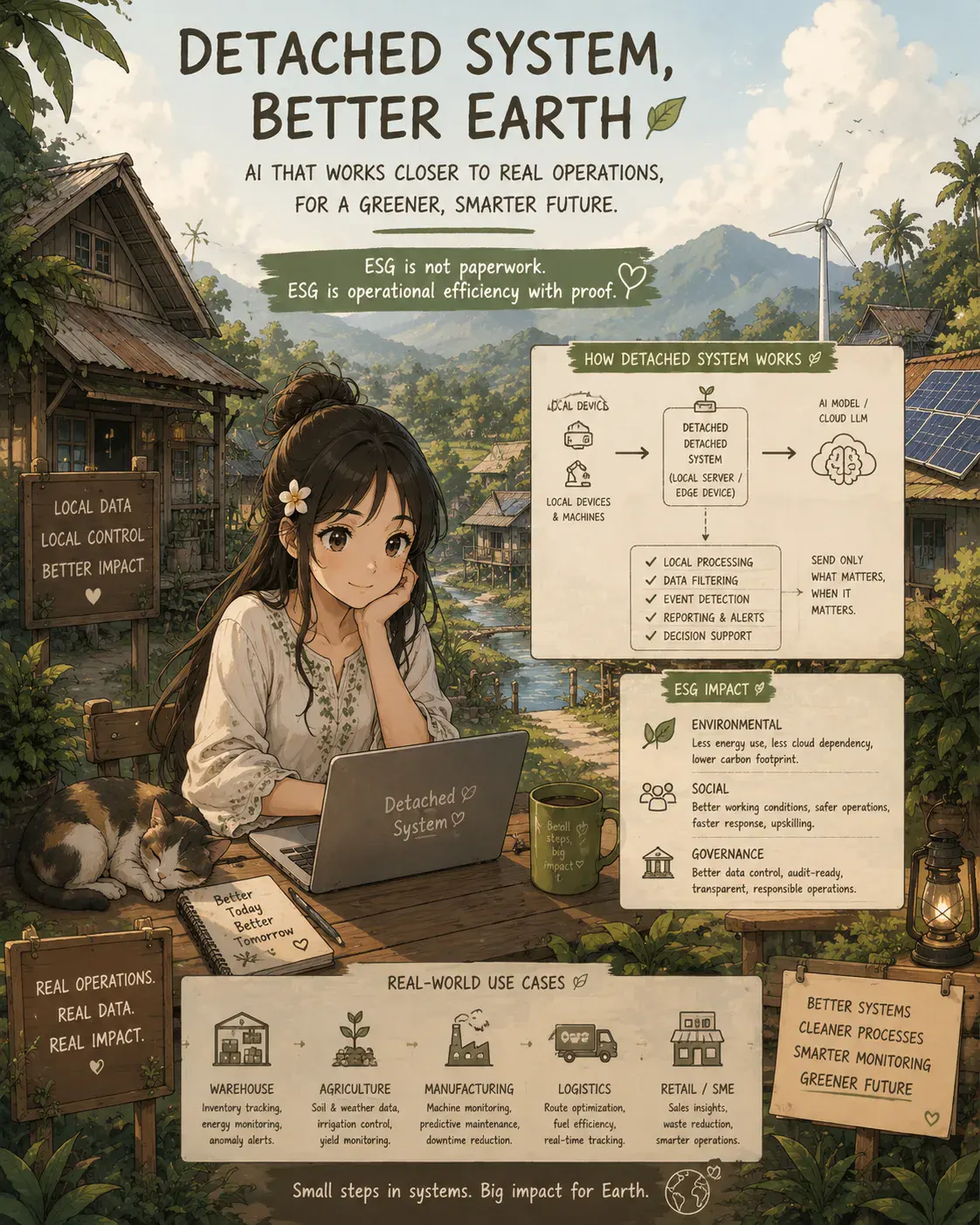
Combine that with detached execution and the impact gets stronger. Let the LLM plan, audit, generate, and decide - then hand off to local scripts, dashboards, cron jobs, APIs, sensors, and automation systems that keep working without burning tokens around the clock.
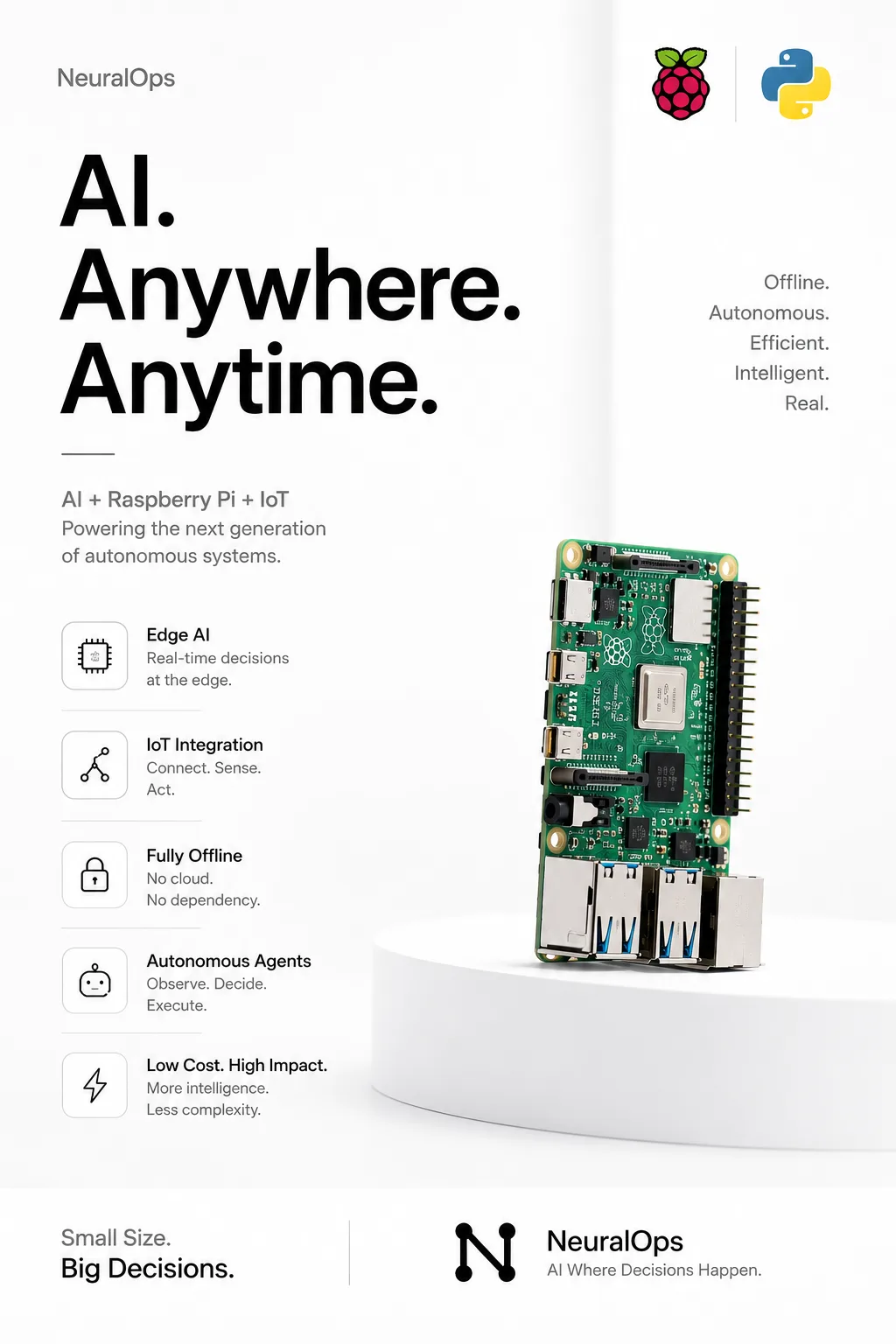
Soon, mobile devices and IoT systems will run their own small LLMs offline and off-grid. That is the AI future I am building toward: practical, lightweight, local, and genuinely accessible - not hype, not cloud lock-in, and definitely not just for big tech.















Ruang pembaca
Apa pendapat anda?
Komen disemak sebelum diterbitkan. Email diperlukan untuk moderasi dan tidak dipaparkan kepada pembaca.
Bahagian 70B tu yang paling kena dengan saya.
Combine that with detached execution is what I would forward to my boss.
Honestly model on a 4GB caught me off guard.
Good write-up. real AI felt locked behind alone was worth the read.
intelligence can live closer - that is the whole thing in one line.