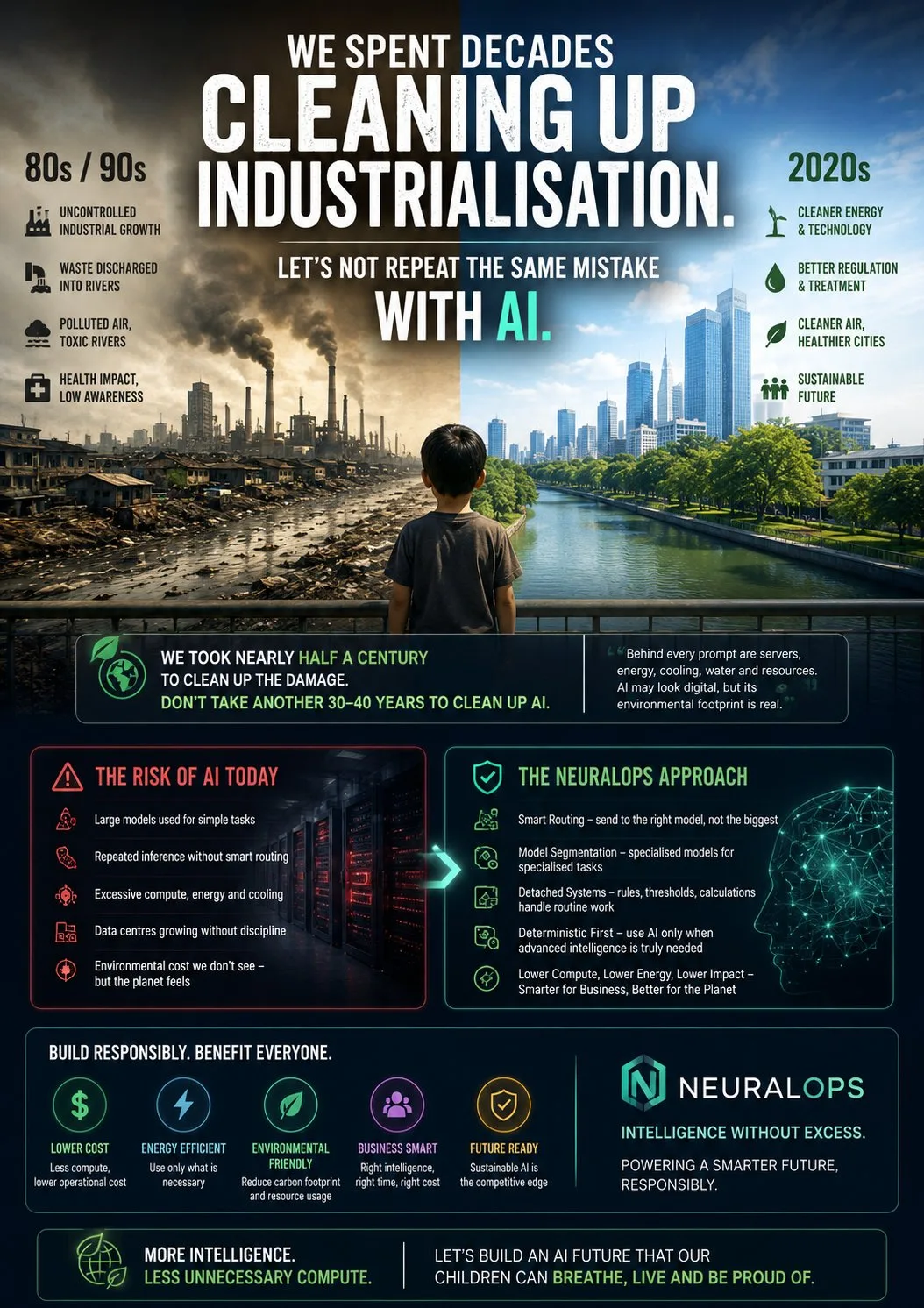
I've spent my career building and deploying AI, IoT and neural systems in production environments, and the design principle that guides my work didn't come from a whiteboard. It came from watching industrial systems scale lebih pantas than the controls meant to contain them. I grew up in the 1970s, an era when that gap was everywhere. One of the cities I lived in for decades was once known for being heavily polluted, and the river there was, at times, very toxic.
Malaysia was not alone. Across the world, factories expanded rapidly, agriculture intensified, livestock production increased, and waste controls were still weak. The infrastructure went in first; the monitoring, regulation and remediation layers were added later.
By the 1980s and 1990s, environmental awareness campaigns had become more visible. Cleaning rivers, improving air quality and changing industrial practices required regulation, infrastructure, technology and, most importantly, time. Those were systems-integration problems as much as policy problems.
I still remember being in Busan, Korea in 1998. After being caught in heavy rain during a period of severe pollution, I became seriously ill for a long time. It was a stark reminder that when environmental controls fail, the health impact is immediate and the recovery is slow.
From the 2000s onward, the world started making significant progress. Persekitaran standards improved, wastewater treatment expanded, renewable energy grew, cleaner transportation became mainstream and EV adoption accelerated. China, Korea, Malaysia and many other countries invested heavily in improving the conditions created during earlier decades of uncontrolled industrialisation.
Today, many cities are dramatically cleaner than they were thirty years ago.
That progress should remind us of something important: environmental damage is not inevitable, but preventing it early is far easier than repairing it later. The same rule should govern how we design AI systems.
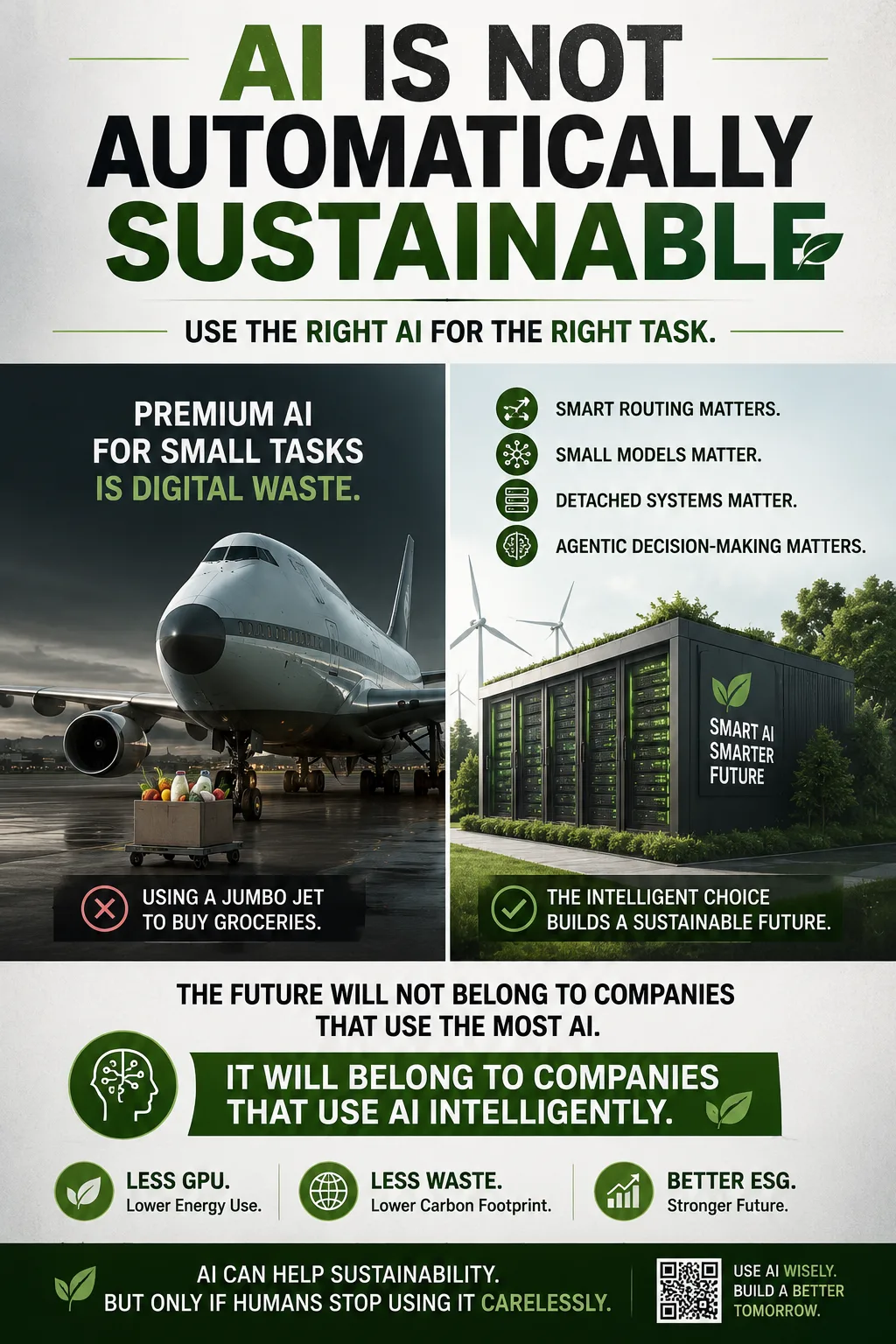
This is why I am increasingly concerned about the way Artificial Intelligence is being deployed in the field. Large models are often called for simple tasks, inference is repeated unnecessarily, and systems are built without proper routing, segmentation or deterministic processing. Behind every AI request are GPUs, servers, electricity, cooling systems, water and physical infrastructure. AI may look digital, but its environmental footprint is very real.
The problem is not AI. The problem is using AI denganout engineering discipline. We spent decades cleaning up the consequences of uncontrolled industrialisation. We should not repeat the same mistake with Artificial Intelligence. At NeuralOps, the principle we apply in production is simple: use advanced AI only when advanced intelligence is genuinely required. Smart Routing, specialised models, detached systems and deterministic processing can reduce unnecessary compute while preserving capability where it matters. Bina more intelligence. Use less unnecessary compute. Design responsibly from the beginning.
















Ruang pembaca
Apa pendapat anda?
Komen disemak sebelum diterbitkan. Email diperlukan untuk moderasi dan tidak dipaparkan kepada pembaca.
إذا كان هناك جزء آخر عن 1970 فسأقرأه.
Worth reading for up in the 1970 alone.
Clearer than the vendor decks I get about i've spent my career building.
Sent this to two people already. regulation and remediation layers is why.
That point about ioT and neural systems is well put.