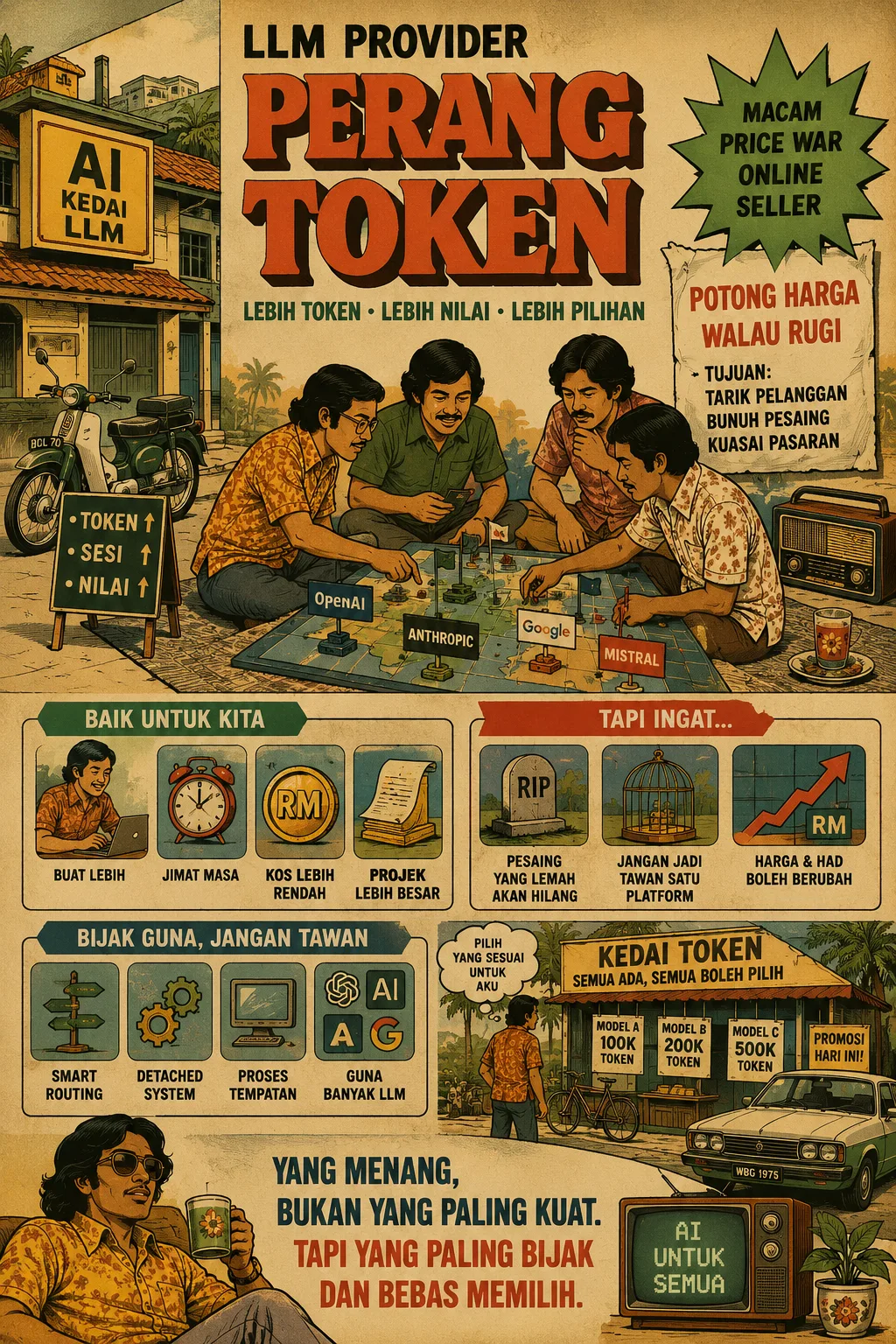
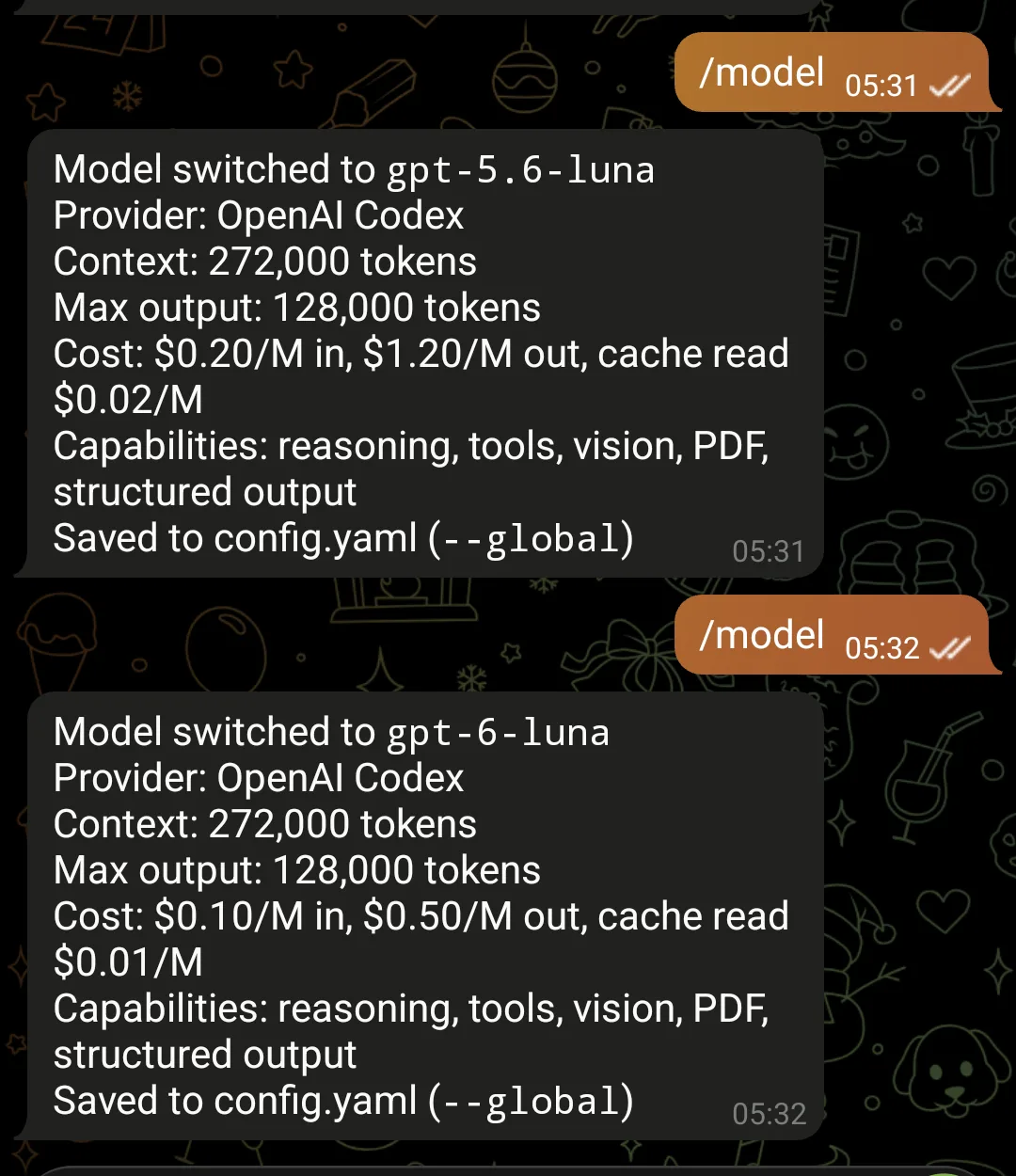
From a cost-accounting standpoint, several LLM providers are quietly increasing the maximum token allowance available per session.
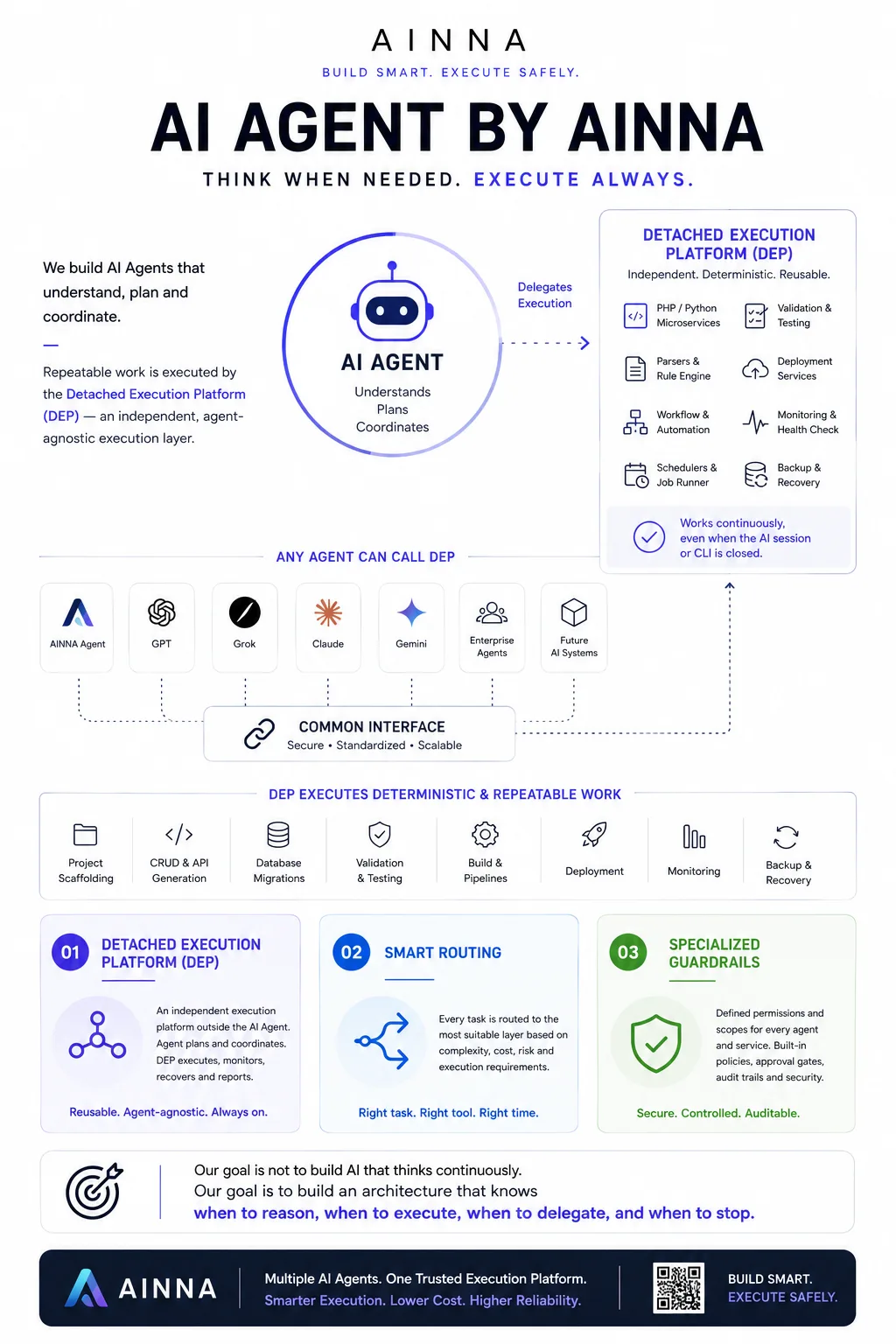
Our NeuralOps engineers recently overhauled and distilled the parsing engine behind AINNA's Sistem Berasingan. Under previous token limits, a complex build of this scale would have exhausted the full session allocation within minutes. After several hours, the remaining balance was still material.
That is a leading indicator of a wider competitive shift. LLM vendors are no longer competing only on model intelligence. They are now racing on context-window length, usage limits, per-token unit cost, response speed and accessibility.
It resembles the price wars we observe among online sellers.
Some sellers keep cutting prices even when gross margins turn negative. The immediate objective is not profit; it is customer acquisition, market-share capture and the removal of weaker competitors that lack the balance-sheet strength to survive without a large, sticky customer base.
LLM providers may now be entering a similar phase. By offering more tokens, longer sessions and better effective value, they aim to lock users onto their platforms before rivals can build stronger switching costs and customer loyalty.
For Malaysian PKS, the short-term benefit is real and measurable. Lagi work can be built, tested and deployed within the same Ringgit-denominated operating budget. Tasks that previously required multiple sessions, repeated prompts and constant context rebuilding can now be completed in a single continuous workflow, reducing both labour cost and project completion risk.
Yet price wars rarely last indefinitely. Once weaker competitors exit and users become concentrated around a small number of incumbents, pricing, usage limits and access terms are likely to tighten again.
The accounting lesson for PKS is therefore clear: treat the current race as a temporary cost advantage, not a permanent cost structure. Take the subsidy while it exists, but avoid vendor concentration. Use Smart Routing, Sistem Berasingan, local processing and multiple LLM providers wherever operationally feasible.
The long-term winner will not be the company running the most powerful LLM. It will be the company that can switch providers without writing off its knowledge assets, retain control of its own data and continue operating profitably when vendor economics change.
#ArtificialIntelligence #LLM #AICompetition #DetachedSystem #SmartRouting #Distillation #Automasi #PerniagaanStrategy #NeuralOps #AINNA













Ruang pembaca
Apa pendapat anda?
Komen disemak sebelum diterbitkan. Email diperlukan untuk moderasi dan tidak dipaparkan kepada pembaca.
เห็นด้วยเรื่องบทความนี้ และทิศทางชัดเจน
I read this twice. tested and deployed within is the part that stuck.
The direction on repeated prompts and constant context is exactly right.