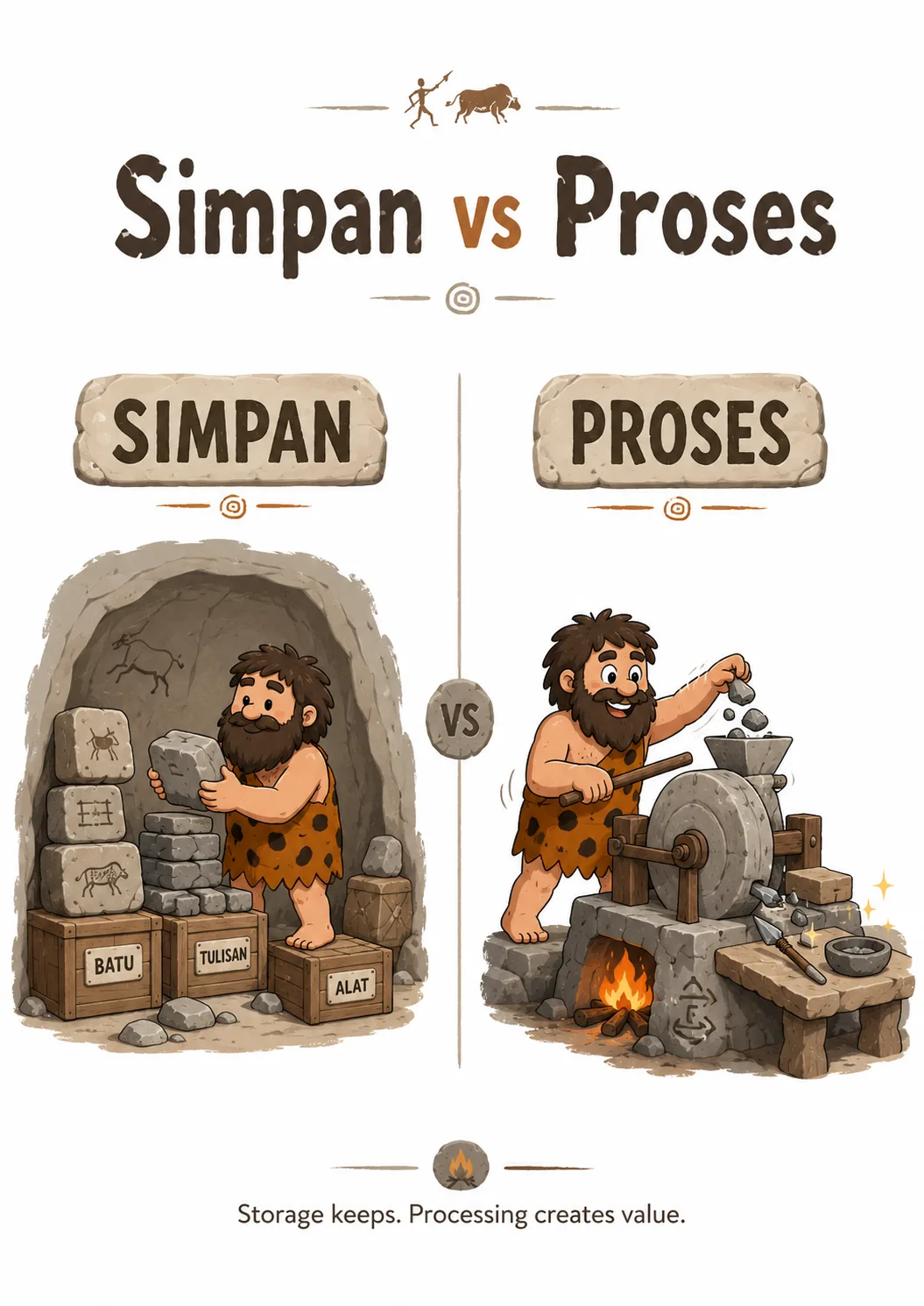
Data centres were once booked as capital expenditure for storage depreciating assets that held databases, backups, websites and servers. But AI is rewriting that classification. Today, the balance-sheet value of a data centre lies increasingly in productive compute capacity, not the capacity to store alone.
AI inference, model serving, analytics, automation, simulation and agentic workloads are all cost drivers that depend on compute. In that sense, a modern data centre should be treated as productive processing infrastructure an operating asset that generates value through throughput, not just capacity.
Think of it as a fixed-asset problem. A machine's worth is not measured by how much inventory it can hold, but by the value of work it can perform. AI serves a different purpose, but the underlying economics are the same: processing power carries real economic value and should be recognised as an income-generating asset rather than dormant capacity.
And that processing power consumes real operating resources: electricity, cooling, GPUs, networking, land and facilities. So the right capital-allocation question is no longer only, "How much data can we store?" but also, "How much computation can we process and control locally?"
This is where public finance and procurement thinking has to be more disciplined when approving large-scale data centre investments. If these facilities consume significant national resources, the return should not be limited to land leases, construction spend, jobs or electricity revenue. There should also be a clear allocation of compute capacity for domestic use especially untuk PKS Malaysia, universities and government workloads.
Without that allocation, Malaysia effectively subsidises foreign processing demand with local land, power, cooling and infrastructure, while local companies still pay premium rates for the compute they need. That is a poor return on national assets and a missed opportunity to improve PKS productivity.
This is also the financial strategy behind AINNA NeuralOps. From a finance and asset-management perspective, owning storage is not the endgame. What matters is owning productive processing power the capability to run AI agents, local LLMs, inference and business automation on infrastructure we control. Our ambition is not to carry more idle storage on the books. Our ambition is to own the processing assets that power Malaysia's AI economy.

















Ruang pembaca
Apa pendapat anda?
Komen disemak sebelum diterbitkan. Email diperlukan untuk moderasi dan tidak dipaparkan kepada pembaca.
इस लेख से सहमत हूँ और दिशा साफ़ है।
Clearer than the decks I usually get on processing power carries real economic.
Malaysia effectively subsidises foreign - sums the whole thing up.