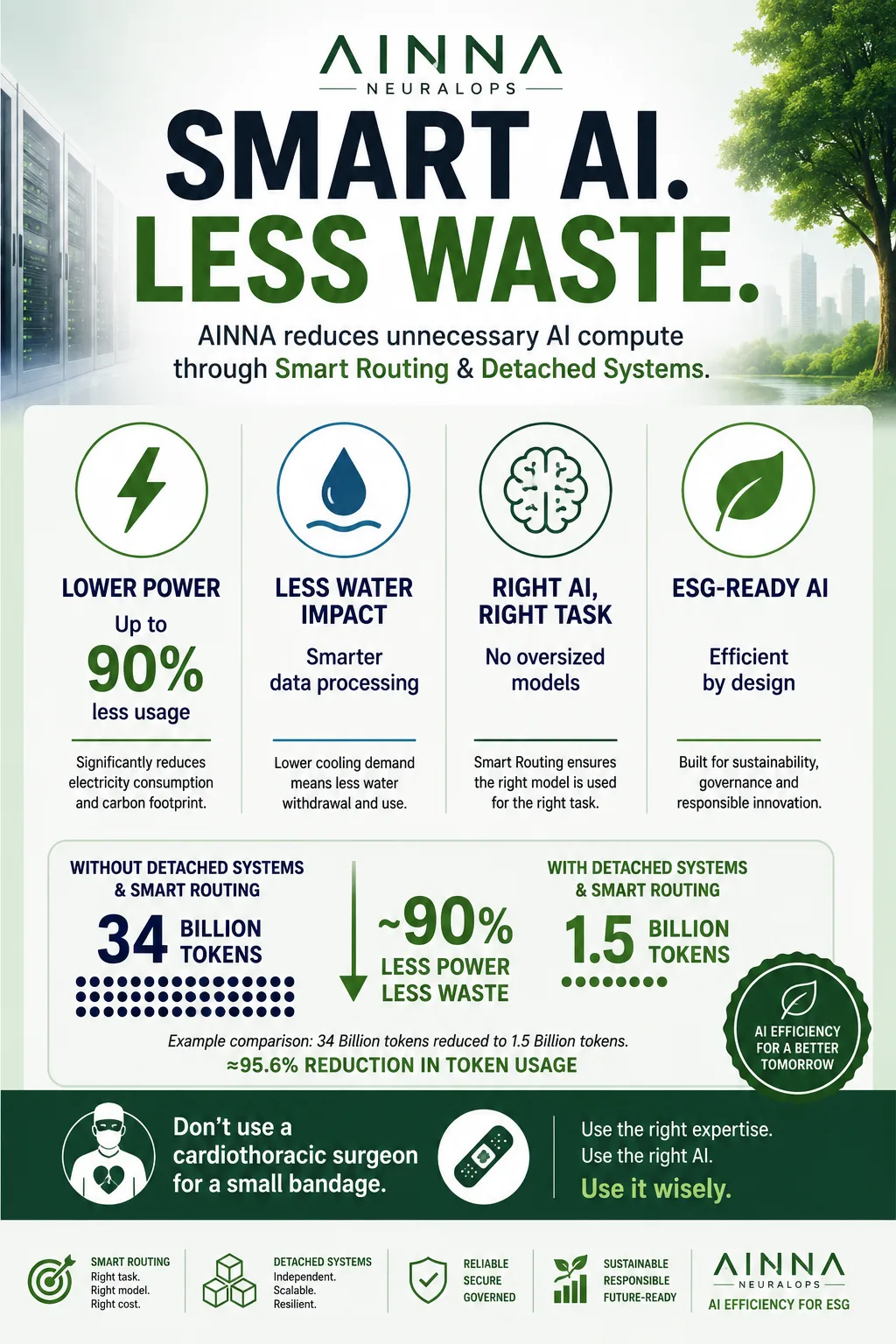
When you architect an AI system, think of it as a triage layer. You do not send a scraped knee to a cardiothoracic surgeon. Not every prompt needs the largest LLM, the highest GPU tier, or the most expensive inference endpoint.
This matters because AI inference carries real ESG cost. The Antarabangsa Tenaga Agency projects data centre electricity consumption could more than double to around 945 TWh by 2030, driven strongly by AI demand. Cooling also consumes water, which is why major technology companies now report water use, freshwater withdrawal, and replenishment alongside their carbon targets.
At AINNA, our design principle is straightforward: the cleanest compute is the compute you never trigger. Without Sistem Berasingan and Smart Routing, a workload could consume around 34 billion tokens. With our architecture, the same operational direction can be reduced to around 1.5 billion tokens - a reduction of approximately 95.6% in token usage.
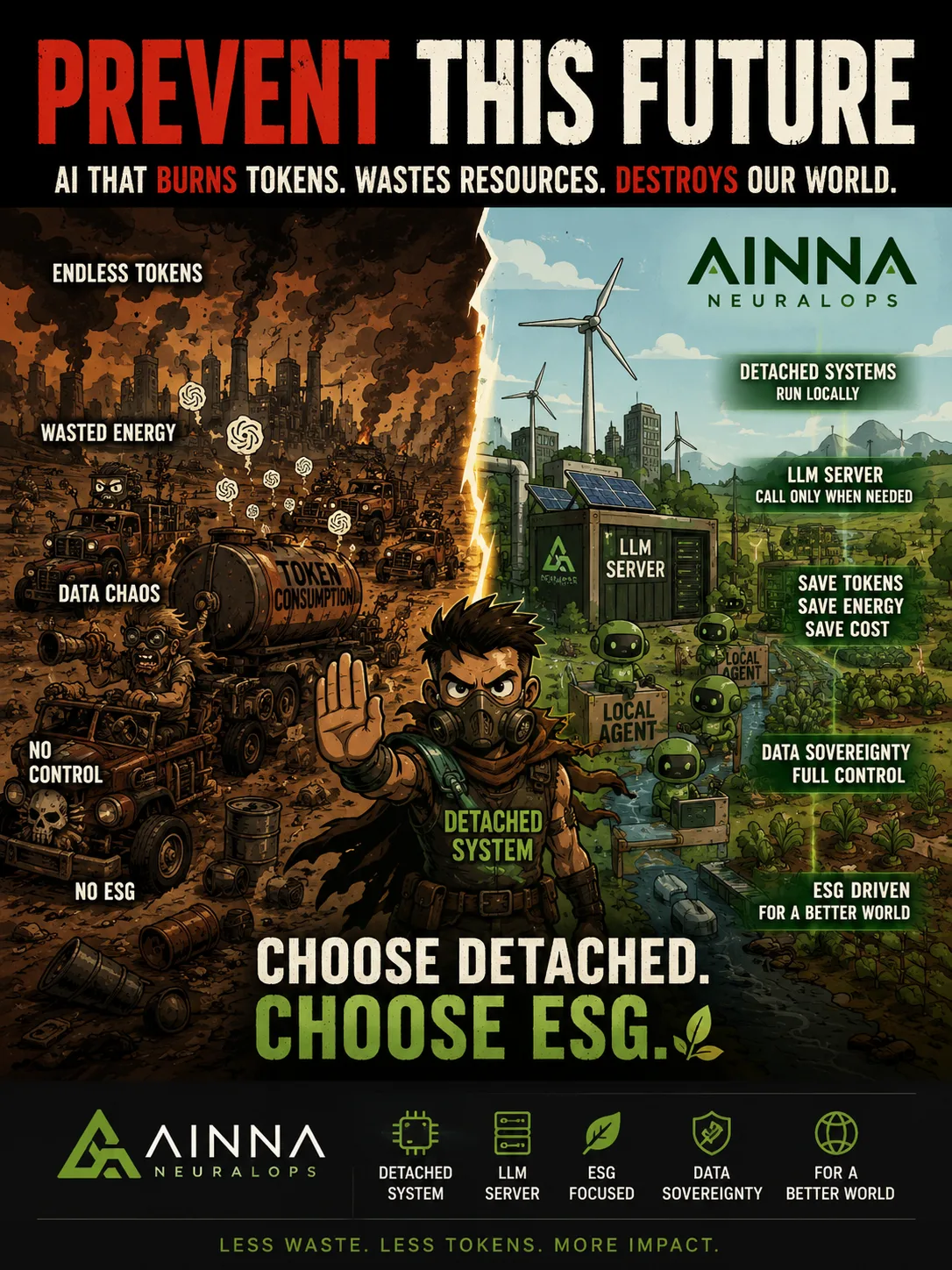
That is why we target around 90% lower power usage as a practical engineering direction. Simple tasks run on lightweight models. Operational flows run through specialized agents. Kompleks reasoning is escalated only when the routing layer detects a genuine need. We never activate a cardiothoracic model for a bandage problem.
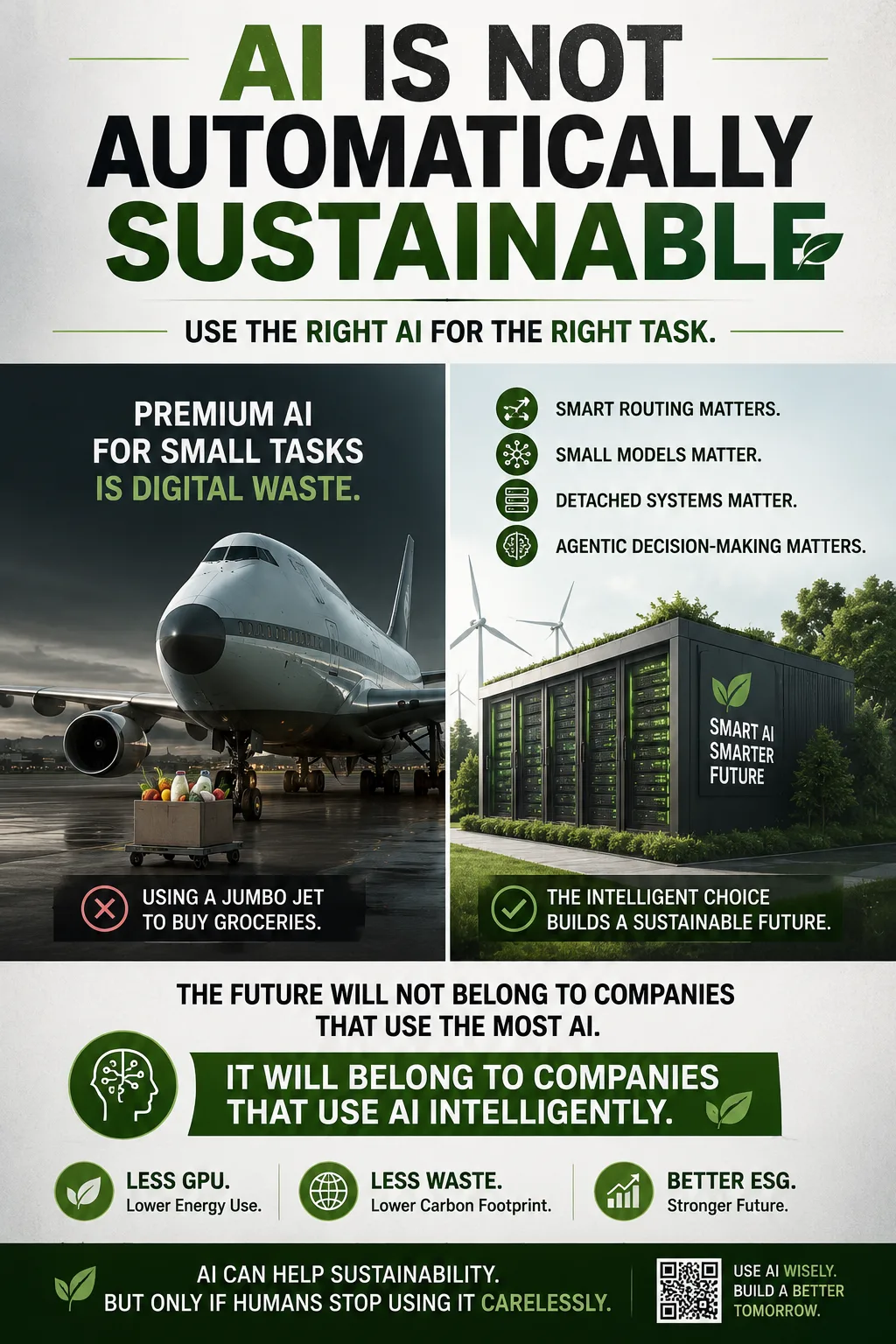
The future of AI should not be measured by how much intelligence we can switch on, but by how much unnecessary compute we can avoid. Real ESG in AI is not about deploying AI everywhere. It is about building systems that deploy the right capability, at the right time, for the right workload.














Ruang pembaca
Apa pendapat anda?
Komen disemak sebelum diterbitkan. Email diperlukan untuk moderasi dan tidak dipaparkan kepada pembaca.
Baru kali ini ada yang bahas 945 dengan jujur.
The direction on cooling also consumes water is exactly right.
First piece I have read that treats 945 TWh by 2030 honestly.