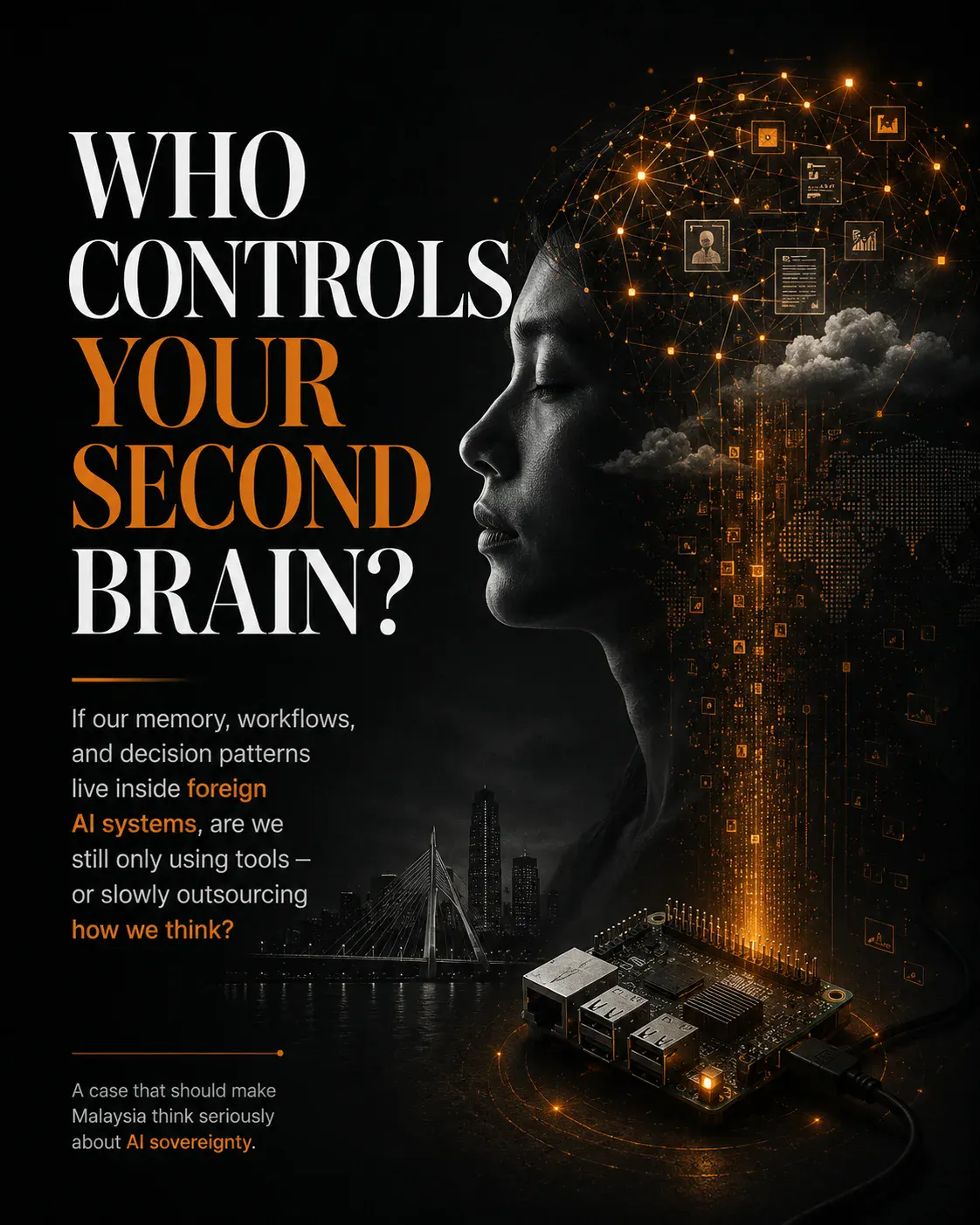
The build is also a strategic signal. AI is moving past the chatbot phase. The systems that matter will remember, learn, structure knowledge, support decisions, and eventually sit inside the decision loop of leaders, companies, and governments. That is the stack we should be designing for Malaysia.
Here is where I get concerned as a system developer. Relying heavily on foreign AI models is not just a data leakage problem. The deeper risk is architectural: every inference request leaks signals about how we think and operate. Query cadence, context window composition, tool-call sequences, retrieval patterns, and decision trajectories all end up in someone else's logs. Even if raw content is anonymised, the pattern of how an organisation reasons, prioritises, and executes is recoverable from API telemetry.
Every prompt is a system call. Every tool selection exposes workflow topology. Every repeated chain-of-thought pattern is a fingerprint on the decision process. Over enough time, a foreign inference provider can reconstruct your operational graph without ever exfiltrating a single confidential document. That is signal analysis, not speculation.
I am not arguing that Malaysia should stop using foreign models. That would be technically backwards. Claude, GPT-4, Gemini, and others are powerful accelerators for learning, coding, automation, analysis, and rapid iteration. I use them daily in development work.
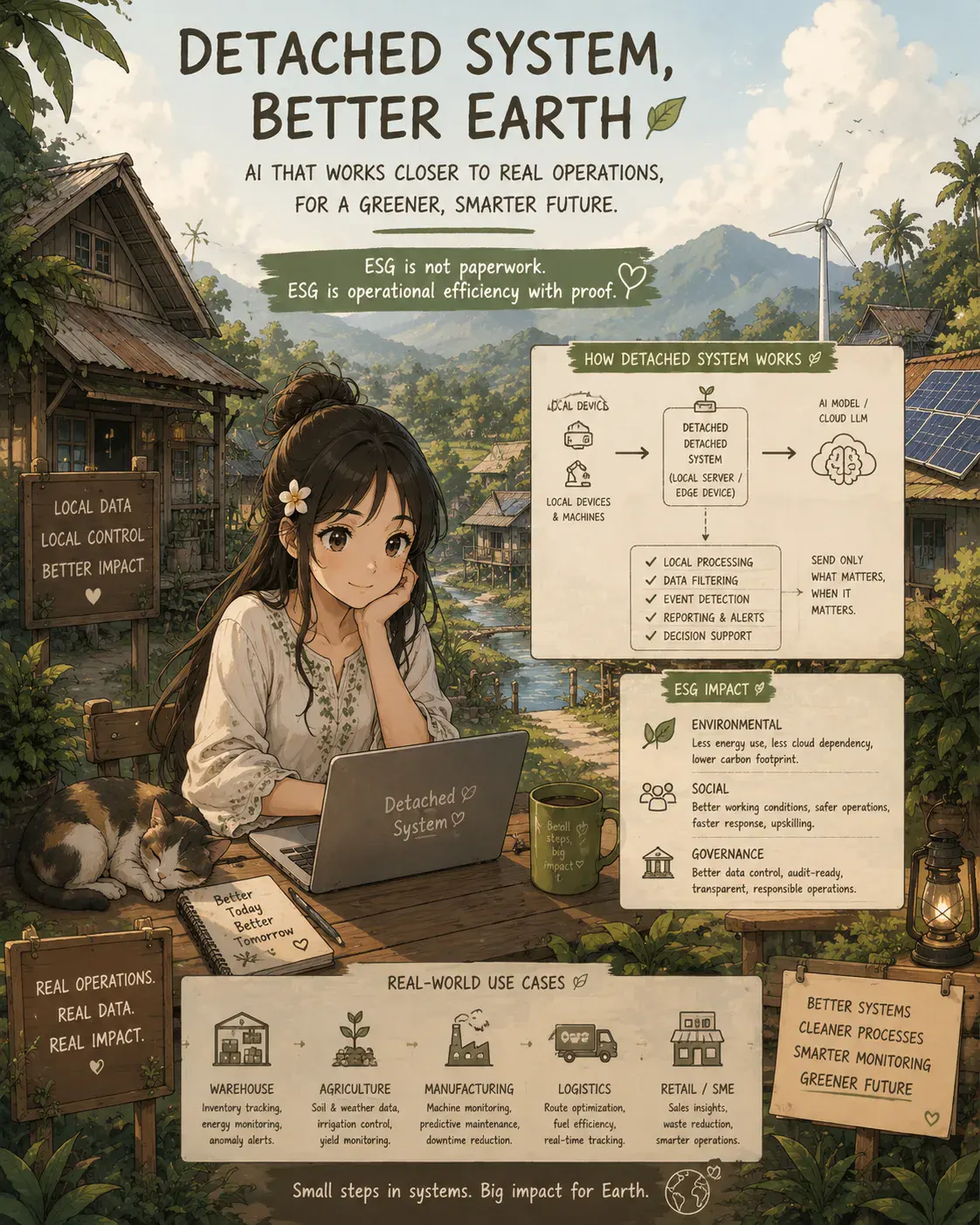
But using them is not the same as depending on them. Malaysia needs a hybrid AI sovereignty architecture: foreign APIs for open experimentation and fast prototyping; local or privately hosted models for controlled workloads; sovereign GPU, vector, and object storage for sensitive data and embeddings; detached or air-gapped inference for operational systems; and a national pipeline that produces our own weights, embeddings, and fine-tunes. The objective is not isolation. It is selectable trust boundaries and survivability when a foreign provider changes terms, pricing, or availability.
If a minister can wire together a second brain on a Raspberry Pi, the harder question for our country and our enterprises is: who owns the inference layer, the memory layer, and the orchestration layer behind ours?
In the systems I deploy, sovereignty is not only about land, borders, or policy. It is about where the model weights live, where the embeddings are stored, who can read the inference logs, and whether the decision loop keeps running when the external API goes dark. Malaysia needs to architect for that now, not after a provider pivot makes it obvious.
#AIKedaulatan #SovereignAI #MalaysiaAI #LLM #ArtificialIntelligence #DataKedaulatan #DigitalKedaulatan #AIInfrastruktur #LocalAI #AIStrategy
Official Cross-Rangkaian Resource















Ruang pembaca
Apa pendapat anda?
Komen disemak sebelum diterbitkan. Email diperlukan untuk moderasi dan tidak dipaparkan kepada pembaca.
Bagian strip away the politics ini yang bikin saya berpikir ulang.
Still thinking about every repeated chain-of-thought pattern.
Sent this to two people already. Relying heavily on foreign AI is why.
Short and clear. every inference request leaks signals is worth sending to my team.
The numbers around every tool selection exposes workflow make more sense than most posts I read.
Strip away the politics is the part I would forward to my boss.