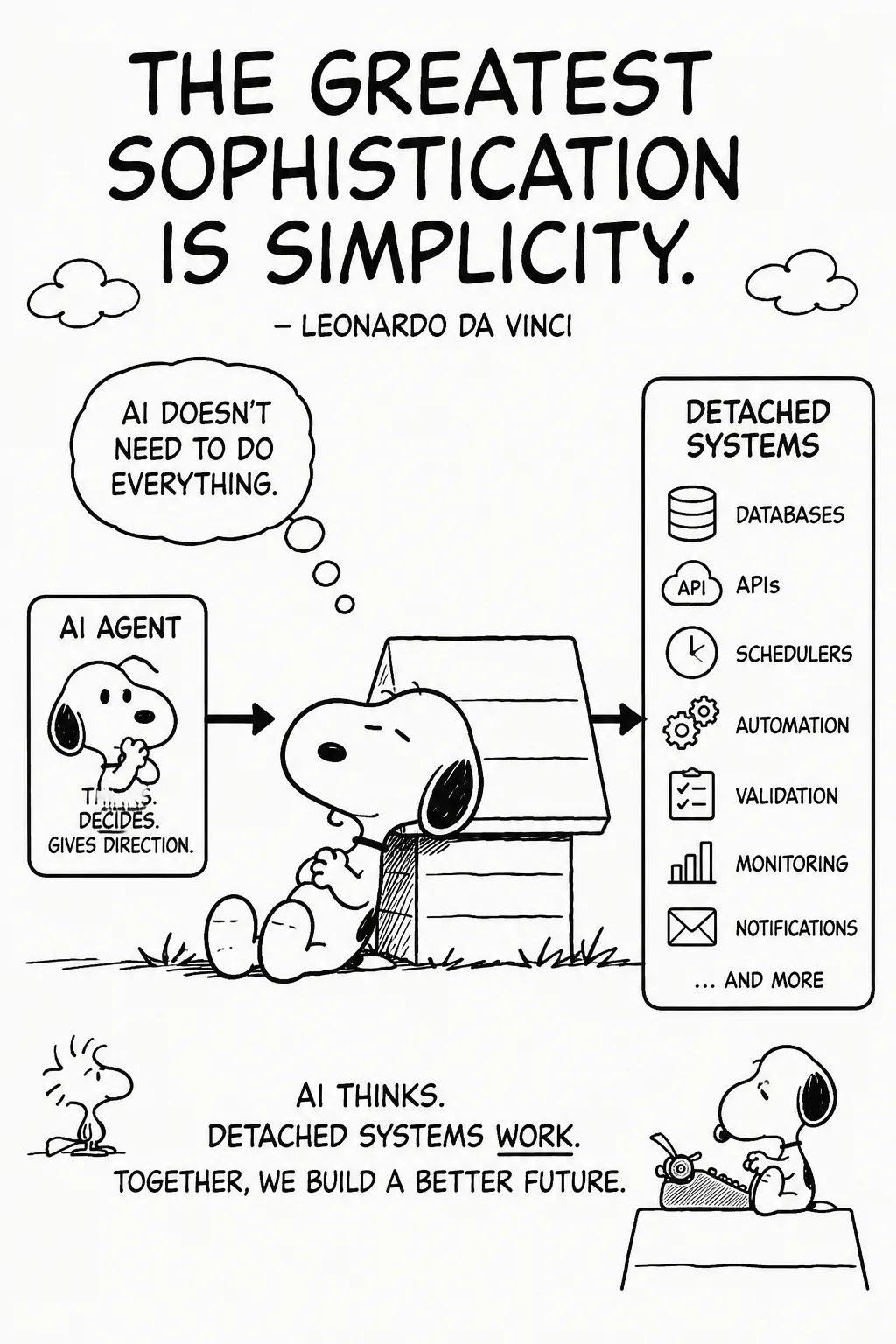
"The greatest sophistication is simplicity." Leonardo da Vinci said it centuries ago, yet it is one of the most useful principles I keep in mind when designing AI systems today. The industry tends to assume that progress means larger models, more parameters, heavier GPU clusters, and tighter coupling between AI and every layer of the stack. From where I stand as a builder, the more interesting path is the opposite: architectures that are simpler, cleaner, and deliberately efficient.
This is what I call a Sistem Berasingan. The concept is straightforward: separate reasoning from execution. The AI layer focuses on decisions, direction, and interpretation. The actual work is done by the infrastructure we already know and trust - databases, REST APIs, workflow automation, schedulers, monitoring pipelines, and event-driven services. AI becomes the brain that evaluates context and issues instructions; the surrounding system handles the rest.
At first, this can feel counterintuitive. Why invest in powerful LLMs only to limit what they touch? The answer is resource discipline. Intelligence is expensive. Token generation, context windows, and inference time all carry real cost and latency. A Sistem Berasingan reserves AI for ambiguity, judgment, and planning, while deterministic code handles repetitive, well-defined tasks. It is the architectural equivalent of not asking a senior engineer to spend the day sorting mail.
For development teams, this changes the economics of AI adoption. You do not need a massive GPU farm or an enterprise inference budget to build something useful. A small team can use an LLM for strategy generation, routing logik, or validation, and let lightweight backend services execute the operasi. This makes AI practical for startups and small businesses, not just well-funded labs.
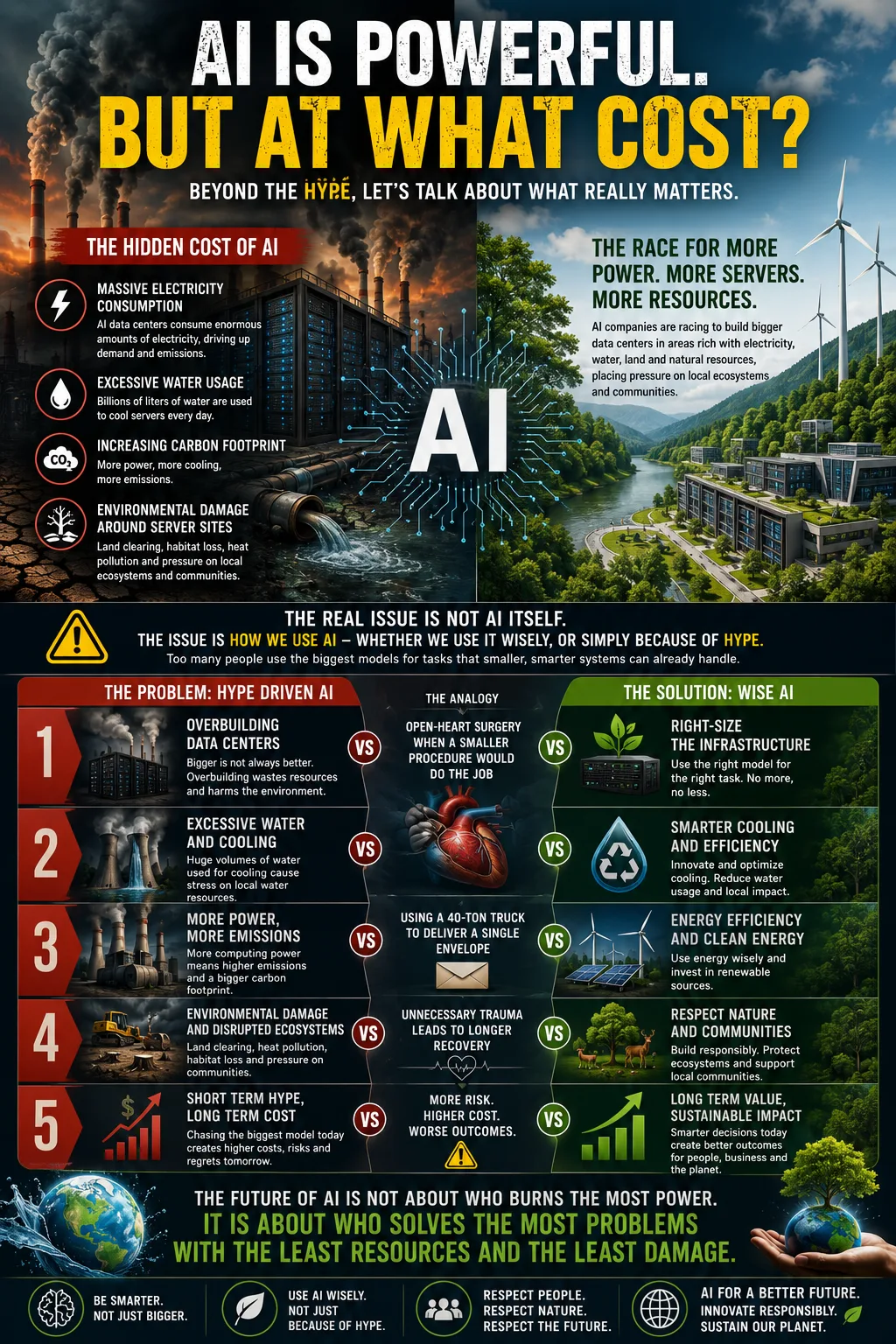
It is also a more sustainable way to build. Every AI call consumes compute and energy. If a rule-based script, SQL query, or scheduled job can deliver the correct result, routing it through an LLM is waste. Sistem Berasingan make that trade-off explicit: AI is invoked only when its reasoning capability genuinely improves the outcome.
Looking ahead, the strongest engineering organizations may not be the ones with the most AI everywhere. They will be the ones that know where AI belongs and where it does not. The real sophistication is architectural restraint - designing systems that are simple enough to maintain, efficient enough to scale, and smart enough to know when to stay out of the way. That is why Sistem Berasingan matter for anyone building the next generation of AI infrastructure.














Ruang pembaca
Apa pendapat anda?
Komen disemak sebelum diterbitkan. Email diperlukan untuk moderasi dan tidak dipaparkan kepada pembaca.
separate reasoning from execution - itu dah ringkasan artikel ni.
We hit AI becomes the brain at work before. Good that someone wrote it down.
Still thinking about every AI call consumes compute.
Clearer than the vendor decks I get about separate reasoning from execution.