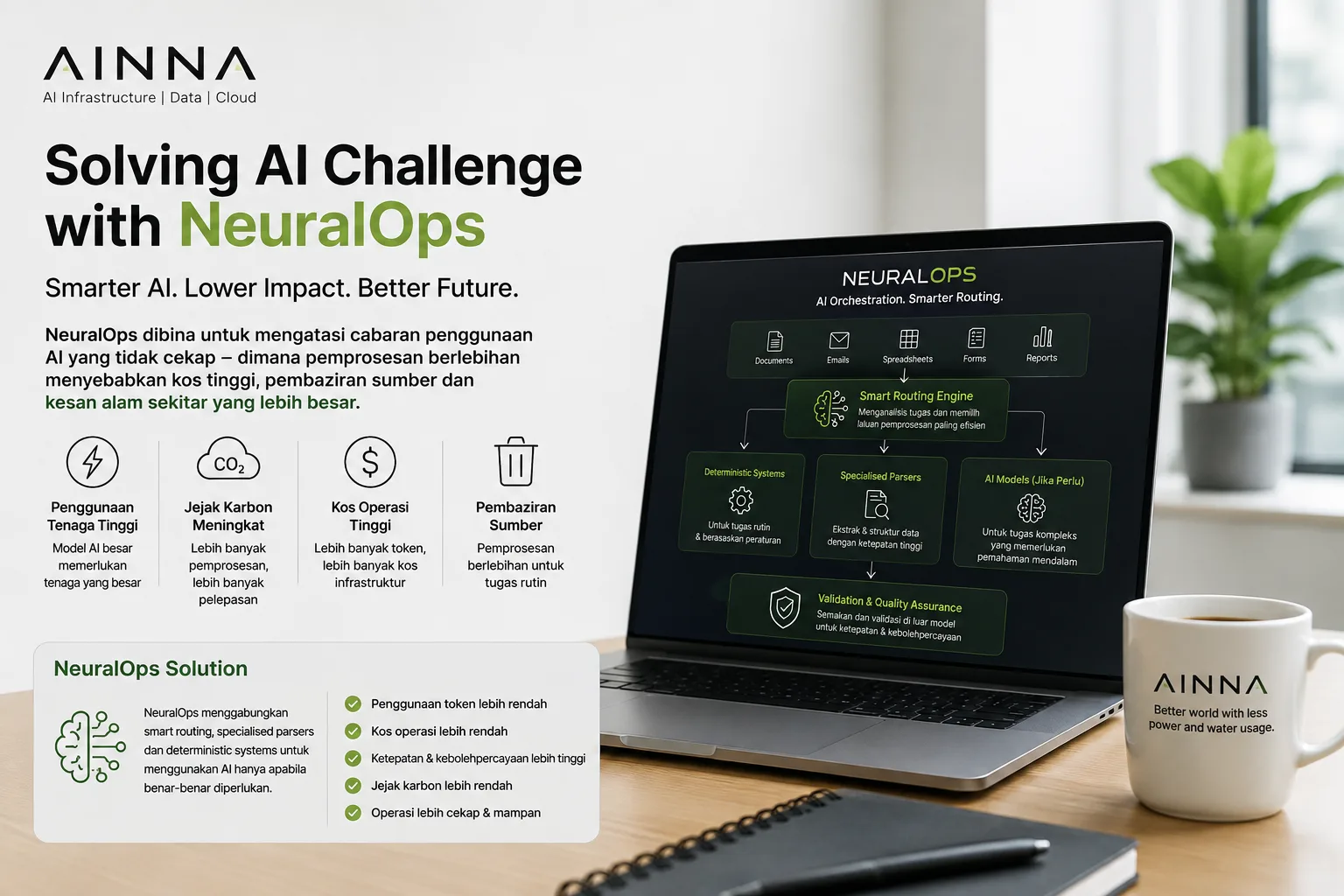
Most organisations I work with are deploying AI to increase productivity.
But there is an engineering problem we rarely talk about:
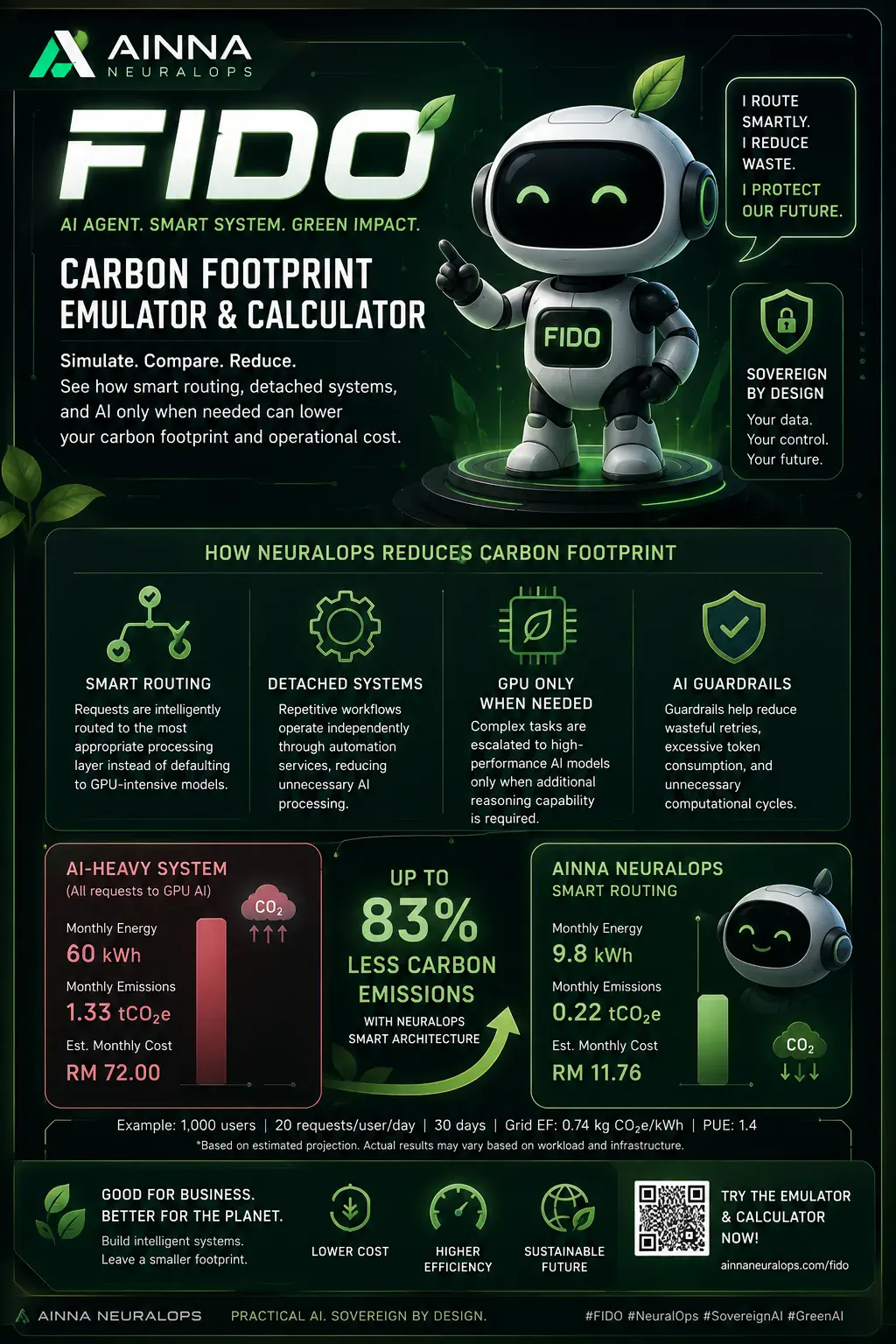
The more AI we push into production, the more GPU cycles, energy, tokens, and infrastructure we consume.
At AINNA, I see routine business tasks being sent to large language models even when they do not need advanced reasoning. That inflates operating costs, wastes processing capacity, and adds unnecessary environmental load.
That is exactly the problem NeuralOps was built to solve.
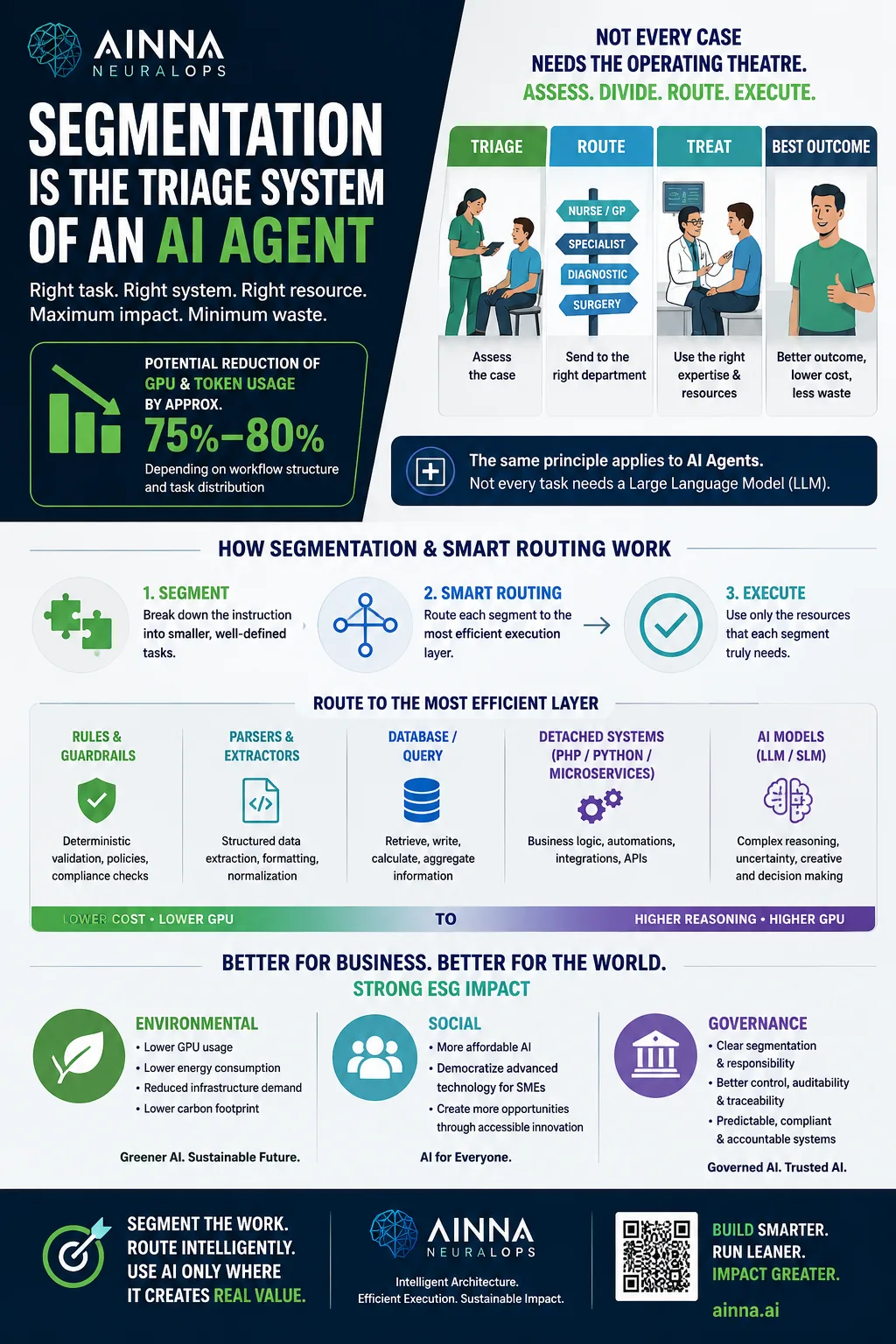
NeuralOps combines model routing, specialised parsers, workflow automation, and deterministic detached systems. It classifies each task and sends it to the right engine: LLMs where reasoning is required, conventional software where it is not.
In production, we apply it to document extraction, financial data processing, validation, reconciliation, reporting, and business analysis.
The result is a leaner digital architecture:
• Lower token consumption
• Reduced compute demand
• Lower operating costs
• Improved accuracy and validation
• Lagi scalable and sustainable AI adoption
The engineering principle is simple:
Gunakan AI termaju hanya apabila kecerdasan termaju benar-benar diperlukan.
AI Mampan is not only about using lebih kecil models.
It is about designing tighter systems.
#NeuralOps #ArtificialIntelligence #MampanAI #GreenTeknologi #Automasi #DigitalTransformation #ESG #DataKedaulatan #AINNA













Ruang pembaca
Apa pendapat anda?
Komen disemak sebelum diterbitkan. Email diperlukan untuk moderasi dan tidak dipaparkan kepada pembaca.
conventional software bagian yang mau saya kirim ke atasan.
conventional software is the part I would forward to my boss.
The section on gunakan AI termaju hanya apabila is the strongest part for me.
Good write-up. AI mampan alone was worth the read.