
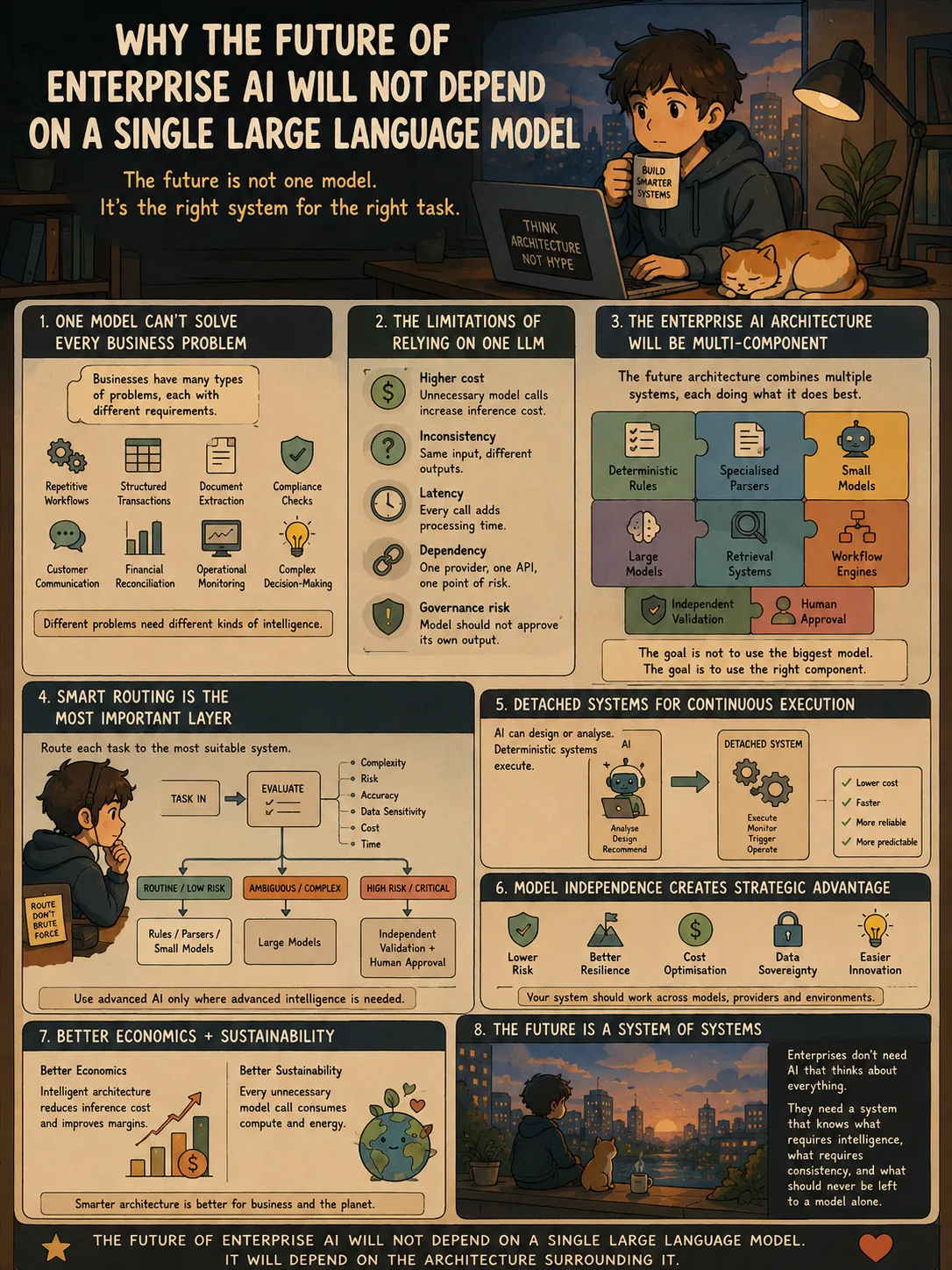
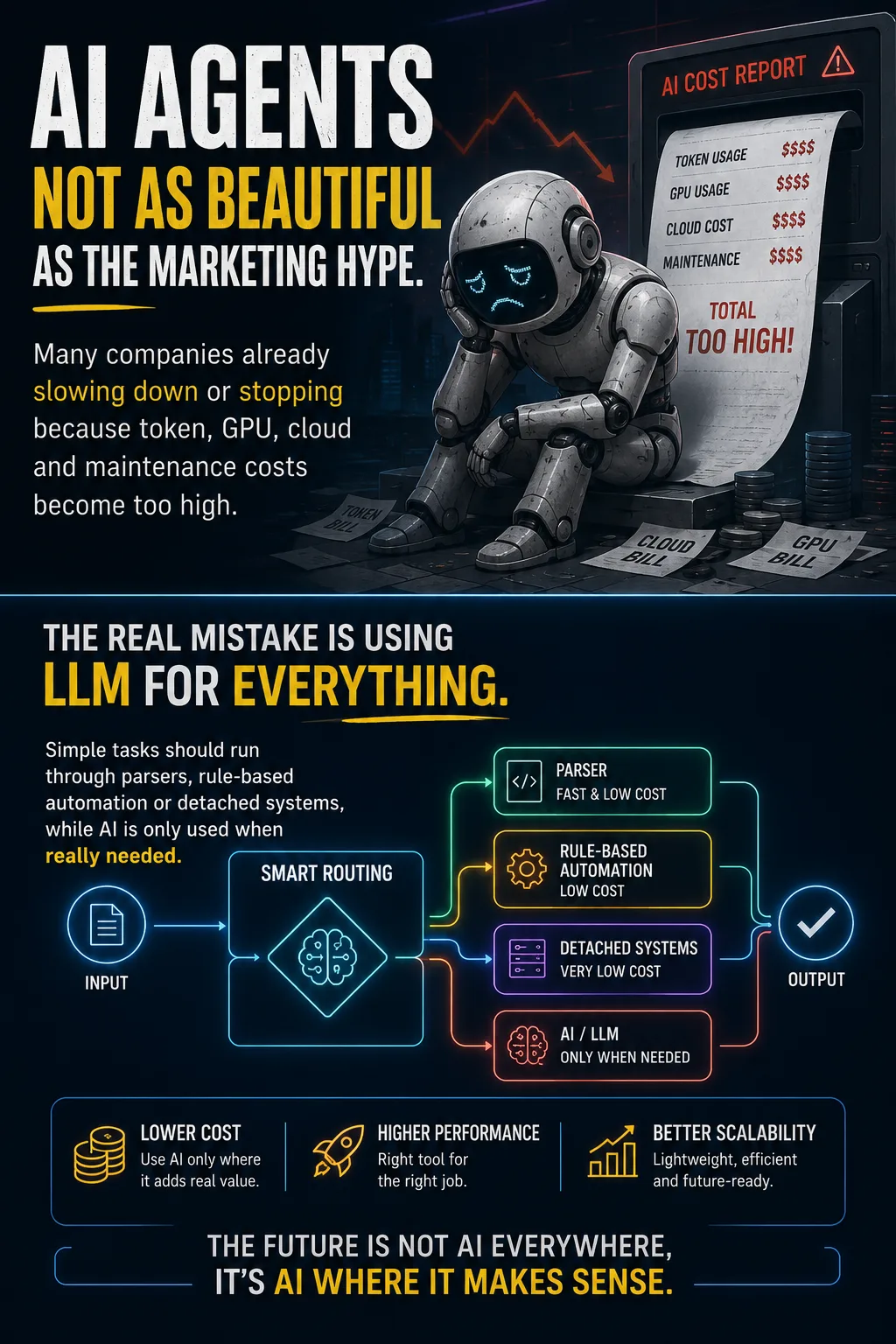
Enterprise AI does not need the most expensive model for every task.
Most corporate AI workloads are repetitive and structured:
Document extraction. Pengelasan. Inventori checks. Transaction matching. Kepatuhan validation. Pelanggan response templates.
These tasks do not always require a full flagship AI model.
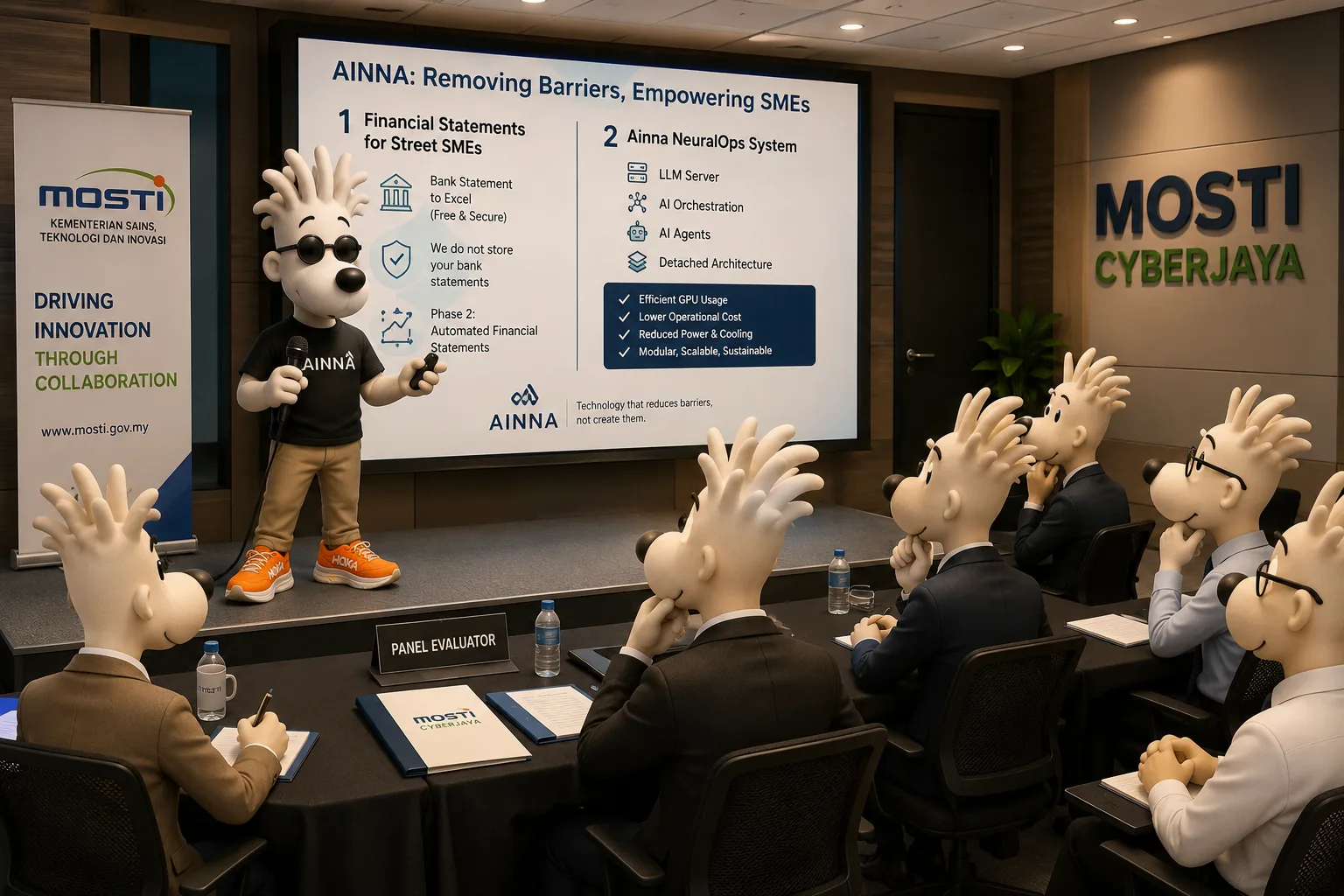
The NeuralOps Kaedah uses:
Smart Routing + Sistem Berasingan + Segmentation + Rules + Tempatan or Rendah-Kos Model + Selective Flagship AI
Smart Routing sends each task to the right processing layer.
Sistem Berasingan isolate finance, inventory, compliance and customer-service operations, reducing data exposure and limiting system-wide failures.
Segmentation breaks large workflows into lebih kecil, controlled steps, making errors easier to detect and outputs easier to audit.
Flagship AI is still important for deep reasoning, strategy and complex unstructured work.
But it should be a specialised reasoning layer-not the default layer for every request.
The result:
Lower cost.
Higher consistency.
Reduced hallucination risk.
Better auditability.
Easier scaling.
The best enterprise AI architecture is not the one that uses the largest model for everything.
It is the one that knows exactly when advanced intelligence is genuinely required.
#EnterpriseAI #NeuralOps #SmartRouting #LocalAI #AIAutomasi #AITadbir Urus #DigitalTransformation













Ruang pembaca
Apa pendapat anda?
Komen disemak sebelum diterbitkan. Email diperlukan untuk moderasi dan tidak dipaparkan kepada pembaca.
Ringkas dan jelas. Document extraction boleh kongsi dengan team saya.
Document extraction is what I would forward to my boss.
This is where reducing data exposure and limiting finally makes sense.
Bagian document extraction ini yang bikin saya berpikir ulang.
The direction on reduced hallucination risk is exactly right.
เห็นด้วยเรื่องหัวข้อนี้ และทิศทางชัดเจน
I read this twice. Pelanggan response templates is the part that stuck.
Sent this to two people already. Segmentation breaks large workflows into is why.