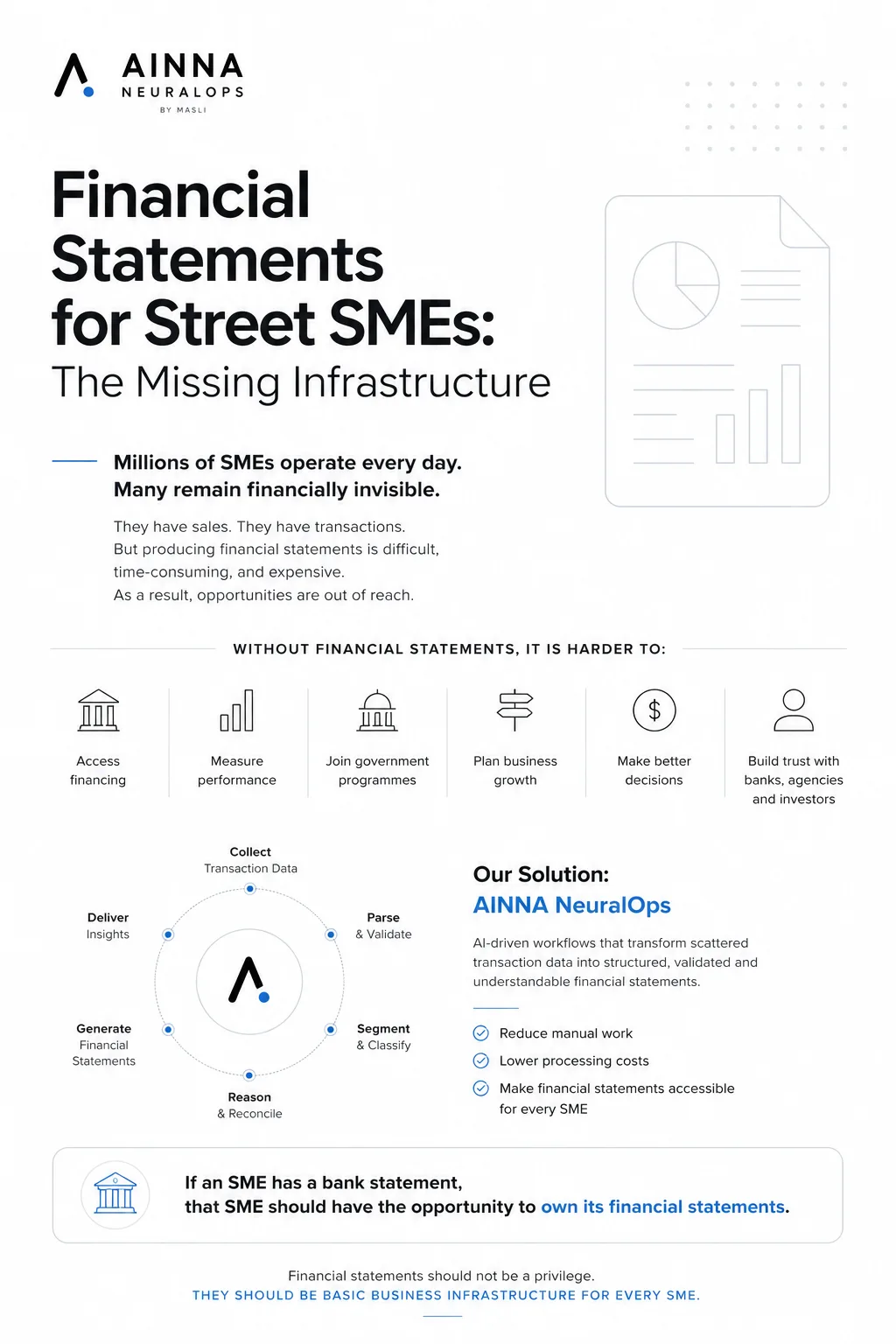
For many PKS, the bank statement is still the most consistent financial record they have. Jualan records may be incomplete, invoices may be missing, and accounting software may not always be updated properly. But every cash inflow and outflow still appears in the bank account.
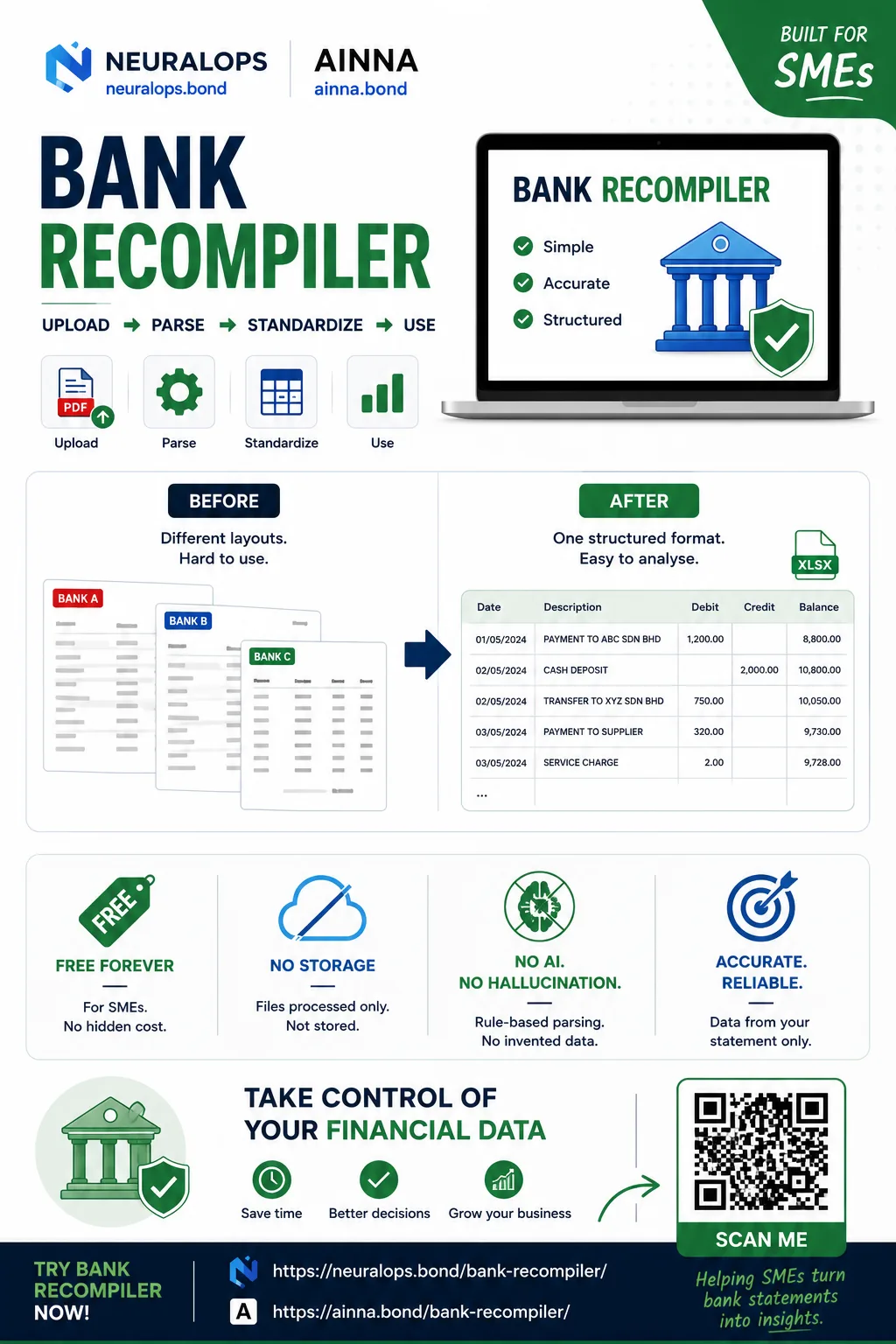
That is why bank statement automation is a practical starting point for PKS accounting. The problem is that bank statements are messy. Transaction descriptions contain merchant names, reference numbers, payment gateways, QR payments, banking codes, transfers, and inconsistent remarks.
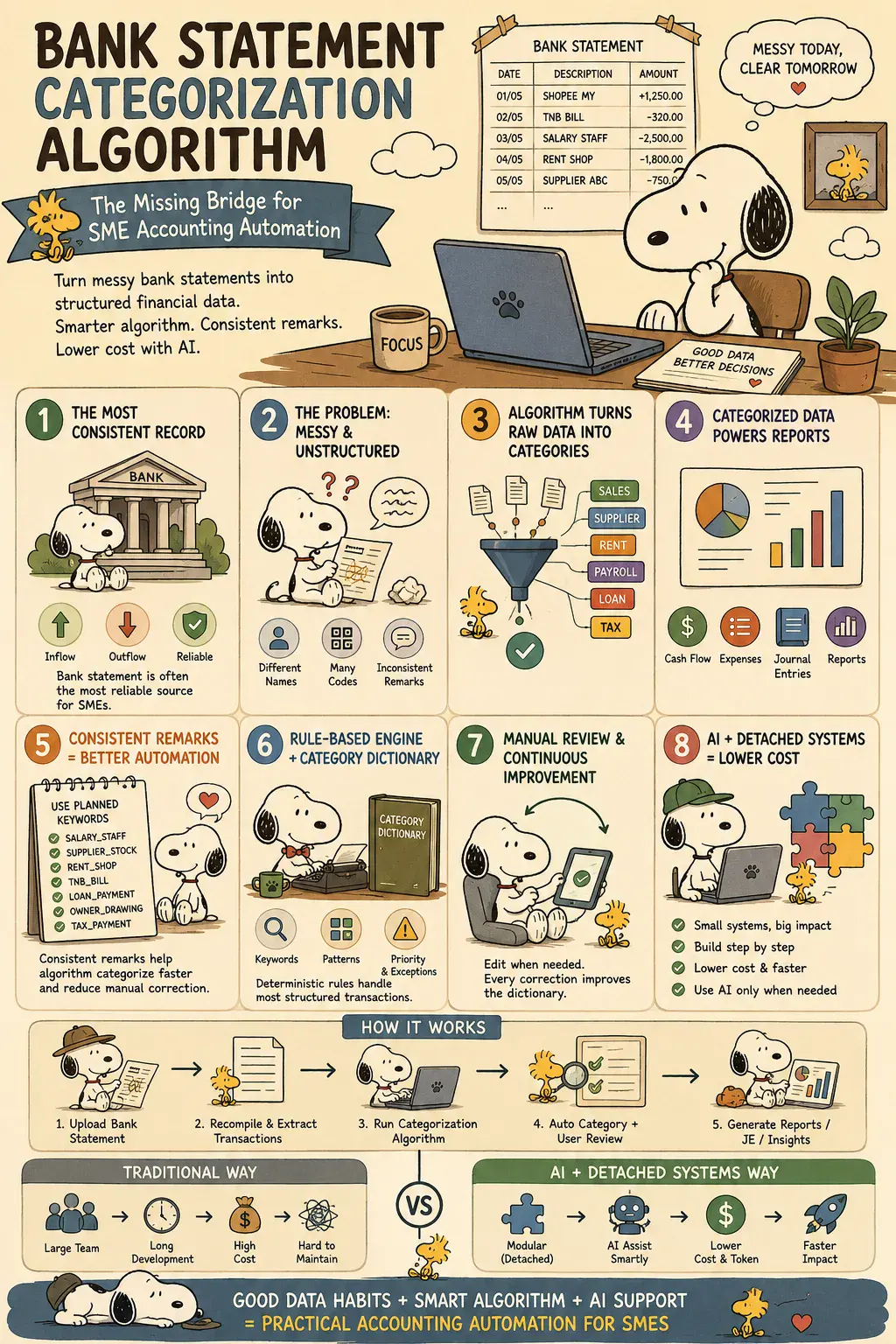
This is where a Bank Statement Categorization Algorithm becomes important. The algorithm classifies each transaction into categories such as sales, supplier payments, rent, payroll, utilities, loan repayment, tax payment, owner drawing, marketplace settlement, refund, and bank charges.
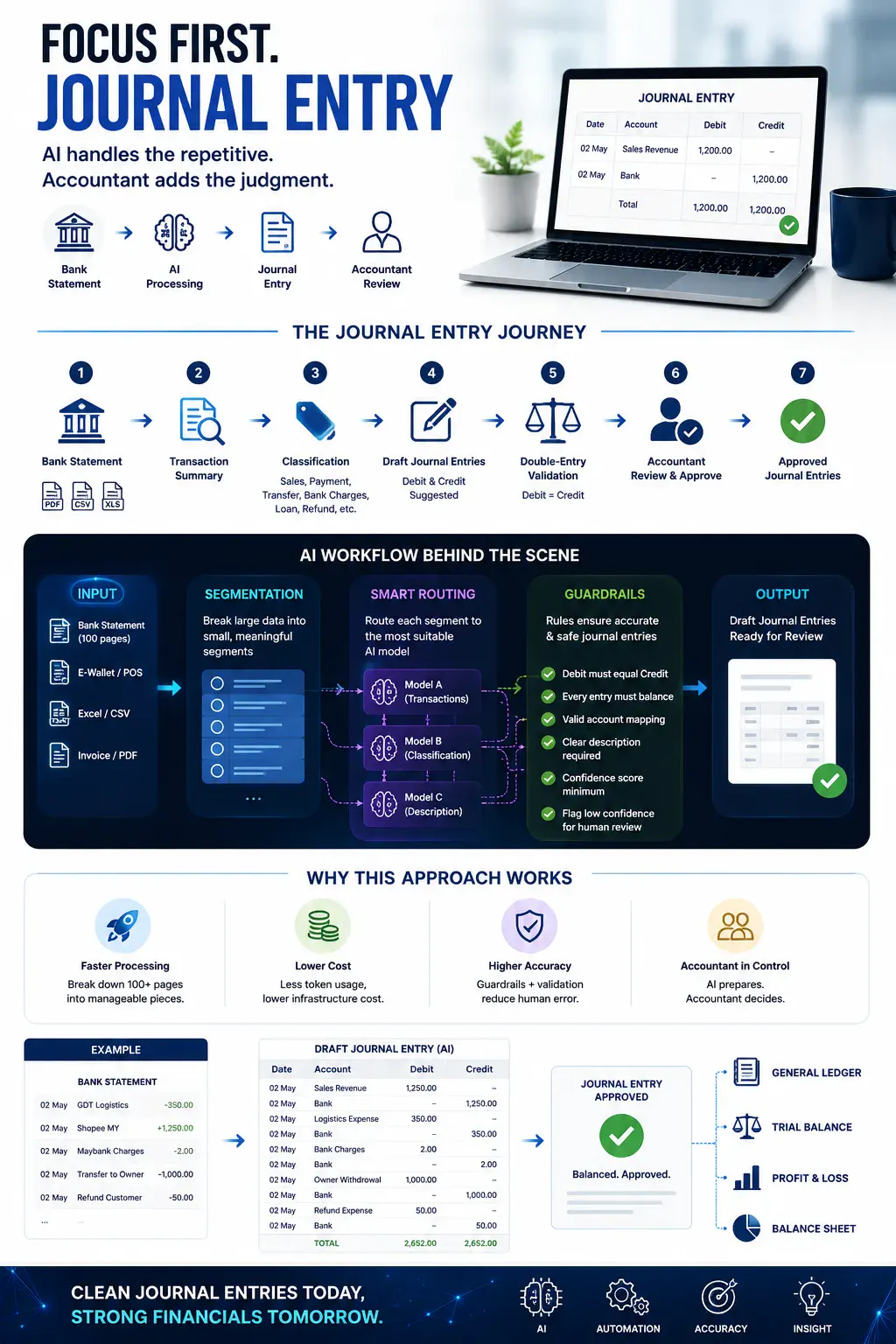
Once categorized, the same data can be used to generate cash summaries, expense reports, draft journal entries, and basic financial reports. A bank statement should no longer remain just a monthly PDF. It should become structured financial data.
But automation is not magic. PKS also need to help the system by using consistent transaction remarks. Instead of writing random remarks like “payment”, “transfer”, or “settle”, businesses should use planned keywords such as SALARY_STAFF, SUPPLIER_STOCK, RENT_SHOP, TNB_BILL, LOAN_PAYMENT, OWNER_DRAWING, and TAX_PAYMENT.
This small habit can make a big difference. When transaction remarks are consistent, the algorithm can categorize lebih pantas, reduce manual correction, and produce cleaner reports. Good automation starts with good transaction behavior.
The best approach is not to depend fully on AI for everything. Use a deterministic rule-based engine with a Category Dictionary. Let the algorithm handle structured and repetitive transactions, while AI assists only when the transaction is unclear or ambiguous.
AI has also reduced the cost of building these detached systems. Instead of developing one huge and expensive accounting platform, PKS can build lebih kecil modules step by step: one system to read bank statements, one to categorize transactions, one to generate summaries, and one to prepare draft journal entries. That is the real bridge between messy PKS records and practical accounting automation.