Gross Margin (%) = (Hasil – COGS) ÷ Hasil × 100
The formula is deceptively simple. Yet for a platform seller, the word revenue has become ambiguous.
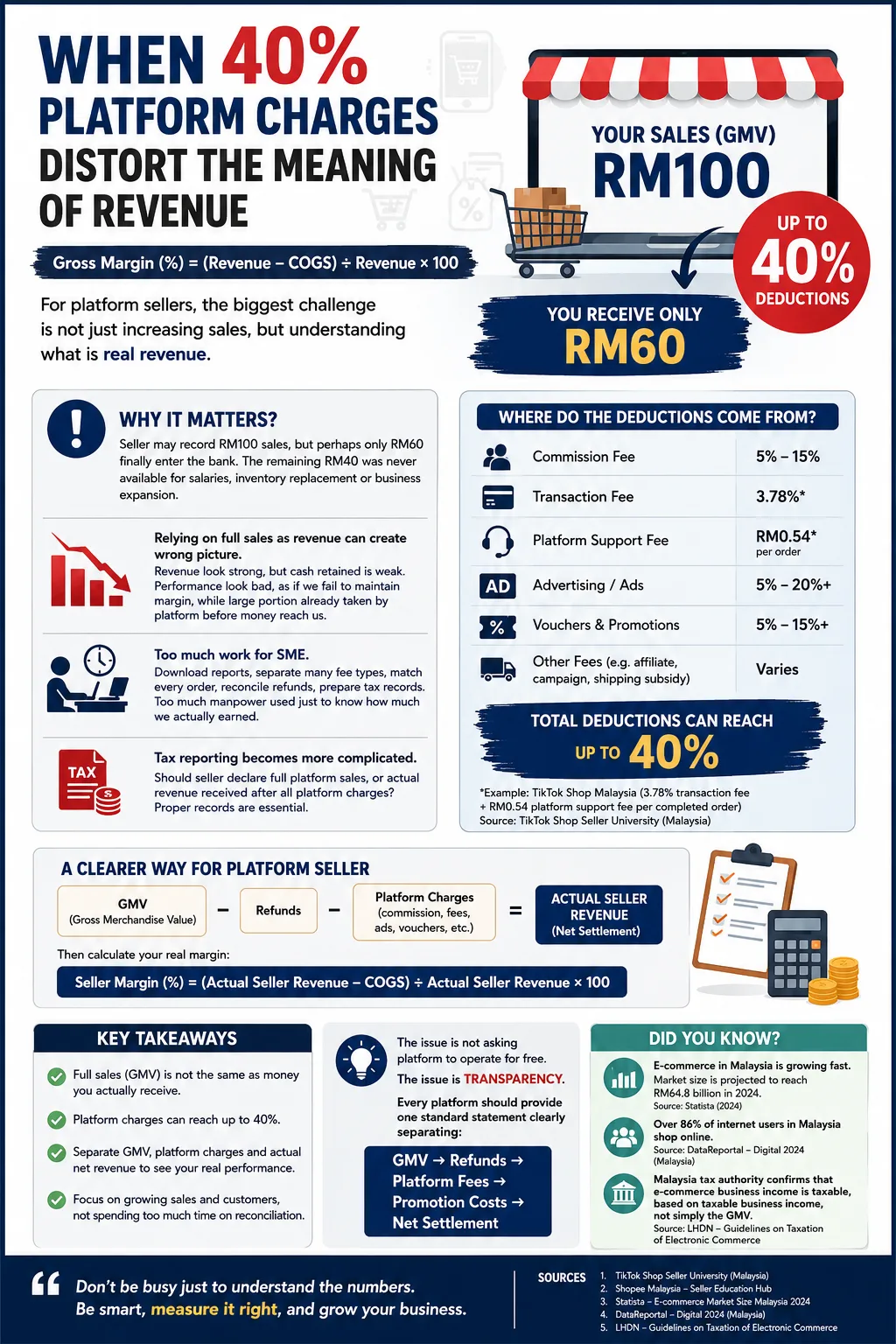
Platform sellers typically absorb multiple deductions: category commission, transaction fees, platform support fees, affiliate commissions, advertising spend, vouchers and seller-funded promotions. TikTok Shop Malaysia, for example, publishes category-based commission, a 3.78% transaction fee and a RM0.54 platform support fee per completed order. Shopee Malaysia similarly charges commission, a 3.78% transaction fee and a platform support fee. (TikTok Shop)
When all of these items are stacked together, jumlah deductions on certain sales or campaigns can approach 40%.
A seller may book RM100 in sales, yet only RM60 may eventually hit the bank account. The remaining RM40 was never available for wages, inventory replenishment or reinvestment.
Under IFRS 15, revenue is reported gross or net depending on whether the seller is a principal or an agen. A principal recognises gross revenue and records platform fees as separate expenses. An agen recognises only its commission or fee. Therefore, simply substituting the platform settlement amount for accounting revenue is not always technically correct. (IFRS Asas)
For PKS management, however, relying solely on gross sales creates a misleading picture.
A seller can report strong top-line revenue while retaining very little cash. Pengurusan then looks ineffective, as though margins have collapsed, when in reality a large slice was already taken by the platform before the cash reached the business.
From a finance operations perspective, PKS should track two separate measurements:
Perakaunan Hasil = Gross sales recognised under the applicable accounting treatment
Actual Seller Hasil = GMV – refunds – platform charges – seller-funded promotions
Then calculate an internal margin that reflects cash retained:
Seller Margin (%) = (Actual Seller Hasil – COGS) ÷ Actual Seller Hasil × 100
The pressure extends beyond margin.
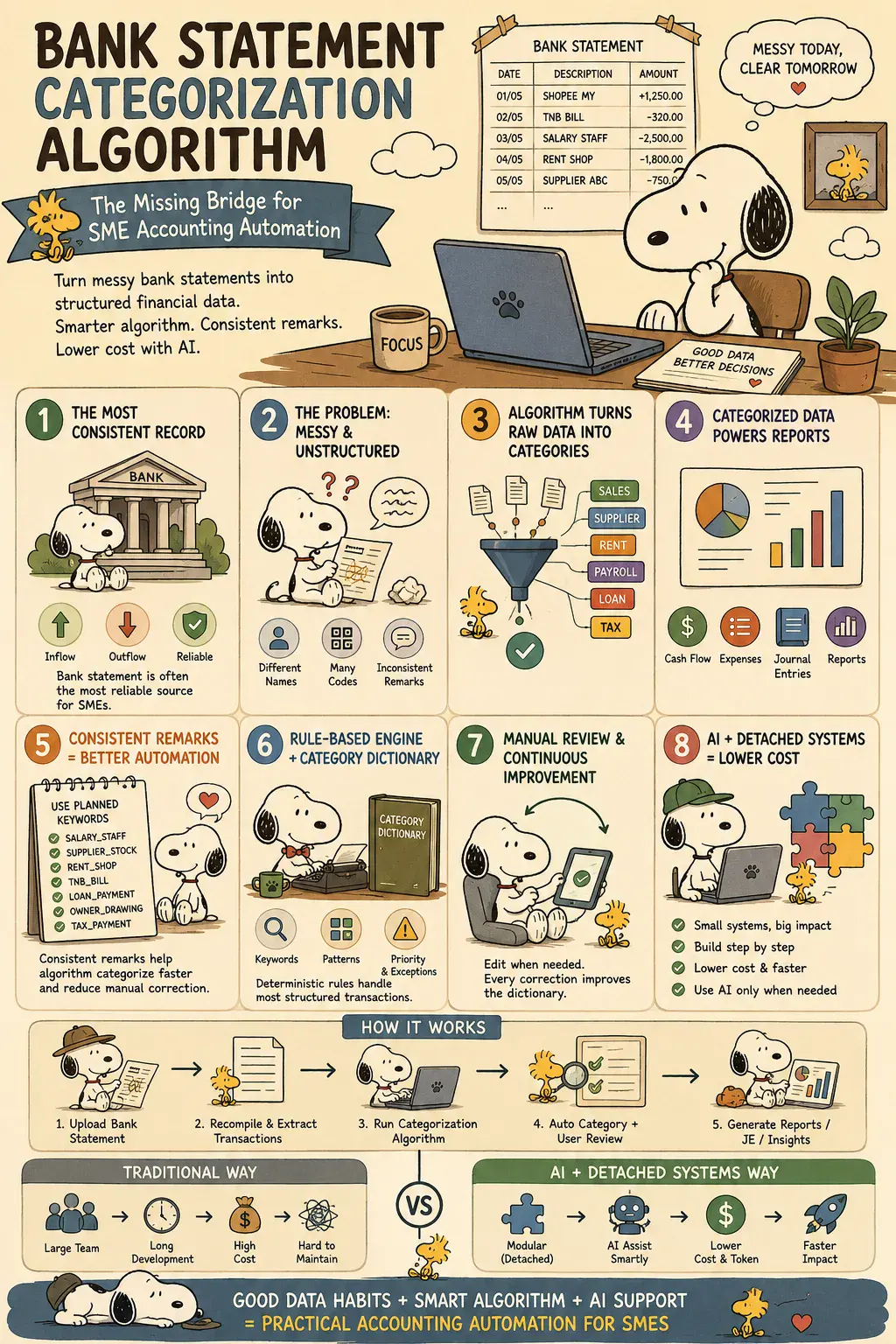
PKS must download settlement reports, classify each fee type, match every order to the correct settlement line, reconcile refunds and produce tax-ready records. This consumes manpower that should instead be used to improve produk and grow sales. At AINNA, I treat this as the exact point where disciplined financial operations turn reconciliation from a cost centre into a source of business intelligence.
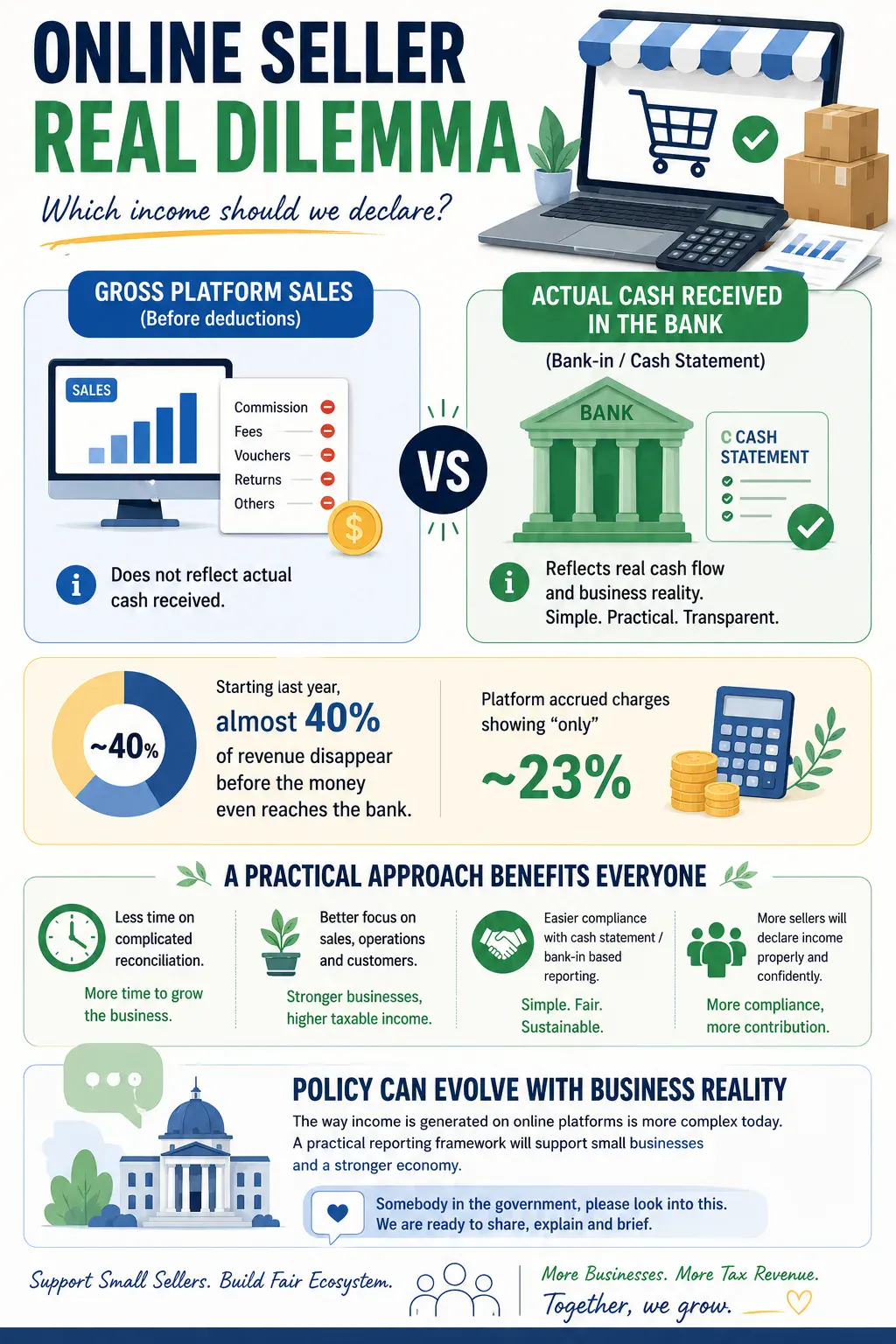
Malaysia’s tax authority confirms that e-commerce income is taxable, but tax is generally computed on taxable business income-not on the marketplace GMV figure shown on the dashboard. Proper records of income and related business expenses are still required. (lampiran2.hasil.gov.my)
The issue is not that platforms should operate free of charge.
The issue is transparency.
Every platform should provide a single, standard settlement statement that clearly separates:
GMV → Refunds → Platform Fees → Promotion Costs → Net Settlement
Without this clarity, an PKS may appear successful based on sales figures, while its bank account tells a very different story.














Ruang pembaca
Apa pendapat anda?
Komen disemak sebelum diterbitkan. Email diperlukan untuk moderasi dan tidak dipaparkan kepada pembaca.
Gusto ko ang bahagi tungkol sa 100 dahil hindi masyadong teoretikal.
The direction on gross margin (%) = (Hasil is exactly right.
إذا كان هناك جزء آخر عن 100 فسأقرأه.
The case for hasil × 100 100 is well made.
First piece I have read that treats platform sellers typically absorb multiple honestly.
The framing around 100 the press 100 is better than I expected.