Mula with the Catatan Jurnal. Everything Else Follows.
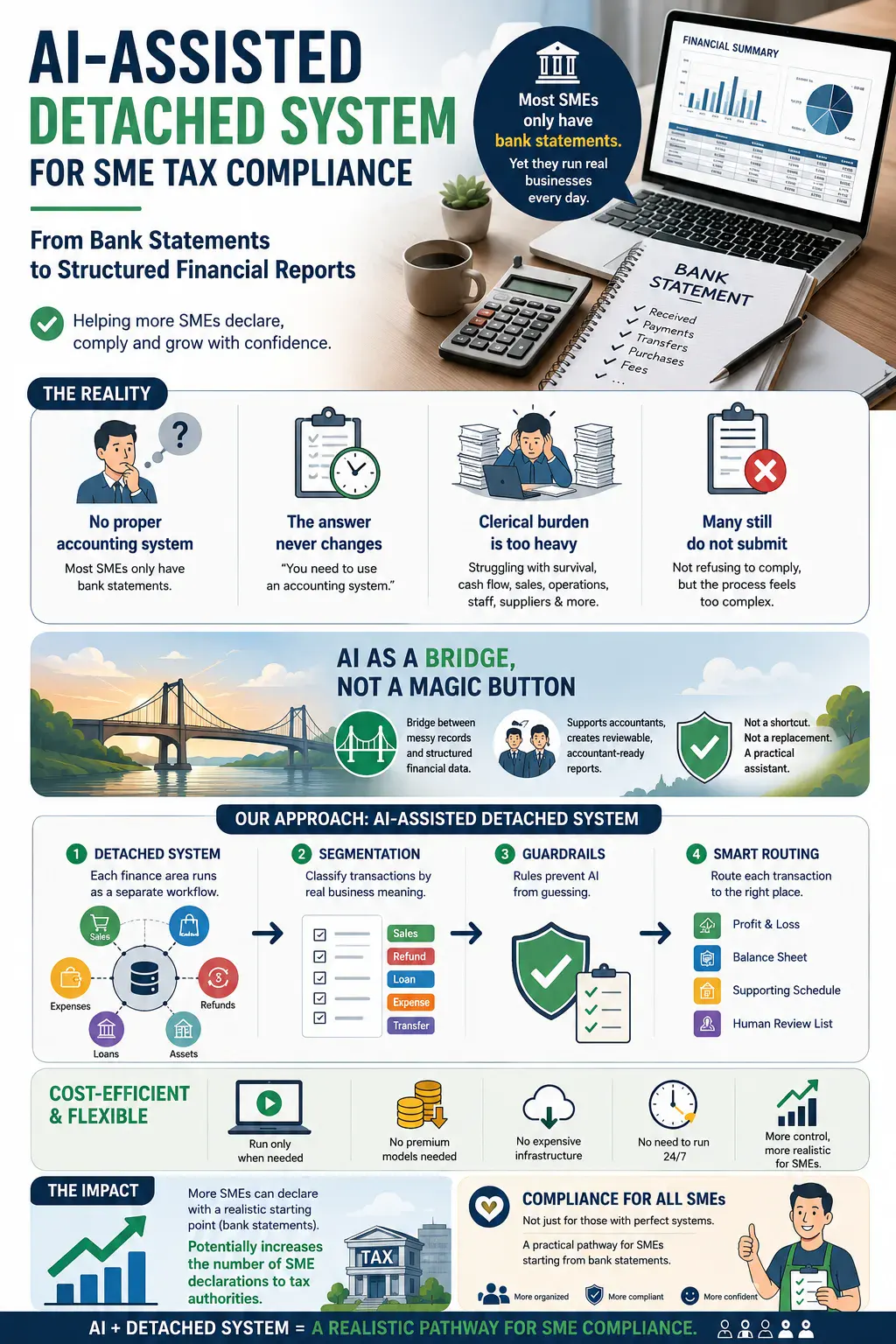
At AINNA, we work with Malaysian PKS that often do not begin with a complete accounting system. What they maintain are bank statements, payment records, spreadsheets, supplier invoices, and customer receipts.
My approach is methodical: do not attempt to generate a full set of financial statements immediately. Mula with the foundational accounting record - the journal entry.
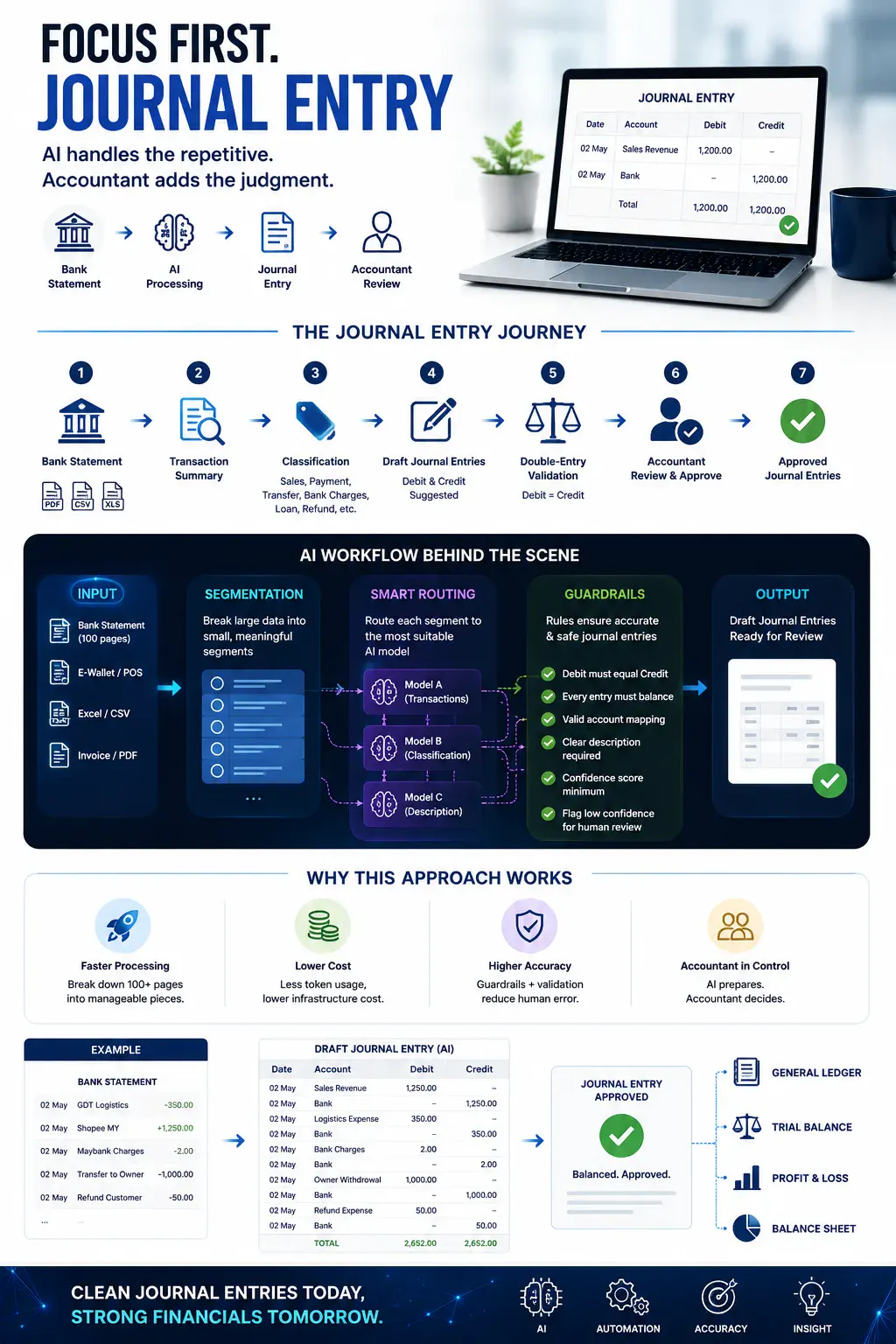
The practical workflow looks like this:
Bank Statement → Transaction Summary → Transaction Pengelasan → Draft Catatan Jurnal → Double-Catatan Validation → Accountant Ulasan
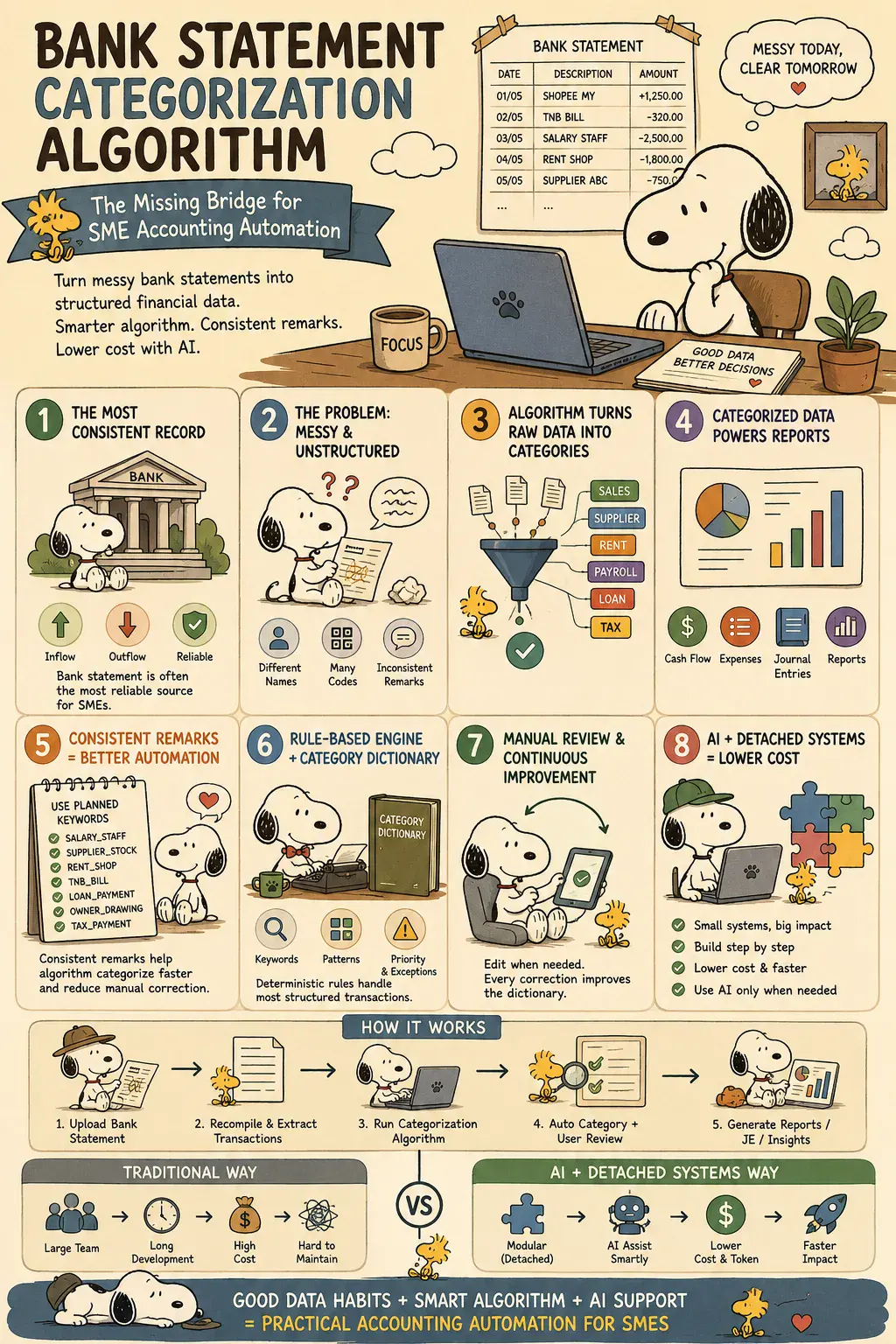
AI can identify recurring transaction patterns such as sales receipts, supplier payments, bank charges, loan repayments, inter-account transfers, refunds, and owner withdrawals. It then converts those source transactions into draft journal entries with the appropriate account allocations.
The important part is not generation - it is validation.
Every journal entry must pass strict accounting guardrails:
- Debit must equal Kredit
- Every transaction must balance
- Each entry requires a meaningful description
- Keyakinan scores should flag entries that need human review
This approach does not replace accountants. It removes repetitive bookkeeping work while keeping the finance professional in control of every final recognition decision.
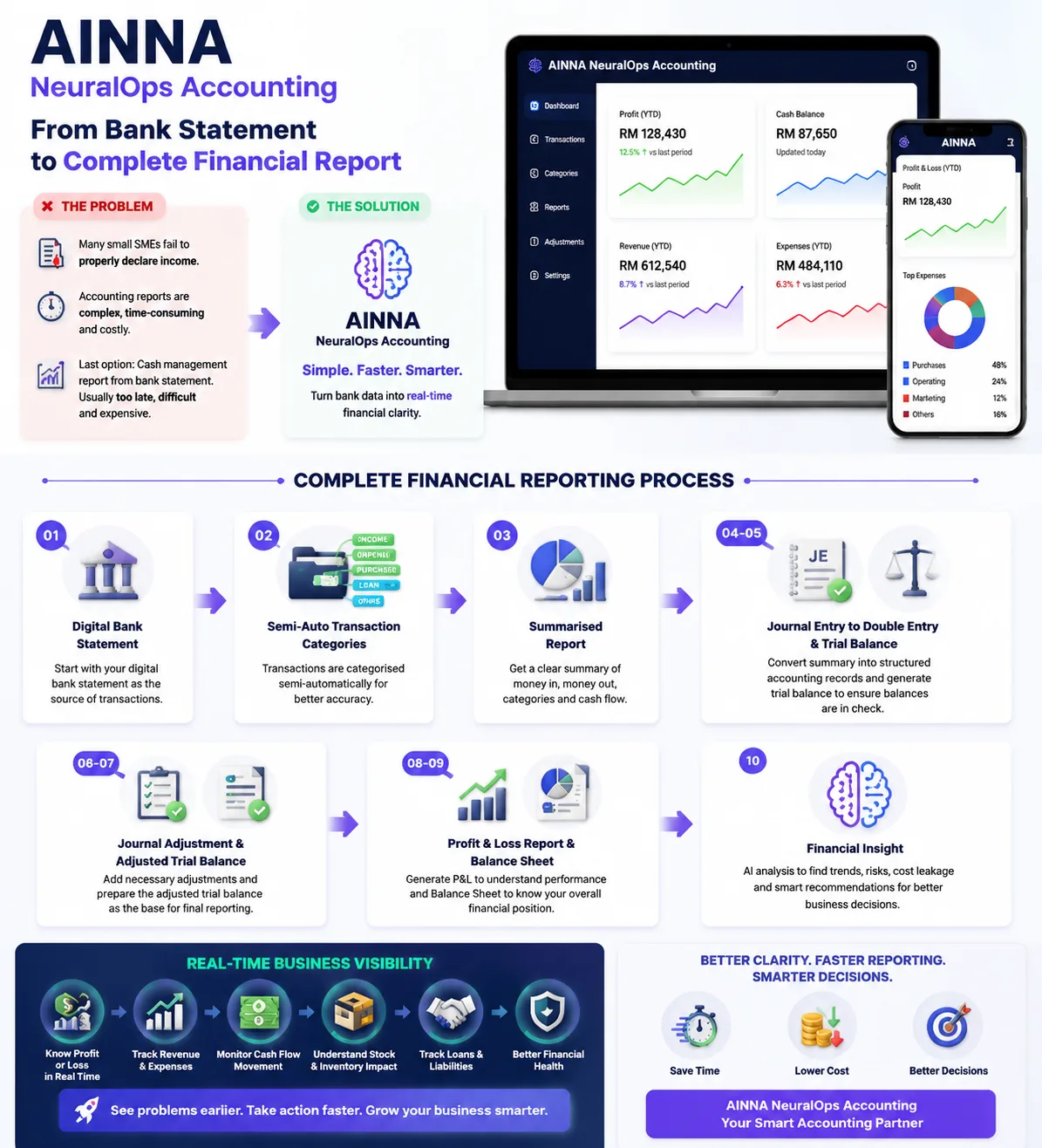
I see journal entry automation as the most practical starting point for AI in PKS accounting. Once clean, validated journal entries exist, the Lejar Am, Imbangan Duga, Profit & Loss, and Lembaran Imbangan become structured outputs - not manual reconstruction projects.
Bina the foundation first. Everything else follows.
#Perakaunan #JournalEntry #DoubleEntry #Bookkeeping #AI #Automasi #PKS #Kewangan #DigitalTransformation













Ruang pembaca
Apa pendapat anda?
Komen disemak sebelum diterbitkan. Email diperlukan untuk moderasi dan tidak dipaparkan kepada pembaca.
Setuju soal mula with the catatan jurnal, dan arahnya jelas.
The numbers around debit must equal kredit every make more sense than most posts I read.
Clearer than the vendor decks I get about inter-account.