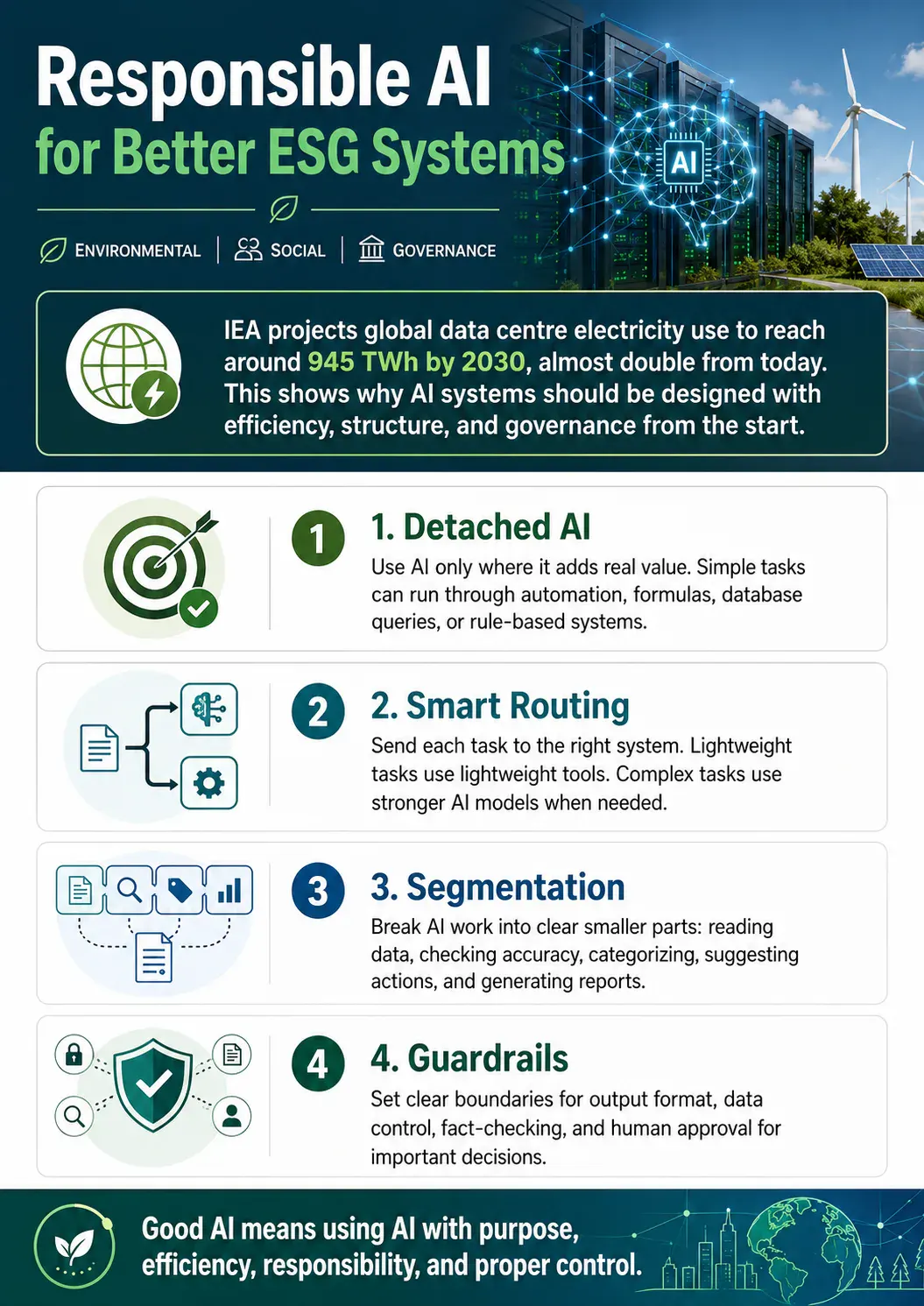
From my side of the finance and asset-management desk at AINNA, that statistic represents more than an environmental concern; it is an operational cost line, a depreciation driver, and a balance-sheet risk. For Malaysian PKS running lean on CAPEX and OPEX, every watt and every litre consumed by AI infrastructure flows straight into the P&L and the sustainability report.
NeuralOps changes the equation. Not every task needs to hit a heavy LLM or high-cost inference layer. By routing workloads efficiently, AINNA can reduce AI compute energy usage by up to 90% for defined workloads. Less compute means lower electricity bills, deferred hardware refresh, and reduced water for cooling - so the savings show up in both cash flow and ESG compliance.
That is why ESG sits at the core of our business model rather than being added as a marketing afterthought. The architecture is designed for resource efficiency from day one, giving finance teams a defensible ROI and a lower jumlah cost of ownership on AI assets.
https://ainna.bond/esg/
Official Cross-Network Resource