
OpenAI’s latest direction around AI agents is significant because it reinforces a broader shift happening across the industry. The conversation is moving away from simply asking which model is smarter, and increasingly toward how intelligence is orchestrated, executed, monitored and connected to real operational systems. The model remains important, but the surrounding agen infrastructure is becoming just as critical. From a finance and accounting perspective, that infrastructure - the orchestration stack - is where cost, control, and measurable business value are determined.
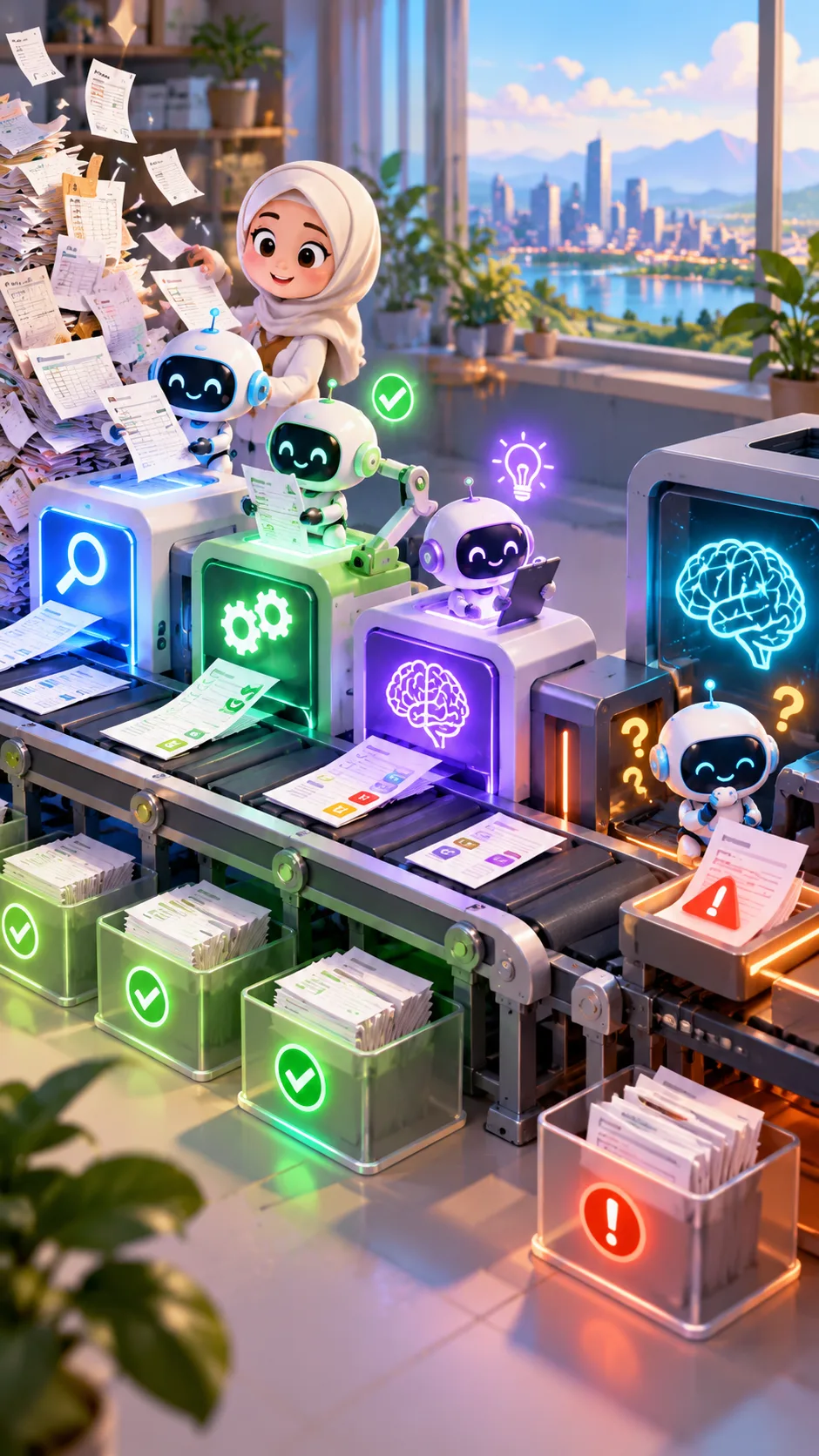
This direction is very close to what AINNA has built with AINNA NeuralOps. The approach is not to keep every task inside a continuous LLM loop. Instead, NeuralOps separates the stack into clear operational layers: the model handles reasoning when needed, while smart routing, specialised parsers, detached systems, APIs and databases handle repetitive and deterministic execution. In financial terms, this separation is what allows us to predict costs, avoid unnecessary AI spend, and allocate the expensive reasoning layer only where it genuinely adds value.
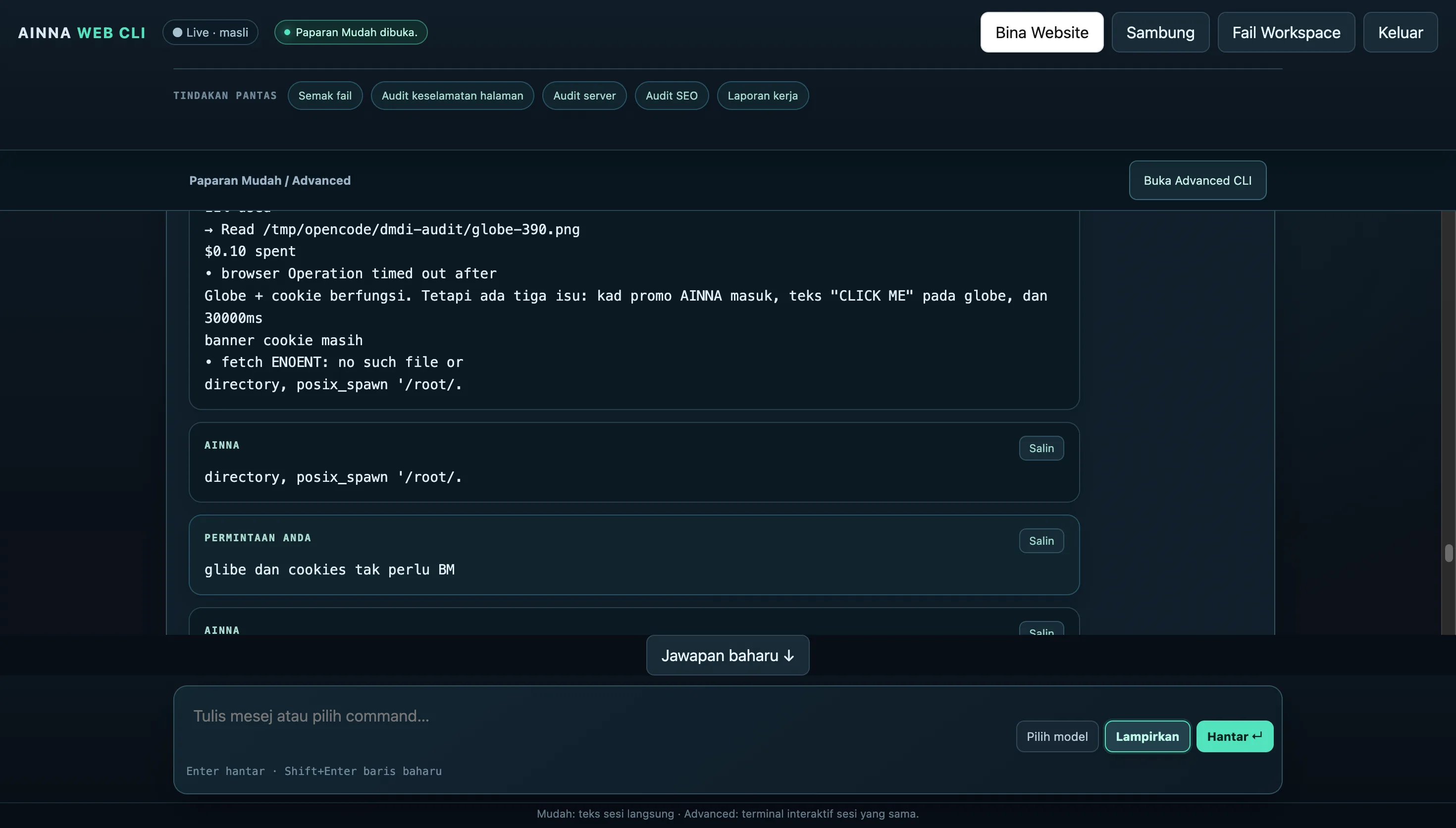
One of the priorities at AINNA is to make the agen more Web CLI-friendly. The goal is for users and technical teams to be able to see, control and interact with the agen in a more operational environment, instead of depending entirely on a conventional chatbot interface. A Web CLI also makes the system easier to inspect, troubleshoot and integrate into existing workflows. For finance teams, that translates into stronger internal controls, clearer audit trails, and simpler integration with accounting and ERP systems.
AINNA has also extended the same interaction layer through Telegram. The idea is simple: the agen should not be locked inside one dashboard. Pengguna should be able to send commands from a familiar messaging interface while the actual routing, execution and automation continue inside NeuralOps. This brings AINNA closer to the interaction model seen in popular agen ecosystems such as Hermes and OpenClaw, where messaging and command-based interfaces become part of the agen operating experience. Practically, this lowers adoption costs and training overhead - a key consideration for PKS that need to move quickly without heavy IT investment.
The most important principle behind the architecture at AINNA is that not every task requires continuous AI reasoning. A stock update, database sync, scheduled process, API transaction or validation rule often does not need an advanced model to think about it repeatedly. Once the workflow is understood, deterministic systems can execute it lebih pantas, more consistently and at lower cost. The LLM should be called when ambiguity, anomaly, interpretation or higher-level reasoning is actually required. This is straightforward financial discipline: use the cheapest reliable method for each task, and reserve premium resources for exceptions.
This is why I see the future of agentic AI as more than a race to build larger models. The next major layer of competition will be around orchestration, execution, observability, integration and cost efficiency. OpenAI’s direction reflects that transition at a global platform level. AINNA NeuralOps is approaching the same problem from an operational and PKS-focused perspective. For Malaysian PKS, the winning question is not which model is smartest, but which stack delivers the lowest cost per operation, the highest reliability, and a clear path to return on investment.
The model provides intelligence. The stack turns that intelligence into operations - and into measurable business value.
#AINNA #NeuralOps #AgenticAI #AIAgents #OpenAI #AIInfrastruktur #Automasi #WebCLI #Telegram #DigitalTransformation














Ruang pembaca
Apa pendapat anda?
Komen disemak sebelum diterbitkan. Email diperlukan untuk moderasi dan tidak dipaparkan kepada pembaca.
Kalau ada lanjutan tentang neuralOps separates the stack into, saya pasti baca.
Good to finally see troubleshoot and integrate into existing set out this clearly.
NeuralOps separates the stack into - that is the whole thing in one line.
อธิบายหัวข้อนี้ได้เข้าใจง่ายมาก
Bookmarked, mostly for where messaging and command-based interfaces.
control and interact is the part I would forward to my boss.