
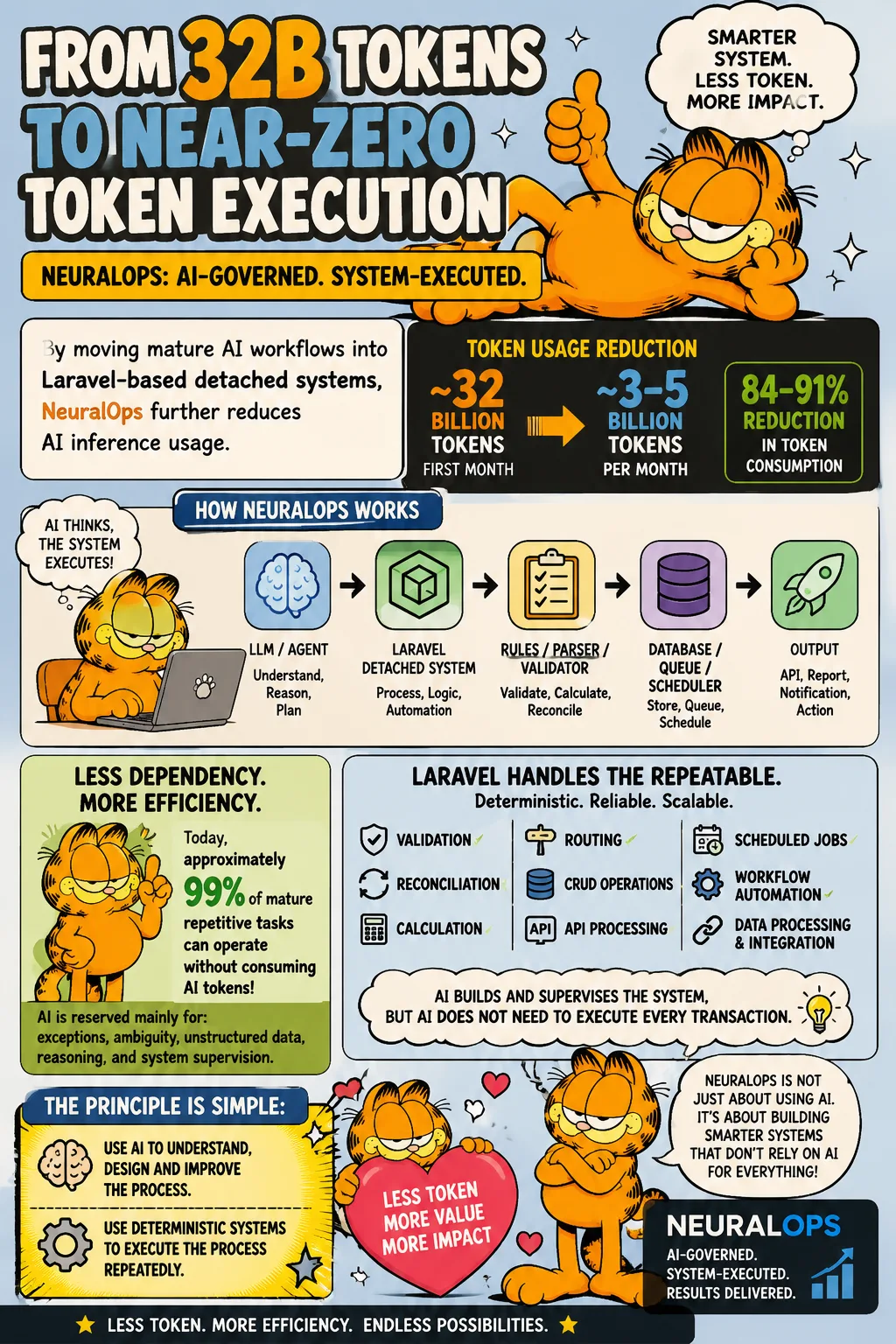
From where I sit in finance and accounting at AINNA, every token an PKS sends to an LLM is a real cost line on the P&L. We have seen deployments cut token usage by up to 90% simply by stopping the AI from doing work that ordinary software already handles more reliably. It is not the flashiest architecture, but inserting an LLM or agen into every workflow is not innovation - it is often just expensive recurring OpEx.
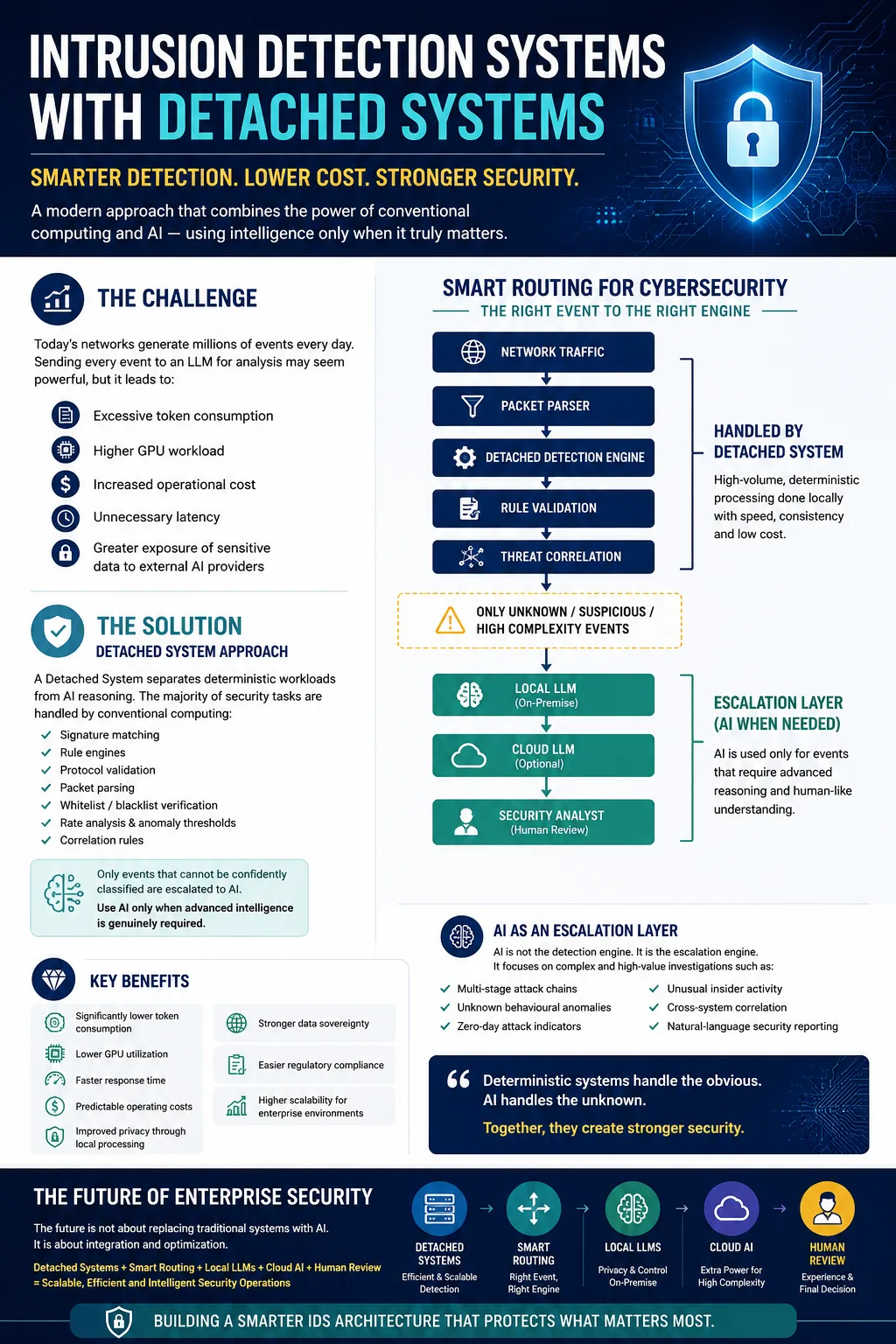
Consider something as routine as processing a supplier email. The system does not need AI to detect a baharu message, extract the sender, match keywords, populate a structured table, update the accounts payable ledger, or trigger the next approval step. Rules, parsers, scripts and deterministic automation complete that work lebih pantas, with audit-ready logs, and at a fraction of the compute cost.
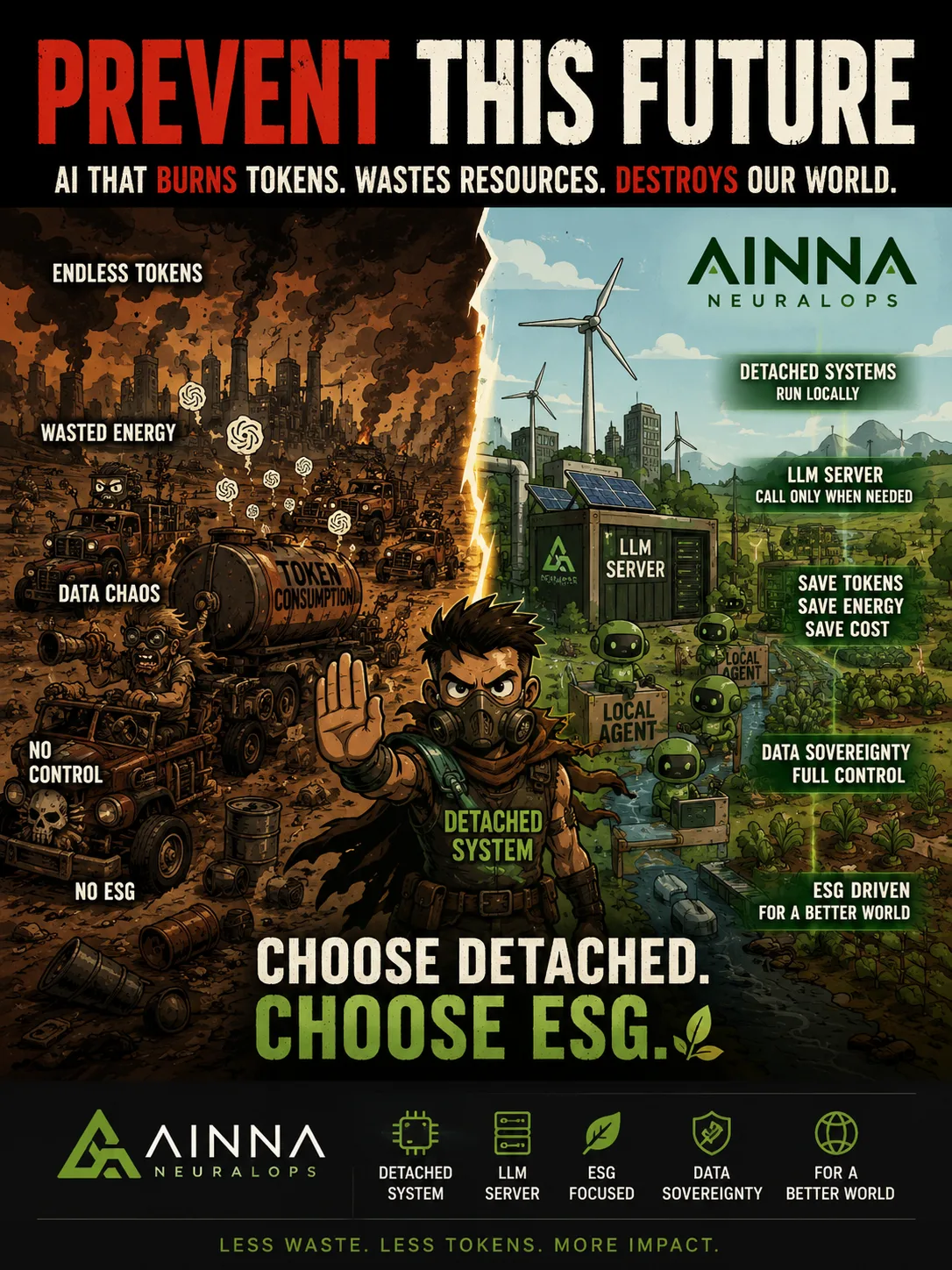
The visually impressive path is to route everything through an LLM: read, classify, summarise, analyse, repeat. It looks good on a dashboard, but each unnecessary token adds GPU time, electricity, cooling and a measurable carbon position in tonnes of CO₂e. For a Malaysian PKS watching cash flow and depreciation schedules, that is money leaving the business with little financial return.
Our operating principle is straightforward: software handles deterministic work; AI handles intelligence. Reserve AI for reasoning, ambiguity, interpretation and decisions. Do not convert capex efficiency into GPU OpEx for tasks a short script can execute reliably.
So the question is financial, not just technical. Do we want AI that inflates tokens, cost, electricity and carbon, or an architecture that protects margins, improves ROI and keeps the books healthy? At AINNA, we choose the disciplined architecture - because the future of AI must be measured in business value, not just compute power.
#AI #AIInfrastruktur #NeuralOps #GreenAI #MampanAI #ESG #Automasi #EnterpriseAI #CarbonReduction













Ruang pembaca
Apa pendapat anda?
Komen disemak sebelum diterbitkan. Email diperlukan untuk moderasi dan tidak dipaparkan kepada pembaca.
我喜欢90%这部分,因为它讲得比较务实。
by up to 90% is the part I would forward to my boss.
Good write-up. improves ROI and keeps alone was worth the read.
Still thinking about consider something as routine.
We hit audit-ready at work before. Good that someone wrote it down.