When we build and deploy AI Ejenik systems at AINNA, the most common request sounds deceptively simple: “Can we use it directly in the browser?” Technically, yes—but in practice, browser-based webchat agents had too many weaknesses for real-world execution.
Long-running tasks often lost part of the instruction, outputs got truncated, context broke, connections timed out, and tool results didn't make it back into the reasoning loop. The result was frustrating—a capable model looked “stupid” simply because part of the execution chain was missing.
That's why CLI-based agents felt more reliable—they operated directly in the environment: terminal, files, alatan, server resources. But CLI isn't for everyone.
Today, that's shifting. Model get lebih pantas, tool calling improves, and more importantly, the architecture around agentic AI is maturing. The browser doesn't have to be where the agen “lives” anymore. The browser can be just the interface, while the real agen continues running server-side.
A user can send an instruction from the browser, watch it run, close the tab, and return later—the agen keeps going with the same task state, files, terminal, alatan, and checkpoints.
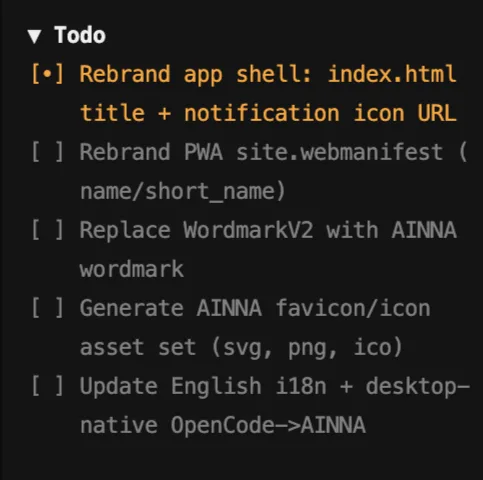
That's the direction we're taking with AINNA—not just turning a CLI into another webchat, but wrapping the reliability and power of a server-side agen environment in a UI that non-technical users can actually work with.
The next wave of AI adoption won't necessarily come from bigger or smarter models—it'll come from better architecture. That means making powerful systems easier, more reliable, and accessible to people who've never touched a terminal.
AI becomes truly useful when the technology disappears into the workflow.
#AgenticAI #AINNA #AIInfrastructure #AIAgents #Automasi #EnterpriseAI #PKS #ArtificialIntelligence