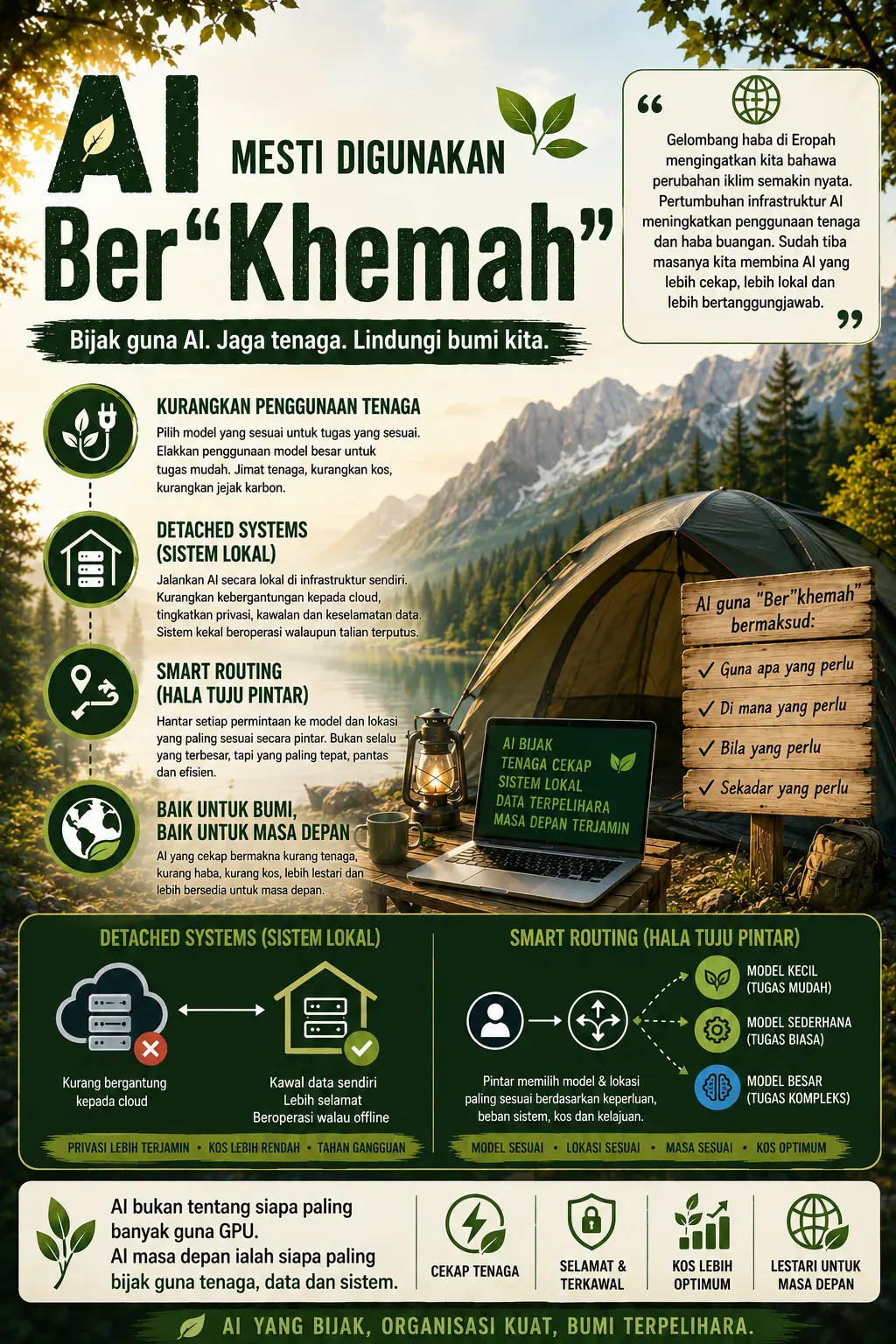
Europe's recent heatwave is not only a climate signal; it is a balance-sheet signal. Every additional cooling load, kilowatt-hour and cloud GPU hour eventually appears in an operating-expense line. For Malaysian PKS evaluating AI, the energy intensity of large cloud models directly affects jumlah cost of ownership, depreciation schedules and cash-flow planning. Persekitaran responsibility and financial discipline therefore point in the same direction.
The question is no longer whether to adopt AI. The practical question is how to deploy AI capital so that every ringgit of compute spend delivers measurable business value.
Too many inference requests are still routed to the largest cloud model by default, even when a far lebih kecil model can produce the same decision. That habit inflates GPU consumption, electricity charges, bandwidth costs and subscription spend without a corresponding lift in output quality or revenue. In accounting terms, it turns variable cloud costs into a low-return cost centre.
At AINNA, we treat this as a capital-utilisation problem. Two architectural levers solve it: Sistem Berasingan and Smart Routing.
Sistem Berasingan keeps AI workloads on local infrastructure or dedicated servers when the use case permits. From a finance perspective, that shifts spending from recurring cloud operating expenses to a depreciable hardware asset. It also reduces internet dependence, data-egress charges, downtime-related revenue risk and compliance exposure. For PKS with predictable workloads, owning a right-sized AI asset is often more cost-efficient than renting over-scaled cloud capacity indefinitely.
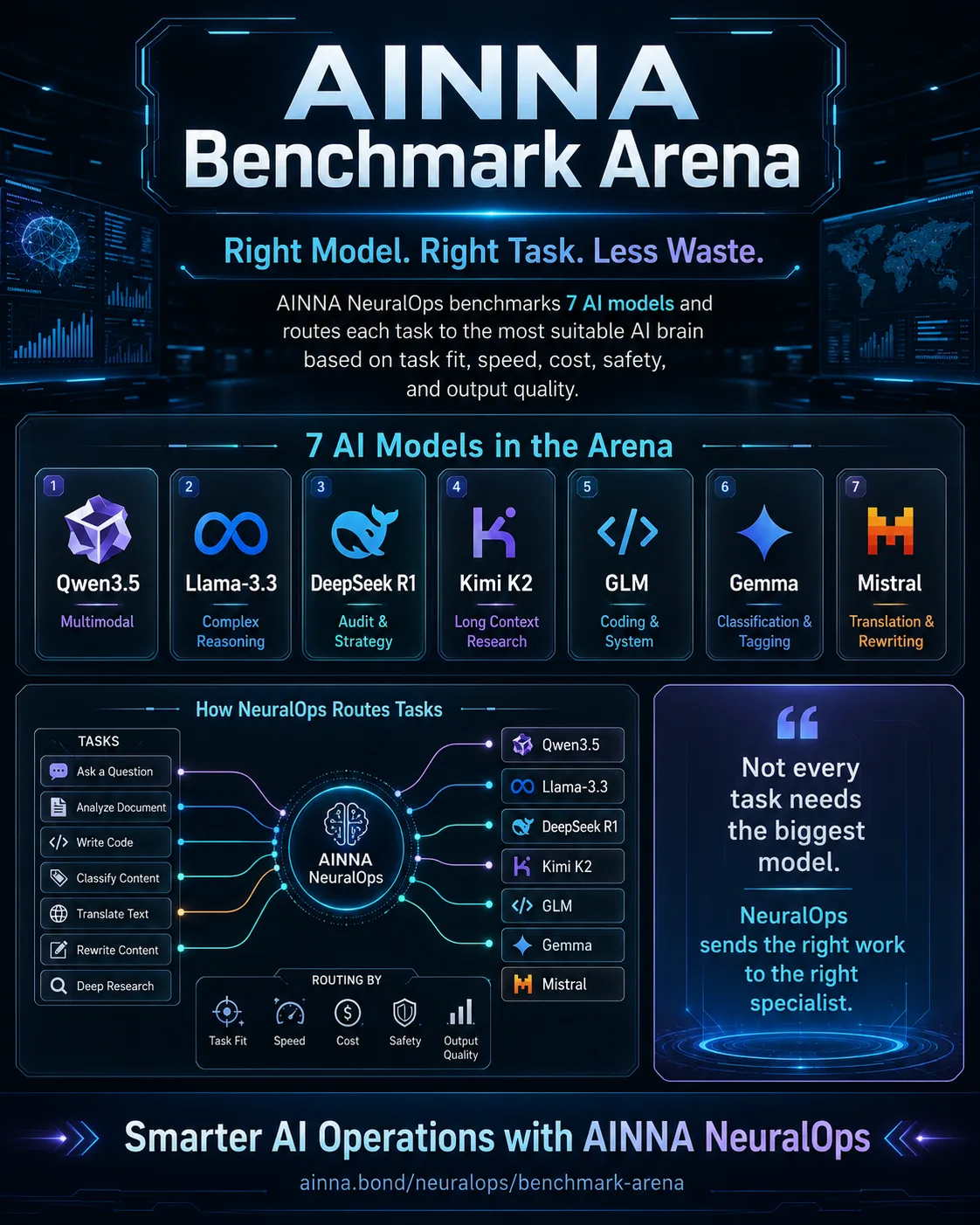
Smart Routing assigns each request to the smallest model capable of the task. Simple questions go to lightweight models; moderate tasks go to mid-size models; only genuinely complex work reaches the high-capability model. The result is a lower average cost per inference, longer effective hardware life, reduced energy consumption and improved margin on AI-enabled services-without degrading decision quality.
The future of AI is no longer a race to own the biggest data centre or the most GPUs. It is a race to deliver the highest output per unit of capital employed.
Organisations that build energy efficiency, smart architecture and resource optimisation into their AI programmes do more than cut operating costs. They also strengthen resilience against energy-price volatility, data-security requirements and sustainability reporting obligations.
AI is a powerful capital asset that can accelerate innovation and productivity. But like any major asset, it must be governed with discipline.
Not every task needs the largest model. Not every dataset belongs in the cloud. Not every problem is solved by adding more GPU.
Smart AI is therefore not only intelligent in its decisions; it is efficient in its use of capital, data and compute.
Efficient AI. Mampan systems. A more accountable future.















Ruang pembaca
Apa pendapat anda?
Komen disemak sebelum diterbitkan. Email diperlukan untuk moderasi dan tidak dipaparkan kepada pembaca.
इस विषय की व्याख्या सरल और समझने योग्य है।
Clearer than the vendor decks I get about europe's recent heatwave.
First piece that handles organisations that build energy efficiency honestly.