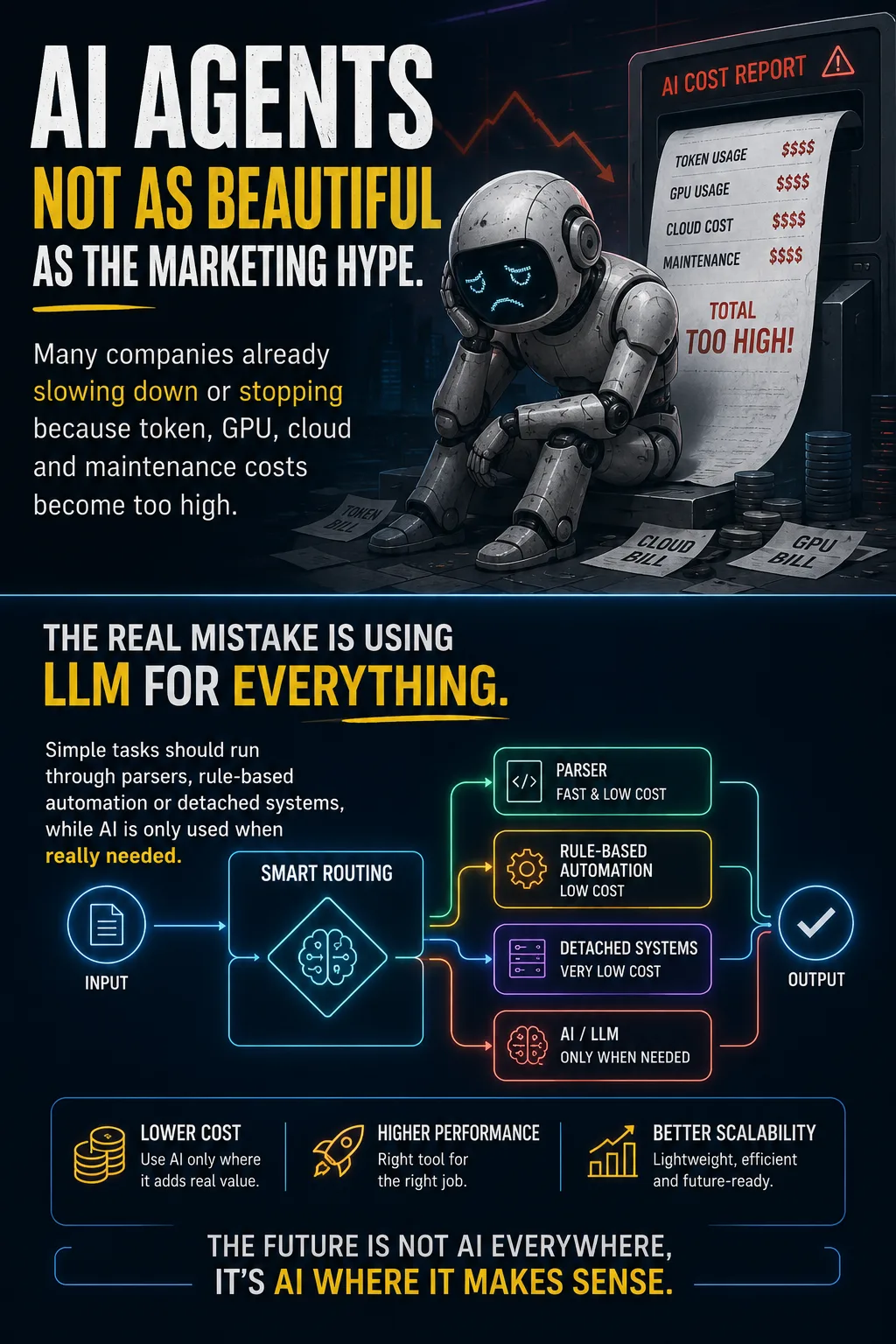
Adopsi ejen AI dalam kalangan PKS/PKS mula perlahan, bukan kerana AI lemah, tetapi kerana terlalu banyak hype dijual terlalu awal.<\/p>
Ramai mempromosikan ejen AI seolah-olah ia boleh berjalan 24/7, autonomi sepenuhnya, membina sistem tanpa henti tanpa penglibatan manusia. Tetapi dalam operasi PKS/PKS sebenar, realitinya sangat berbeza. Kos tinggi, risiko halusinasi masih nyata, output boleh tidak konsisten, dan apabila sesuatu berlaku, pemilik perniagaan tetap yang menanggung akibatnya.<\/p>
Masalah sebenar bukan AI itu sendiri. Masalahnya ialah kekurangan guardrail, routing lemah, segmentasi tugasan tidak jelas, dan objektif kabur. Ejen AI hari ini belum cukup matang untuk berjalan secara bebas dalam kebanyakan persekitaran perniagaan. Peranan terkuat mereka sekarang bukan sebagai pengganti operator, tetapi sebagai pembina.<\/p>
Ejen AI berkuasa apabila digunakan untuk membina sistem, mengautomasikan aliran kerja, menjana kod, menstrukturkan proses, dan mempercepatkan pelaksanaan. Tetapi menjual idea bahawa mereka boleh menjalankan perniagaan sendiri adalah mengelirukan.<\/p>
Yang membuat kecewa ialah melihat guru AI, CEO, dan CTO yang bermegah tentang ejen AI memprogram 24 jam tanpa henti, sedangkan ramai di antara mereka tidak menggunakan apa yang mereka khotbahkan dalam persekitaran produksi sebenar.<\/p>
Jujur sahaja. Jika keperluan lengkap, guardrail jelas, aliran kerja distrukturkan dengan betul, dan skop ditakrifkan dengan baik, ejen AI kadang-kadang boleh menyiapkan satu modul dalam 10 minit. Yang mengambil masa bukan pengkodan. Yang mengambil masa ialah mentakrifkan guardrail, menjelaskan objektif, memecahkan tugasan, debug, uji, sahkan, dan memastikan sistem tidak runtuh dalam penggunaan dunia sebenar.<\/p>
Selagi hype terus dijual, PKS/PKS akan menjadi lebih kecewa. Kerana apa yang kedengaran cantik dalam teori sering kelihatan sangat berbeza dalam pelaksanaan.<\/p>
AI bukan pekerja ajaib. AI ialah alat berkuasa, tetapi hanya apabila manusia di sebaliknya benar-benar memahami apa yang mereka bina.<\/p>AINNA Bank Vault & SME Finance Tools