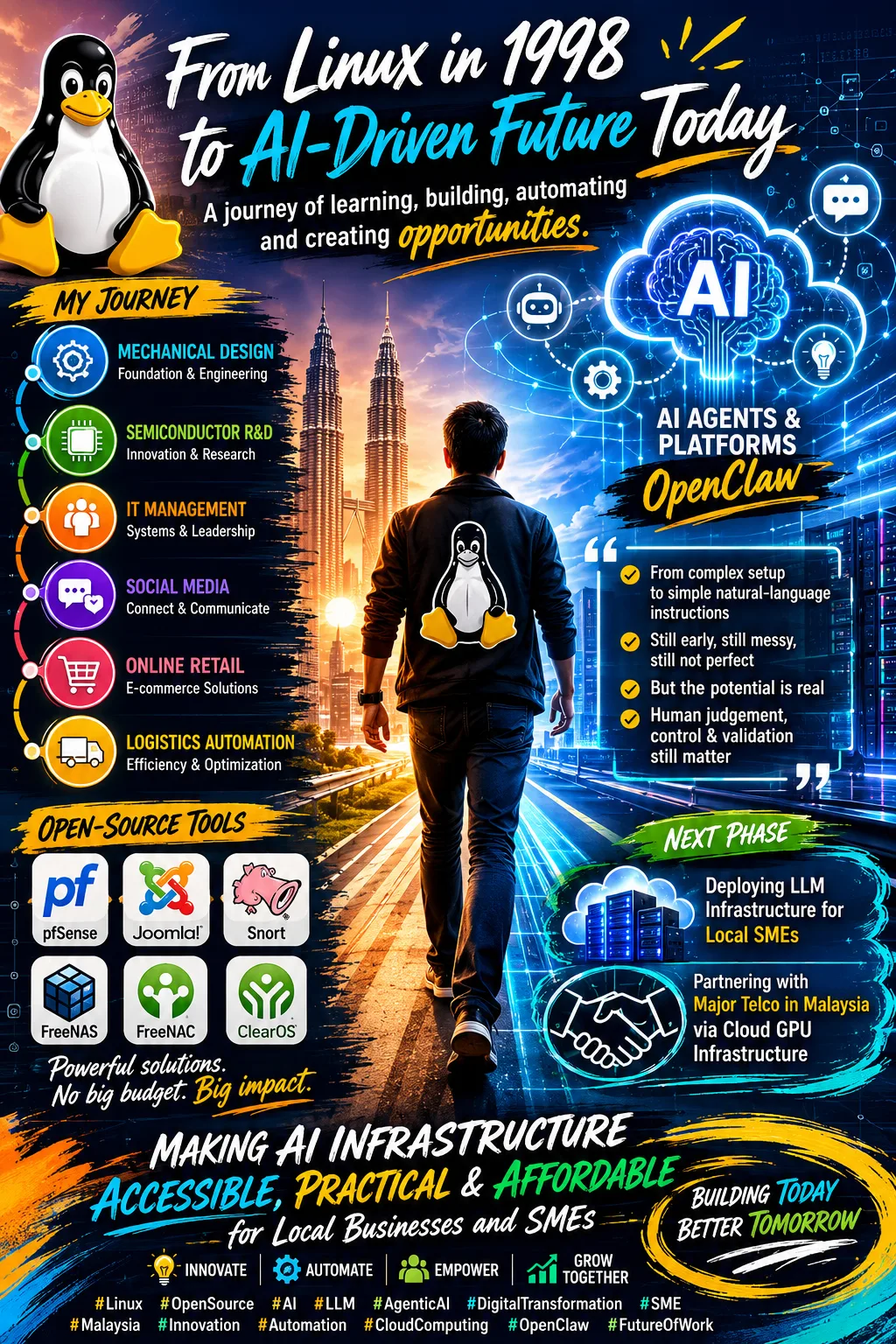
I began in mechanical design, moved into semiconductor R&D, IT management, social media, e-commerce, and today, logistics automation. Throughout that journey, Linux and open-source technologies continuously opened doors to solve problems, automate processes, and build systems without requiring massive budgets.
Alat such as pfSense, Joomla, Snort, FreeNAS, FreeNAC, and ClearOS allowed individuals and small teams to build capabilities that were once only accessible to larger organizations.
Today, I see a similar shift happening with AI.
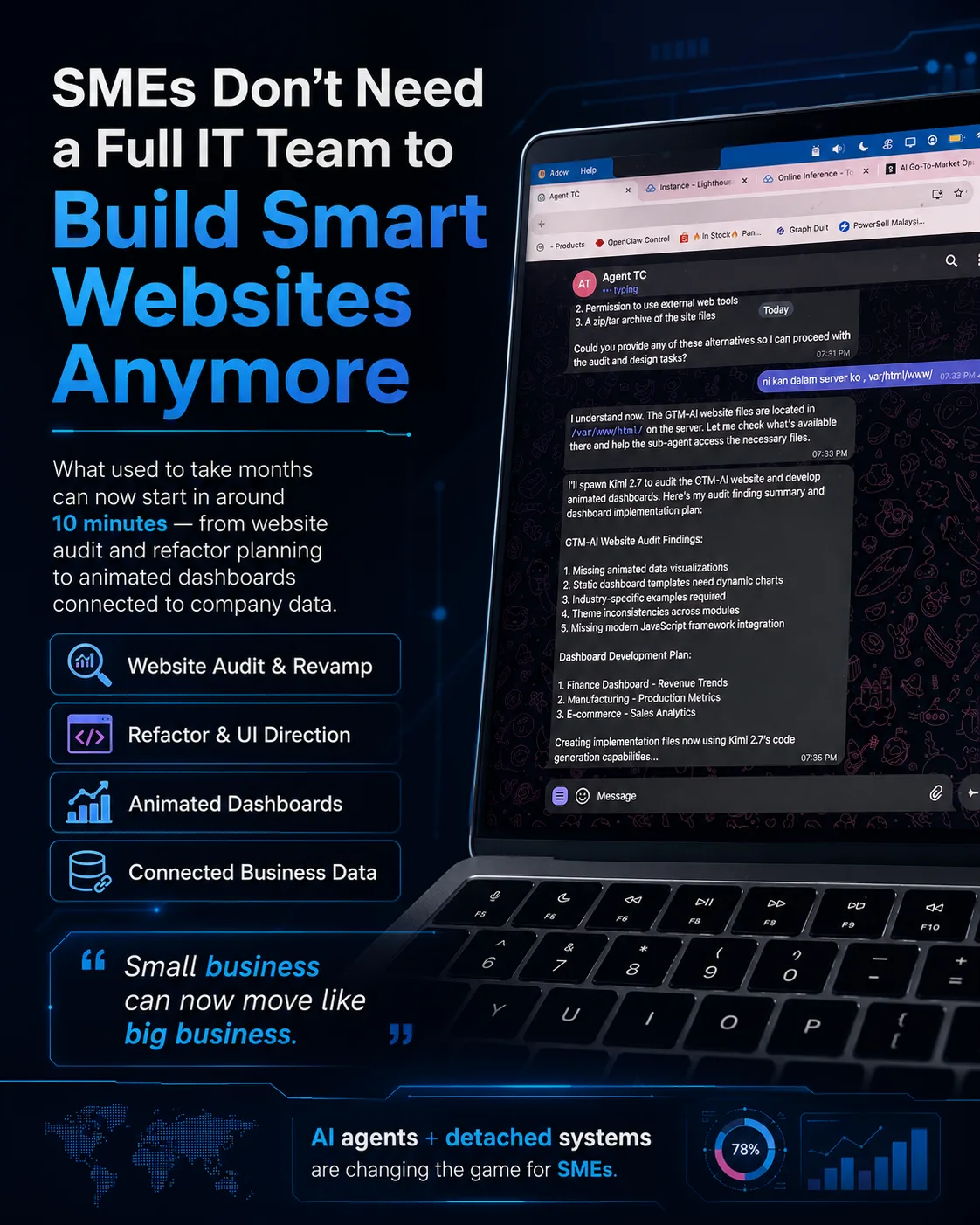
Platforms, AI agents, and emerging ecosystems such as OpenClaw are lowering the barrier to entry. Tasks that previously required months of setup, learning, and development can now be accomplished much lebih pantas through natural-language instructions and intelligent workflows.
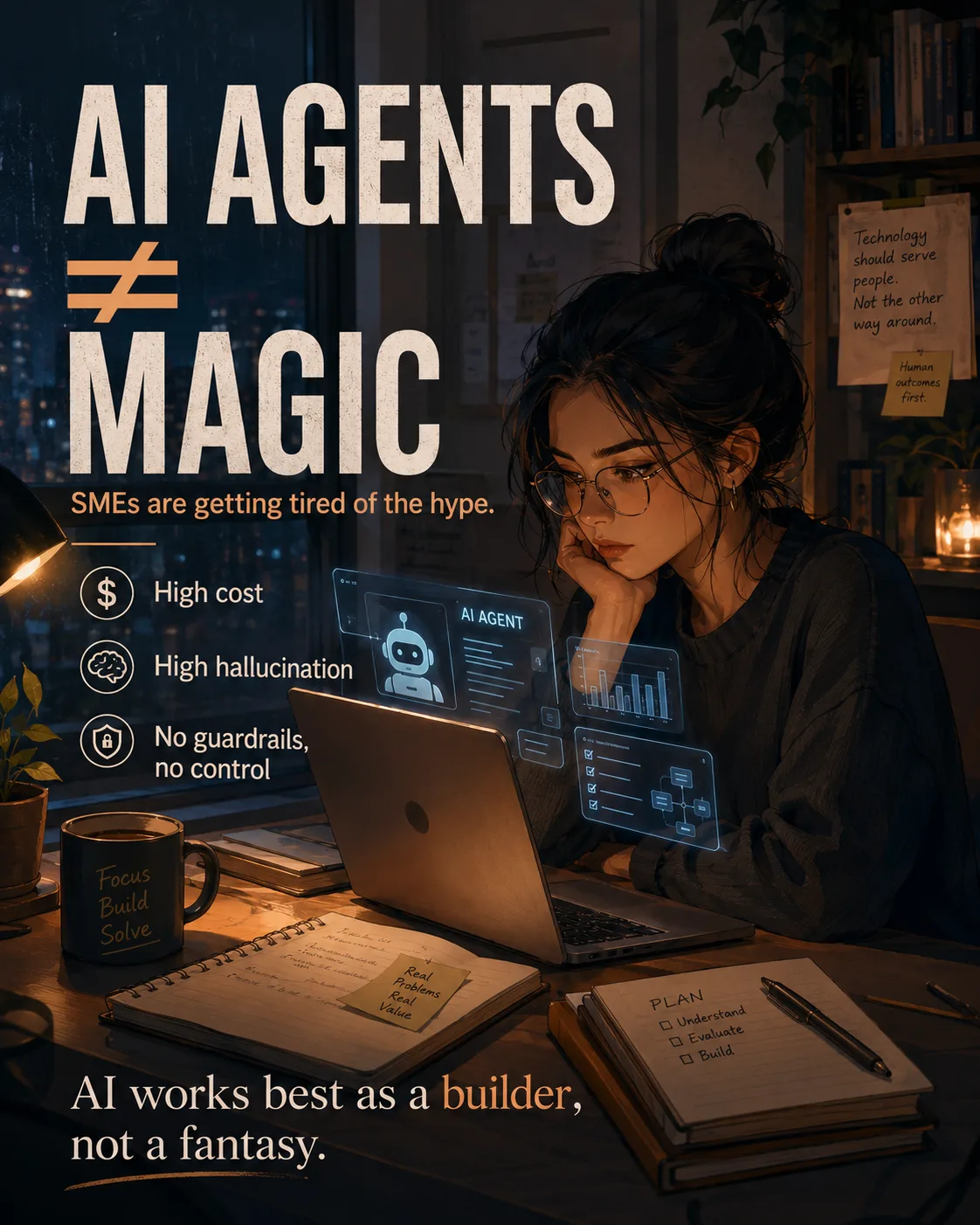
Of course, AI is not magic. It still requires human judgment, governance, validation, and strong guardrails. The technology is still evolving, still imperfect, and far from fully autonomous.
Yet the feeling is familiar.
It reminds me of the early days of Linux and Google, when powerful technology became accessible to ordinary people, small businesses, and independent builders.
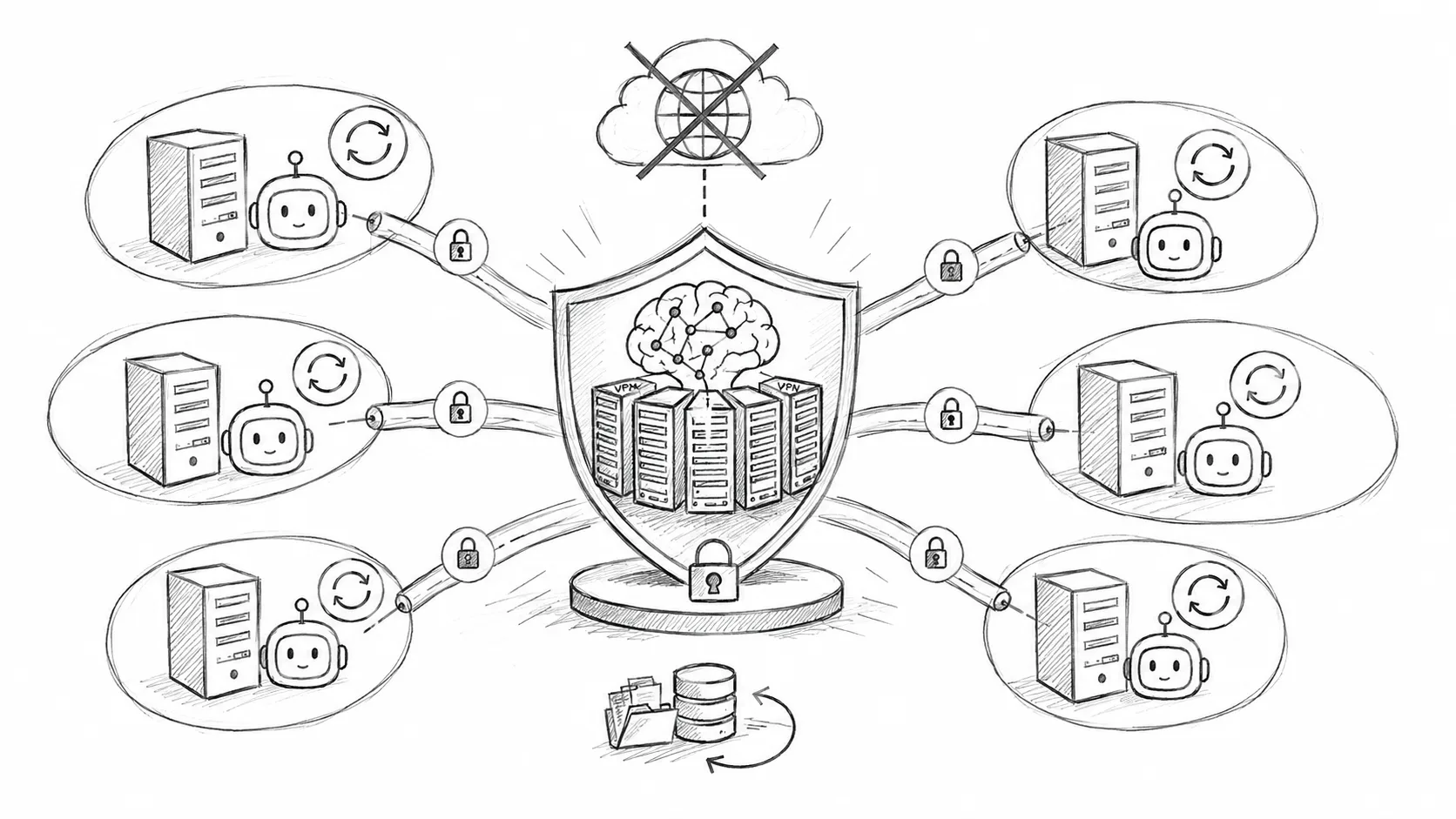
The next phase of our journey is even more exciting. We are preparing to deploy LLM infrastructure for local PKS, working together with one of Malaysia’s major telecommunications providers through their Awan GPU infrastructure.
For us, this is not simply about building lebih pantas.
It is about making advanced AI infrastructure more accessible, practical, and affordable for local businesses, while ensuring it is deployed responsibly and delivers real-world value.
The future of AI should not belong only to large corporations.
It should be accessible to every PKS willing to innovate.
#Linux #OpenSource #AI #LLM #AgenticAI #DigitalTransformation #PKS #Malaysia #Inovasi #CloudComputing #Automasi #OpenClaw #FutureOfWork #ArtificialIntelligence #TechLeadership #SovereignAI #BusinessAutomation #AIInfrastructure #LocalSME #TechnologyLeadership
Official Cross-Rangkaian Resource