Mula with Catatan Jurnal. Everything Else Comes Later.
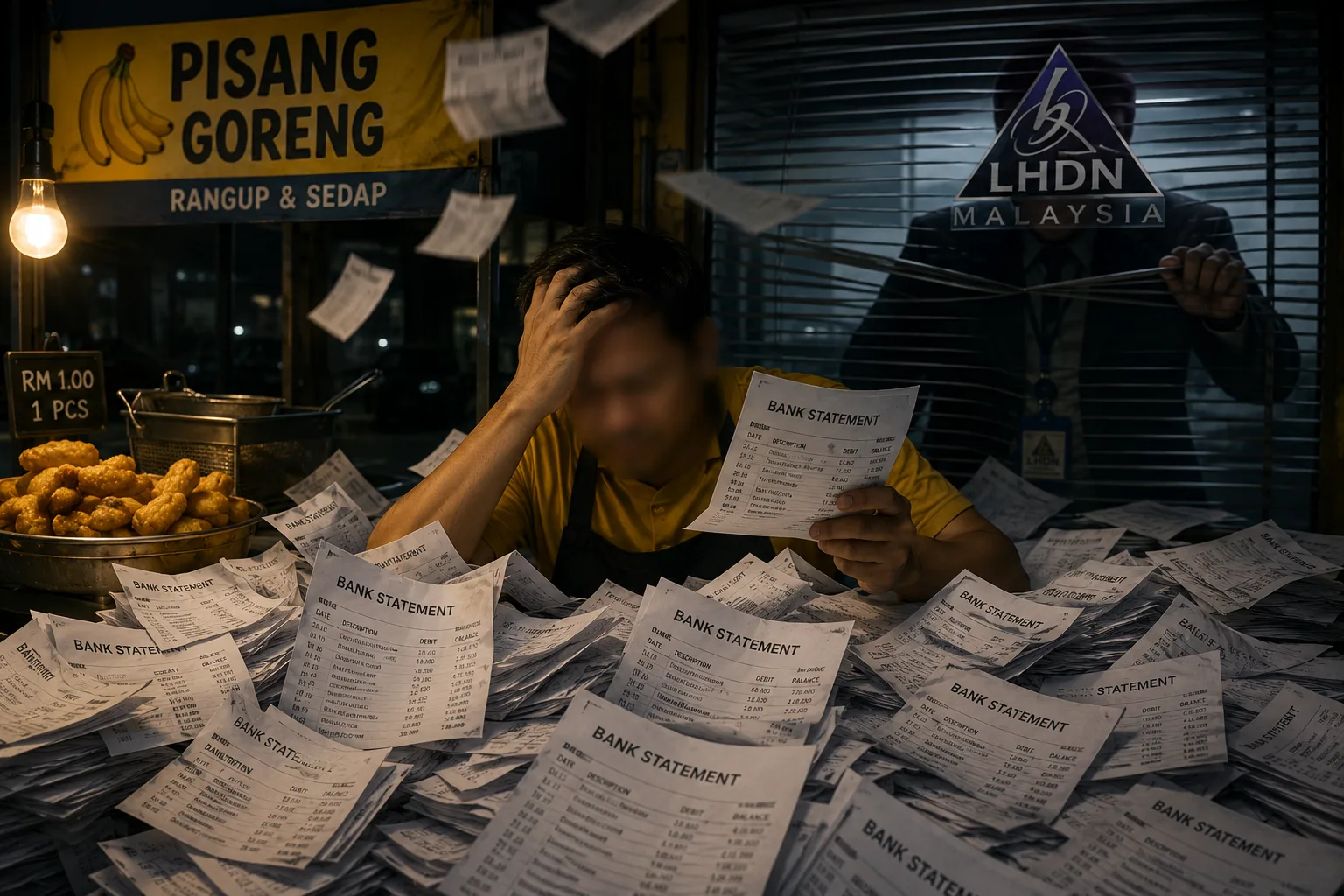
Many PKS don't have a complete accounting system. What they do have are bank statements, payment records, spreadsheets, and invoices.
Instead of trying to generate full financial statements immediately, start with the foundation: journal entries.
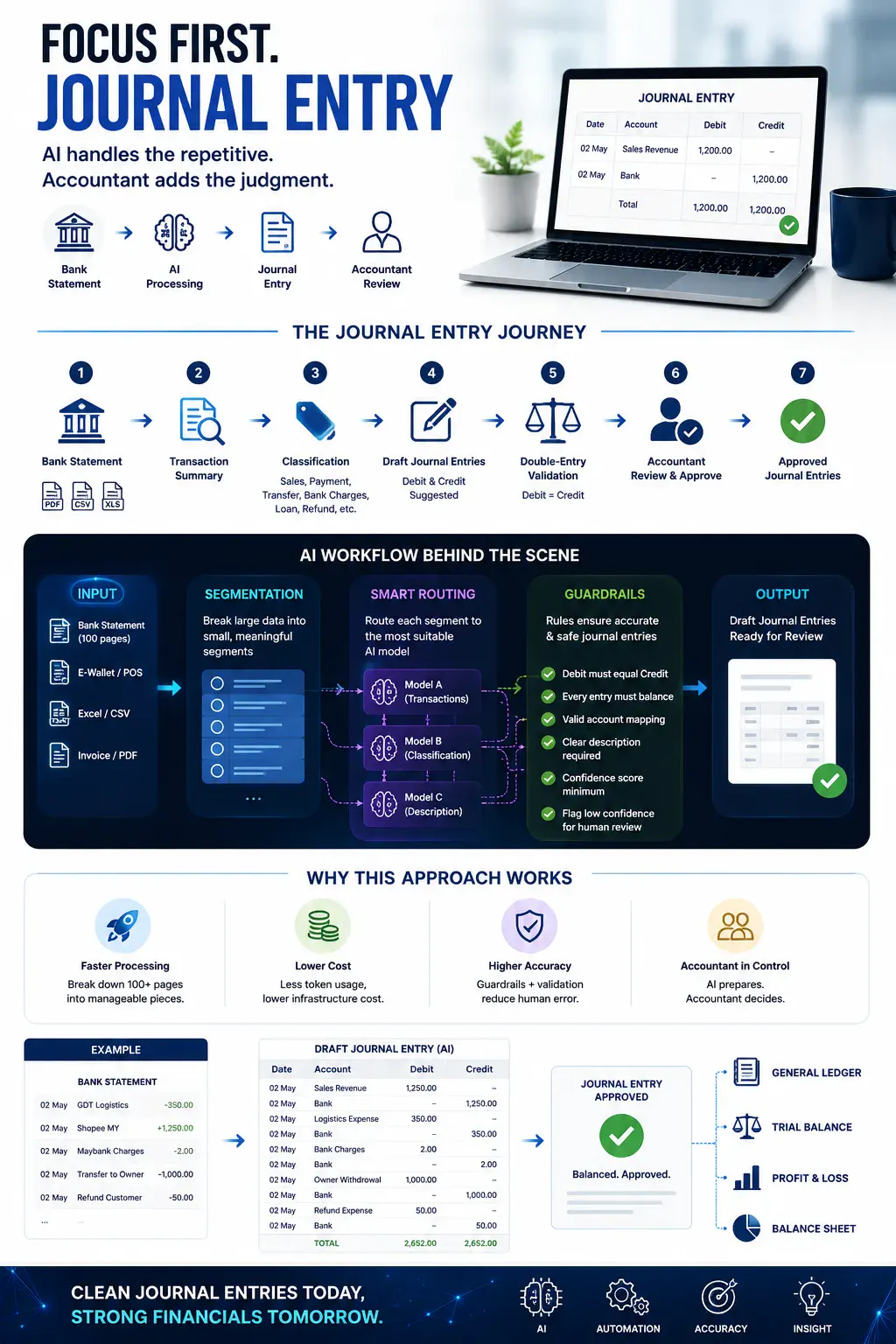
A practical workflow looks like this:
Bank Statement → Transaction Summary → Transaction Pengelasan → Draft Catatan Jurnal → Double-Catatan Validation → Accountant Ulasan
AI can identify recurring patterns such as sales receipts, supplier payments, bank charges, loan repayments, transfers, refunds, and owner withdrawals. It then converts those transactions into draft journal entries.
The important part isn't just generating entries-it's validating them.
Every journal entry should pass strict guardrails:
- Debit must equal Kredit
- Every transaction must balance
- Each entry requires a meaningful description
- Keyakinan scores should highlight entries that need human review
This approach doesn't replace accountants. It removes repetitive bookkeeping work while keeping professionals in control of every final decision.
In my view, journal entry automation is the most practical starting point for AI in accounting. Once clean journal entries exist, the Lejar Am, Imbangan Duga, Profit & Loss, and Lembaran Imbangan become structured outputs-not manual projects.
Bina the foundation first. Everything else follows.
#Perakaunan #JournalEntry #DoubleEntry #Bookkeeping #AI #Automasi #PKS #Kewangan #DigitalTransformation