Detached Systems

Detached Systems + Process Segmentation = AI Efficiency

Detached Systems + Process Segmentation = AI Efficiency

Detached Systems + Process Segmentation = AI Efficiency

Most organisations treat every workflow as an AI problem. A customer inquiry, a compliance check, a stock alert, a report export — all routed through the same LLM pipeline. The result is predictable: rising token bills, slower response times, and infrastructure that scales cost faster than it scales value.

The fix is not a bigger model. It is architectural discipline: **Detached Systems** paired with **Process Segmentation**. Together, they turn AI from a default processor into a precision tool — used only where reasoning adds measurable value.

What Are Detached Systems?

A Detached System is an independently deployed service that continues operating after the AI generation phase is complete. Once built — whether by OpenClaw, a developer, or an agentic builder — it runs on its own schedule, database, and business logic. No standing LLM session. No per-request token burn.

Typical Detached Systems in production:

The defining property is independence: the system detaches from the AI builder and sustains itself through deterministic automation, local knowledge, and scheduled execution.

What Is Process Segmentation?

Process Segmentation means decomposing a business workflow into discrete stages and assigning each stage to the most efficient execution layer — not defaulting everything to GPU-intensive inference.

A practical routing model:

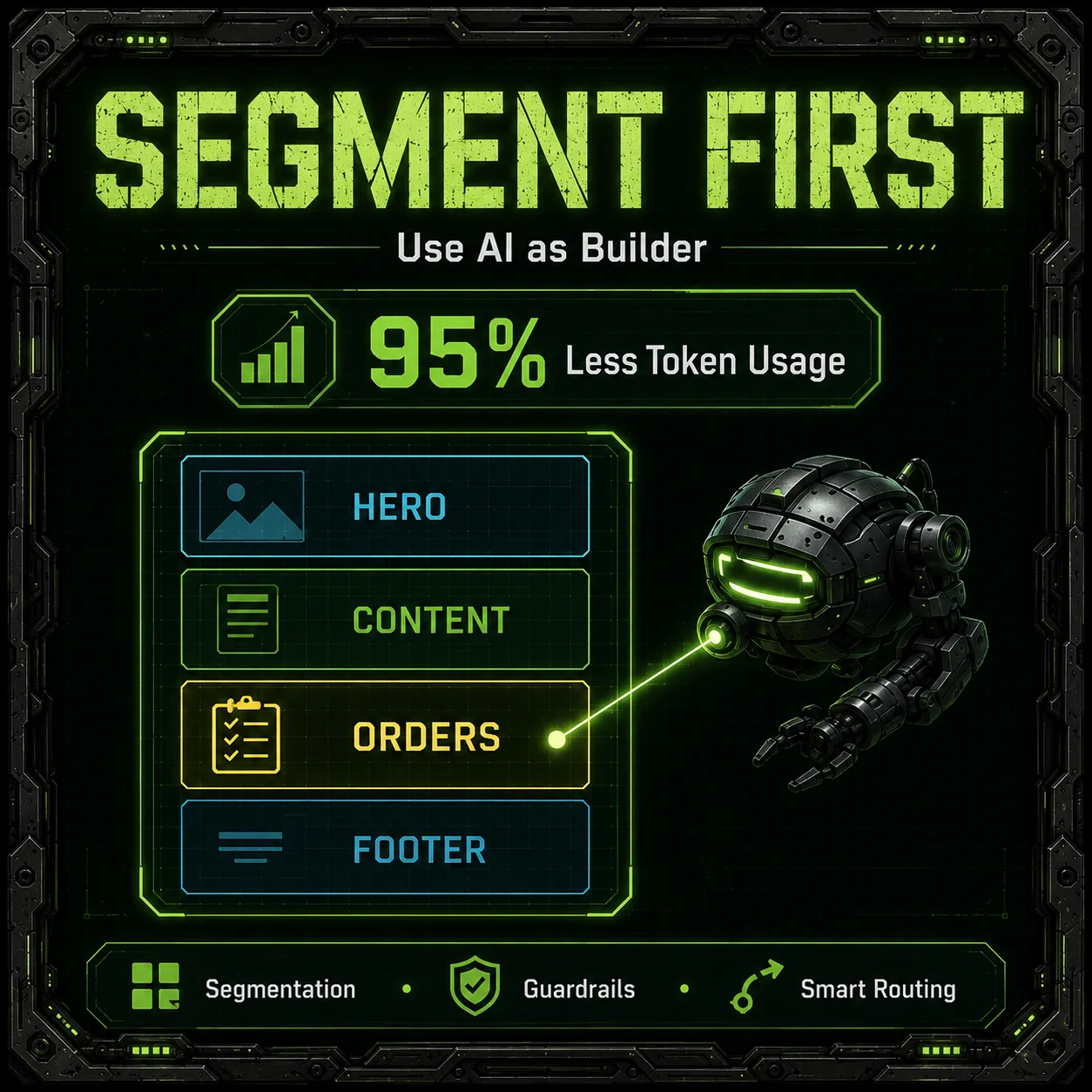
| Stage Type | Best Layer | Why ||---|---|---|| Structured data fetch | Detached System / API | Zero tokens, millisecond latency || Rule-based decision | Detached System | Deterministic, auditable || Pattern recognition | Lightweight model | Lower cost than frontier LLM || Novel reasoning / drafting | Full LLM | Justified token spend |

Smart Routing — a core principle in the AINNA NeuralOps ecosystem — implements this table automatically. Simple requests never touch expensive models. Complex requests get the reasoning capacity they actually need.

The Efficiency Equation

When Detached Systems and Process Segmentation work together, efficiency gains compound across four dimensions:

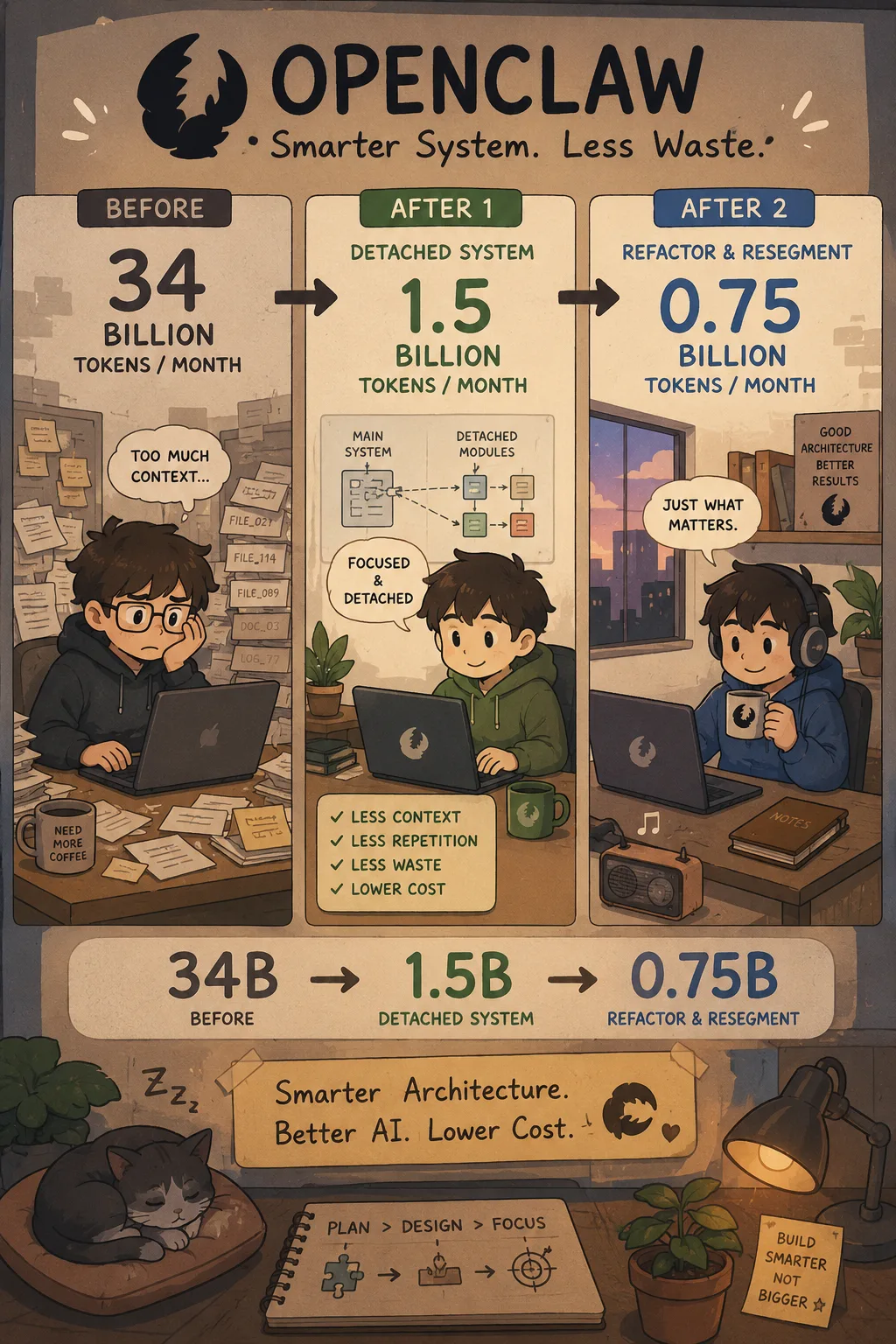
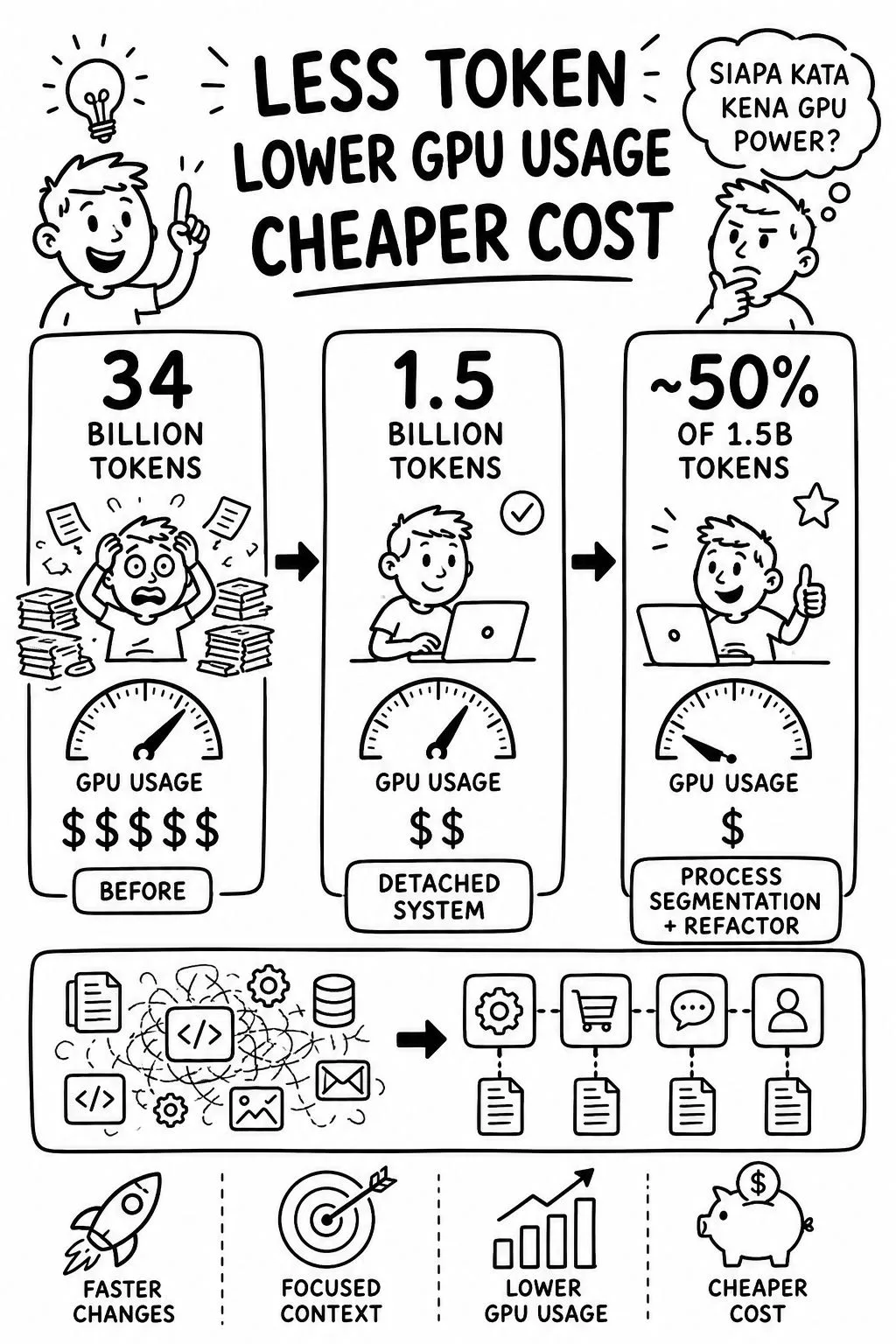
**1. Token reduction (60–90% on repetitive workflows)**

Repetitive tasks — daily reports, status checks, scheduled notifications — should not re-invoke an LLM every cycle. A detached cron job with local SQL and webhook logic handles them at near-zero marginal cost.

**2. Latency improvement**

Deterministic services respond in milliseconds. Customers waiting for an order update do not need a 3-second model inference when a database lookup answers the question in 40 ms.

**3. Operational reliability**

Detached Systems do not depend on model availability, rate limits, or prompt drift. If the LLM provider has an outage, your monitoring dashboard, alert pipeline, and scheduled exports keep running.

**4. Lower carbon footprint**

Every avoided GPU inference reduces energy consumption. For organisations reporting ESG metrics, intelligent routing is not just a cost decision — it is a sustainability decision.

Implementation: A Five-Step Framework

**Step 1 — Map the full workflow.** List every step from trigger to outcome. Mark each step as *deterministic*, *pattern-based*, or *reasoning-required*.

**Step 2 — Segment by execution layer.** Draw a boundary between stages that need AI and stages that need automation. Be ruthless: most enterprise workflows are 70% deterministic.

**Step 3 — Build detached services first.** Deploy the repetitive segments as standalone microservices with their own data stores and schedules. Use OpenClaw or your builder for the initial generation, then detach.

**Step 4 — Connect with Smart Routing.** Configure the orchestration layer so inbound requests are classified and routed before any model is called. Simple → Detached System. Complex → LLM.

**Step 5 — Measure and iterate.** Track token spend per workflow, response latency per segment, and error rates per layer. Optimise the segmentation boundaries based on real data, not assumptions.

Real-World Example: E-Commerce Operations

Consider a Malaysian SME running cross-border e-commerce:

Before segmentation, every customer message triggered a frontier model call — roughly 2,000 tokens per interaction, hundreds of times daily. After segmentation, 80% of messages are handled by detached auto-replies and rule engines. Token usage dropped by 74%. Average response time fell from 4.2 seconds to 0.3 seconds for routine queries.

The Strategic Takeaway

AI efficiency is not about using less AI. It is about using AI **only where it earns its cost**. Detached Systems eliminate redundant inference. Process Segmentation ensures every workflow stage runs on the right layer.

The organisations that master this architecture in 2026 will operate faster, spend less, and scale AI adoption without scaling AI waste. The equation is simple:

**Detached Systems + Process Segmentation = AI Efficiency.**

Start by auditing one workflow this week. Segment it. Detach the repetitive parts. Measure the difference. The savings will justify the next ten.

← Back to News