Pemprosesan penyata bank sering dianggap tugasan pengekstrakan data mudah, tetapi nilai sebenar bermula selepas transaksi dibersihkan, dikategorikan, dan diringkaskan.
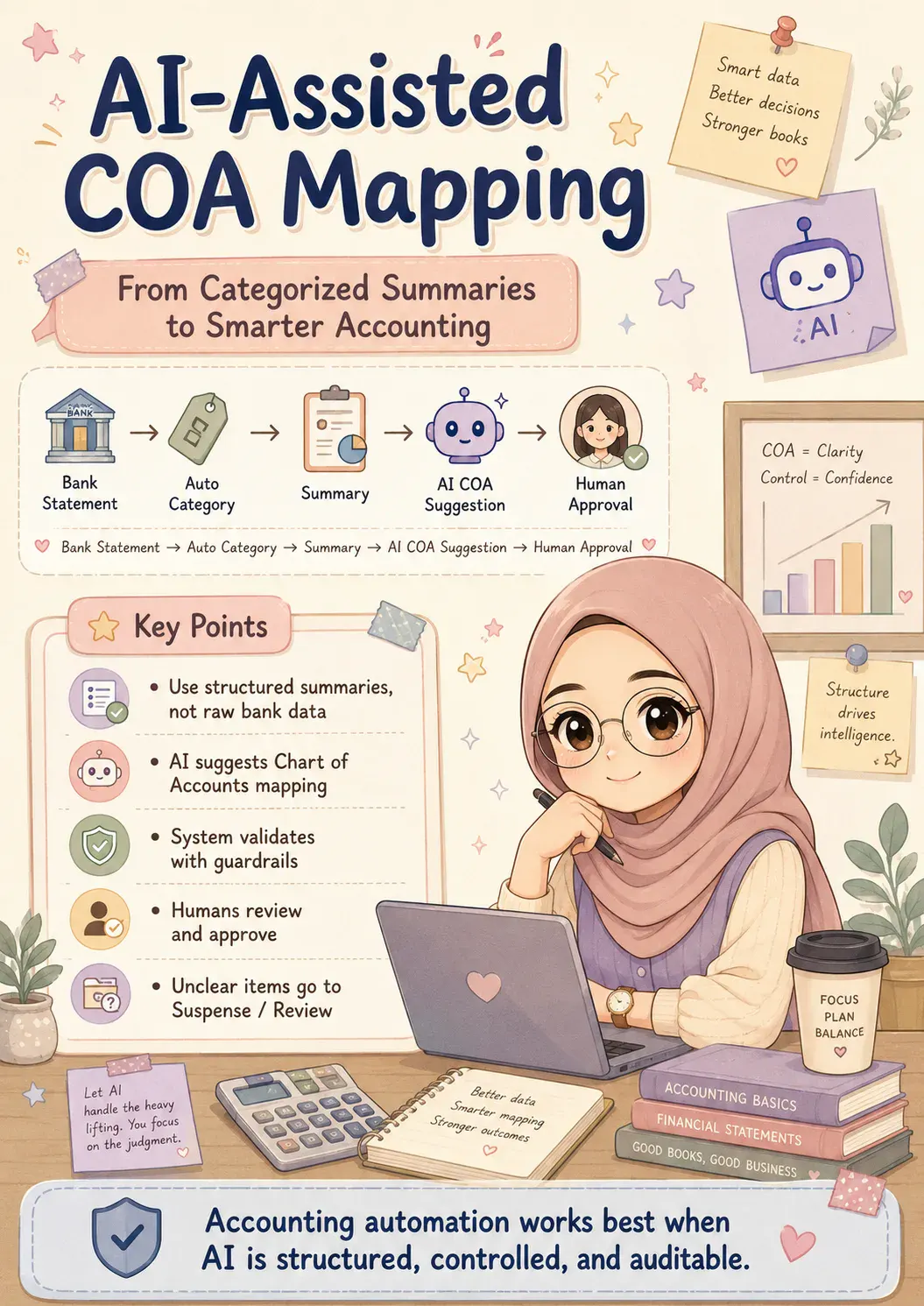
Satu langkah seterusnya yang berguna ialah menggunakan AI untuk mencadangkan Carta Akaun daripada ringkasan transaksi berkategori. Sebagai ganti meminta AI membaca penyata bank mentah secara langsung, sistem dahulu memproses transaksi, mengumpulkannya mengikut kategori, kata kunci, peniaga, dan corak tingkah laku transaksi, kemudian hanya menghantar ringkasan berstruktur kepada AI.
Pendekatan ini lebih praktikal kerana data bank mentah biasanya terlalu banyak hingar. Huraian boleh tidak konsisten, nama peniaga boleh berbeza, dan tujuan transaksi tidak selalu jelas. Apabila AI bekerja daripada ringkasan berstruktur, output menjadi lebih fokus, lebih terkawal, dan lebih mudah disemak.
Contohnya, transaksi berkaitan iklan boleh dipetakan ke Advertising & Pemasaran Expense. Bayaran kurier dan penghantaran boleh dipetakan ke Delivery atau Fulfillment Expense. Caj bank boleh dipetakan ke Bank Charges. Transaksi tidak jelas tidak patut dipaksa ke akaun rawak ia patut diletakkan di bawah Suspense atau Ulasan untuk semakan manual.
Prinsip utamanya mudah: AI mencadangkan, sistem mengesahkan, manusia meluluskan.
AI tidak patut dibenarkan mencipta akaun perakaunan secara bebas tanpa kawalan. Tanpa guardrails, Carta Akaun boleh cepat menjadi berselerak, berpendua, dan tidak konsisten. Sistem yang baik patut dahulu semak sama ada akaun serupa sudah wujud, gunakan penskoran keyakinan, dan hantar transaksi tidak pasti untuk semakan manual.
Ini mencipta aliran kerja perakaunan lebih bersih: dari penyata bank, ke kategori transaksi, ke ringkasan, ke pemetaan COA, dan akhirnya ke draf entri jurnal.
Bagi PKS, aliran kerja sebegini sangat berguna. Ramai perniagaan kecil masih bergantung kuat pada penyata bank sebagai rekod kewangan utama. Menukarkan data itu kepada format perakaunan berstruktur boleh mengurangkan kerja manual, meningkatkan konsistensi, dan menjadikan pelaporan kewangan lebih mudah diurus.
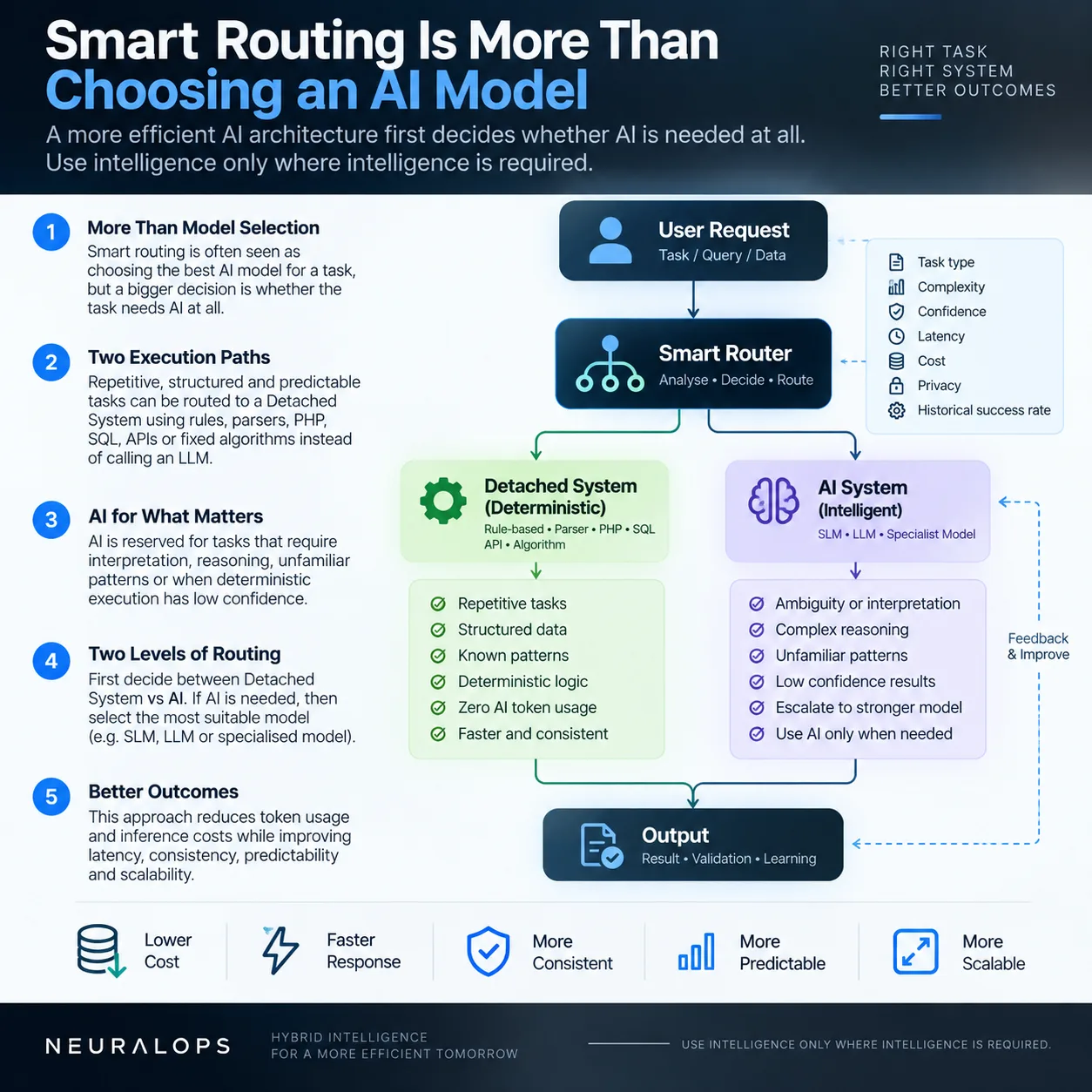
Matlamatnya bukan membiarkan AI "buat perakaunan" secara buta. Pendekatan yang lebih baik ialah meletakkan AI pada titik yang betul dalam aliran kerja, disokong peraturan pengesahan, guardrails, dan langkah kelulusan.
Itulah cara automasi perakaunan menjadi realistik bukan ajaib, tetapi berstruktur, terkawal, dan boleh diaudit.